Skip to main content
The Washington Institute for Near East Policy
Menu
Toggle Main Menu
Homepage
Main navigation
Analysis
Experts
About
Support
Maps & Multimedia
Trending:
Terrorism
Great Power Competition
Iran
Lebanon
Gulf States
Toggle List of
All Regions & Issues
Regions & Countries
Egypt
Gulf States
Iran
Iraq
Israel
Jordan
Lebanon
North Africa
Palestinians
Syria
Turkey
Issues
Arab & Islamic Politics
Arab-Israeli Relations
Democracy & Reform
Energy & Economics
Great Power Competition
Gulf & Energy Policy
Military & Security
Peace Process
Proliferation
Terrorism
U.S. Policy
Close List of All Regions and Issues
Close
Search Policy Analysis
TWI English
TWI Arabic:
اللغة العربية
Fikra Forum
Close Menu
Close
Search Policy Analysis
Search
Policy Analysis
Filter by:
Keyword
Region
- Any -
Egypt
Gulf States
Iran
Iraq
Israel
Jordan
Lebanon
North Africa
Palestinians
Syria
Turkey
Issue
- Any -
Arab & Islamic Politics
Arab-Israeli Relations
Democracy & Reform
Energy & Economics
Great Power Competition
Gulf & Energy Policy
Military & Security
Peace Process
Proliferation
Terrorism
U.S. Policy
Media type
- Any -
Audio
Maps & Graphics
Multimedia
Video
Date Published
- Any -
Past 7 Days
Past 30 Days
Past Year
Custom range...
Start date
End date
Type
- Any -
Articles & Testimony
Brief Analysis
In-Depth Reports
Sort by
Oldest first
Newest first
Found
12181
results
Articles & Testimony
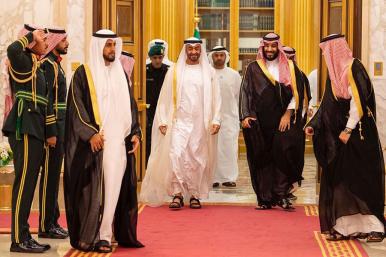
A Saudi-Emirati Thaw Can Help Contain Iran
The Gulf needs a joint front on deterrence, engagement, and freedom of navigation.
Aug 3, 2026
◆
Allison Minor
April Longley Alley
Brief Analysis
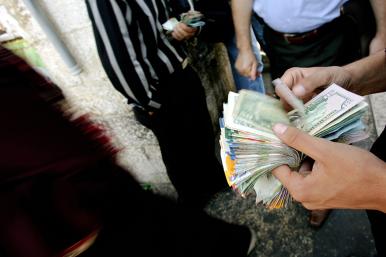
Bridging the Verification Gap on PA Prisoner Payments
Amid mounting economic and security pressures in the West Bank, only a U.S.-led mechanism can credibly determine Palestinian compliance with the Taylor Force Act and help promote wider stability.
Aug 3, 2026
◆
David Makovsky
Nava Goldstein
Articles & Testimony
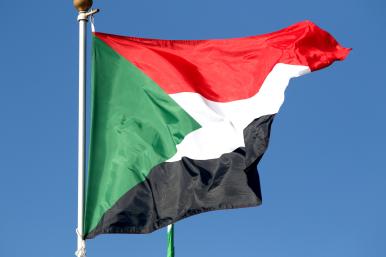
What New U.S. Sanctions Mean for the Sudan Civil War
A determination that the Sudanese government used chemical weapons likely will not alter the military balance, but it does create a record that activists, human rights advocates, and any future civilian government can ultimately draw upon in pursuing accountability.
Jul 31, 2026
◆
Areig Elhag
Brief Analysis
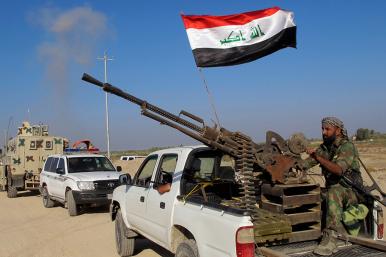
How to Prevent Militias from Disrupting Iraqi-Saudi Relations
As the dust settles from new attacks in both countries, Baghdad will need U.S. support to make progress against Iran-backed militias while assuaging Riyadh’s security concerns.
Jul 30, 2026
◆
Michael Knights
Brief Analysis
Kuwait and the Future of U.S. Power Projection
Given the country’s difficult experience during the Iran war, Washington should offer sustained political attention, practical assistance, and an expanded vision for the partnership’s future.
Jul 28, 2026
◆
Elizabeth Dent
Articles & Testimony
Five Years After Saied’s Power Grab, Tunisia Is Isolated and Unmoored
Even as the country's president shuns outside support, Western actors can use creative methods to engage reformers, support the Tunisian economy, and prevent instability.
Jul 27, 2026
◆
Sabina Henneberg
Sarah Yerkes
Brief Analysis
Russia Is Not Leaving Syria
While it no longer enjoys primacy in Damascus, the Kremlin has proven itself able to adapt to the new reality, and Washington must play the long game in response.
Jul 27, 2026
◆
Anna Borshchevskaya
Articles & Testimony
Lindsey Graham’s Last Gift to the U.S.-Israel Alliance
A White House meeting facilitated by the senator’s funeral could let Trump and Netanyahu avoid the appearance of a wartime rift.
Jul 25, 2026
◆
David Makovsky
Brief Analysis
Changing Iran’s Coercive Calculus Requires More Than Massing U.S. Forces
Regardless of where the current round of escalation goes, Tehran will continue using ceasefires, front-loaded sanctions waivers, and tit-for-tat attack cycles as opportunities to reconstitute its forces until Washington imposes hard, verifiable limits on its fastest-recovering asymmetric capabilities.
Jul 24, 2026
◆
Farzin Nadimi
Video
Brief Analysis
Palestinian Elections: Renewal or More of the Same?
Former officials and advisors discuss the newly announced Palestinian legislative elections in light of Hamas’s leadership change, Israel’s political imperatives, growing violence in the West Bank, and the prospects for jump-starting the Trump administration’s stalled transition plan in Gaza.
Jul 24, 2026
◆
Neomi Neumann
Ibrahim Dalalsha
Ghaith al-Omari
Articles & Testimony
How to Isolate Tehran
To reopen the Strait of Hormuz after the latest dip in the Iran roller coaster, the Trump administration will need to marry renewed blockade efforts with a more collective-minded diplomatic approach.
Jul 17, 2026
◆
Dennis Ross
Brief Analysis
Previewing the Trump-Aoun Meeting: A Make-or-Break Moment for the Israel-Lebanon Agreement
Circumstances are ripe for a successful visit, but both presidents are looking for more than bonhomie—Aoun needs practical U.S. commitments of operational and financial support, while Trump needs additional evidence of Beirut’s seriousness on disarming Hezbollah.
Jul 16, 2026
◆
Robert Satloff
Brief Analysis
Yemen’s Truce at Risk
High-profile funeral events in Iran provided an opportunity for the Houthis to pressure Saudi Arabia, and for Tehran to demonstrate support to its partner and signal it has cards to play at another maritime chokepoint.
Jul 16, 2026
◆
April Longley Alley
Articles & Testimony
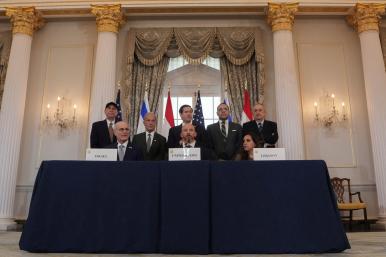
Operationalizing the Trilateral Framework Agreement
The framework's success will largely depend on the creation of a U.S.-led, third-party verification system to avoid the shortcomings experienced with previous agreements, bolstered by effective intelligence support and international financing.
Jul 15, 2026
◆
Matthew Levitt
Articles & Testimony
Hizballah’s Deep State: The Real Challenge of Disarmament in Lebanon
As long as the group’s economic, political, and institutional ecosystem remains intact, officials will need to pair disarmament efforts with a sustained strategy to target financial networks, political influence, and judicial infiltration.
Jul 15, 2026
◆
Hanin Ghaddar
Articles & Testimony
Mr. Al-Zaidi Goes to Washington
Despite significant progress, Iraq still has a long way to go to meet the Trump administration’s expectations for reining in Iranian influence.
Jul 13, 2026
◆
David Schenker
Video
Brief Analysis
Russia, the Iran War, and the Middle East
Former senior U.S. defense officials join a Russia expert to discuss how the Iran crisis is shaping Moscow’s military, political, and economic ambitions in the region.
Jul 10, 2026
◆
Keith Kellogg
Anna Borshchevskaya
Matthew Tavares
Articles & Testimony
A Ceasefire Won’t End Iran’s Terror War on Europe
Even if Washington resumes negotiations, Tehran will keep sending its proxies to commit attacks, buy weapons, and establish sham charities on the continent, so European governments must crack down harder.
Jul 9, 2026
◆
Michael Jacobson
Brief Analysis
Iraqi Visit Can Help Shape the Future Fight Against the Islamic State
Despite other pressing priorities and the imminent end of the coalition mission, Zaidi’s trip is a vital opportunity to make sure Baghdad has the targeted assistance it needs to keep IS from resurging at a time of great domestic and regional turbulence.
Jul 8, 2026
◆
Devorah Margolin
Gabriel Wein
Fikra Forum
Fikra Forum
After War, a Crackdown in Iran's Sistan-Baluchestan Province
Recent crackdowns against Iran's Baloch minority over tensions around mining in the province suggest that the rift between the regime and many Baloch is deepening in the post-war period.
Jul 8, 2026
◆
Samand Muhammadshahi
Pagination
Previous page
‹‹
First page
« First
Page
1
Page
2
Current page
3
Page
4
Page
5
Page
6
Page
7
Page
8
Page
9
…
Last page
Last »
Next page
››