- Policy Analysis
- Fikra Forum
Iran’s Western Frontier: Iranian Kurds Navigate Risk and Opportunity
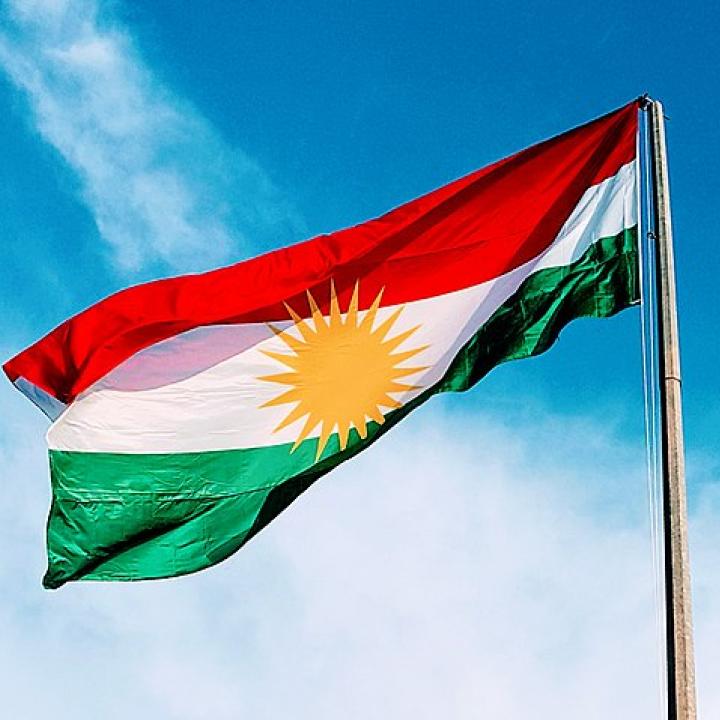
For the estimated 7 to 15 million Kurds in Iran, the current war represents a narrow window for change, albeit one where the parameters are unclear.
After seeking a more decentralized political system that better protects Kurdish minority rights for generations, the potential of major changes to the Islamic Republic’s political system is seen as a major potential catalyst for stronger Kurdish rights. The Kurdish political movement, one of the oldest organized opposition forces in Iran, represents the country’s third-largest ethnic group, after Persians and Azerbaijani Turks. Kurdish parties have long sought political rights reflecting this reality, both through their own political organizations and by building coalitions with other opposition groups willing to recognize Iran’s ethnic diversity and consider decentralized governance. These groups’ military wings reflect Iranian Kurdish leadership’s hedging that these political rights can be obtained peacefully.
Kurdish opposition leaders remain cautious about initiating large-scale military actions without clarity regarding the conflict’s broader strategic trajectory. They are aware that the Kurdish region could once again become the regime’s first target in the event of renewed internal conflict or a political transition that reasserts centralized power. Historically, authorities in Tehran have often confronted the Kurdish opposition as a way to rally nationalist sentiment and consolidate power. At the same time, recruitment and mobilization efforts suggest that Kurdish movements are preparing for the possibility that conditions inside Iran could indeed change rapidly in a way that allows for a better future for the Iranian Kurdish region.
The Strategic Role of Kurdish Geography
The Kurdish region in western and northwestern Iran occupies a strategic position within Iran’s regional security architecture. Several important military installations of the Islamic Revolutionary Guard Corps (IRGC), including missile and drone facilities, are located in Kurdish provinces near the Iraqi border. One of the most significant concentrations is around the province of Kermanshah, where the IRGC established some of its earliest operational bases after the revolution. Since the 1980s, western Iran, including the Kurdish region, has remained one of the most heavily militarized areas of the country.
Geography plays a crucial role in this. Much of Iran’s Kurdistan region consists of rugged mountain terrain that provides natural protection for military installations. This makes the region suitable for underground missile facilities, drone bases, and hardened infrastructure designed to withstand external attack. At the same time, the western location of these provinces gives them strategic importance within Iran’s broader military posture. From western Iran, missile and drone systems can reach multiple theaters across the Middle East, and in particular, Israel.
This has made the Kurdish region a critical component of Iran’s regional deterrence strategy. This militarization also has a domestic role, designed to quell internal unrest. Iranian Kurdistan is one of the most politically mobilized regions of the country, and Kurdish cities have repeatedly been at the forefront of protests and political movements challenging central government authority. This combination of heavy militarization and sustained political mobilization makes the region a uniquely sensitive part of Iran’s internal security landscape.
For Tehran, therefore, Kurdistan represents both a strategic military frontier and a political vulnerability. The same mountainous terrain that protects military installations has historically allowed Kurdish opposition movements to operate and maintain connections with local populations. In this sense, Iranian Kurdistan represents both a shield and a fault line for the Islamic Republic: a heavily fortified military frontier that has simultaneously long served as one of the most politically oppositional regions of the country.
Longstanding Kurdish Opposition to Centralization
Kurdish demands for political recognition and regional autonomy date back to the formation of the modern Iranian state under Reza Shah Pahlavi in 1925. The Pahlavi monarchy sought to construct a centralized nation-state by promoting a homogenized national identity and suppressing ethnic and linguistic diversity through coercive state power, including military repression, executions, and strict central control over peripheral regions. This dynamic was briefly challenged by the establishment in 1946 of the Kurdistan Republic in Mahabad, led by Qazi Muhammad, which sought autonomy within Iran rather than independence. Its emergence was facilitated by the Soviet presence in northern Iran, though this support reflected a broader power vacuum and strategic competition rather than ideological alignment. As Qazi Muhammad emphasized in meetings with U.S. representatives, including American military attaché Archibald Roosevelt, the movement was not a Soviet proxy but a local effort to govern a region effectively abandoned by the central state. However, following the Soviet withdrawal that same year, Tehran, backed by the United States, moved to suppress the republic, underscoring how Kurdish political aspirations were ultimately constrained by both domestic centralization and great-power rivalry.
These policies continued in different forms under the Islamic Republic. Kurdish demands for decentralization, cultural rights, and regional self-governance were framed by the new leadership as threats to national security and labeled as separatism, leading to military confrontation between Kurdish political organizations and the revolutionary state. Indeed, the Kurdish region became the IRGC’s first major battlefield. Early operations by the IRGC and the Iranian National Army targeted Kurdish cities and villages, killing thousands of civilians in the first years after the revolution.
Armed confrontation between Kurdish forces and the Iranian government continued for years but evolved through several phases. By the mid-1990s, Kurdish political organizations began shifting their strategy from sustained military operations toward broader social and political mobilization within Iranian Kurdish society. This shift followed a 1996 understanding with the authorities in the Kurdistan Region of Iraq (KRI), including both the Kurdistan Democratic Party (KDP) and the Patriotic Union of Kurdistan (PUK), which limited the use of Iraqi Kurdish territory for sustained cross-border military operations against Iran.
As a result, Kurdish parties increasingly emphasized political organization, civil activism, and grassroots mobilization inside Iranian Kurdistan. Cultural, environmental, and linguistic initiatives became important tools for maintaining political influence. Over time, Kurdish activism became increasingly linked with broader social and political grievances across Iran, connecting ethnic demands with wider calls for democracy, political rights, and decentralization within the Iranian state.
However, divisions within the broader Iranian opposition movement have complicated these efforts. Some opposition factions advocate for a highly centralized Iranian state, which Kurdish political actors often view as a repeat of patterns from both the Pahlavi monarchy and the Islamic Republic. This tension became particularly visible during the January protests: Kurdish actors responded with skepticism to the increasing prominence of former Crown Prince Reza Pahlavi and the use of imagery from the Pahlavi monarchy era, which they viewed as the revival of a vision of centralized government that had historically been associated with denying Kurdish rights. This perception deepened further after Pahlavi criticized Kurdish parties and spoke of confronting them with a future national army, reinforcing mistrust between Kurdish parties and segments of the opposition. If such divisions persist and Pahlavi comes to power while parts of the opposition remain opposed to Kurdish movements, this could cause internal conflict in Iran.
Iranian Kurdish Parties’ Traditional Approach: Both Negotiations and Militias
There has been increasing international focus on Iranian Kurdish parties due to their relative organization and military professionalization as the fracturing of the Islamic Republic becomes a topic of discussion. Multiple Iranian Kurdish opposition groups maintain structured leadership and armed wings today, including the Democratic Party of Iranian Kurdistan (KDPI), the Party for a Free Life in Kurdistan (PJAK), Komala Party of Iranian Kurdistan (Komala), the Kurdistan Freedom Party (PAK), the Khabat Organization, and Komala of the Toilers of Kurdistan.
Despite decades of confrontation, the preferred strategy of these Kurdish political movements has historically been negotiation with the central government. Kurdish leaders attempted dialogue with the Iranian government under both the Pahlavi monarchy and the Islamic Republic, though these negotiations frequently ended in violence, including assassinations. One of the most prominent cases was that of Kurdish leader Abdul Rahman Ghassemlou, who was assassinated in Vienna in 1989 during negotiations with Iranian representatives. Other Kurdish leaders were targeted in similar incidents over the years, reinforcing deep distrust between Kurdish political actors and the Iranian state.
During the 2000s, traditional Kurdish parties largely refrained from sustained armed confrontation. However, PJAK—established in 2004 and widely regarded as an affiliate of the Kurdistan Workers’ Party (PKK), with organizational ties to its leadership in Qandil—began operating in Iran’s Kurdish regions and engaged in intermittent clashes with Iranian security forces from 2005, after a wave of unrest in Iranian Kurdish cities, until a ceasefire in 2011. Many of these groups have bases in the KRI, where they continue political and military training while maintaining connections with supporters inside Iran. Most of these Iranian Kurdish forces also gained new operational experience during the war against the Islamic State in Iraq and Syria. Cooperation with the U.S.-led coalition exposed Kurdish fighters to intelligence coordination, modern battlefield tactics, and new military technologies, further shaping their capabilities as organized political-military actors.
That being said, the armed Iranian Kurdish presence across the border in the KRI came under increasing pressure after the March 2023 security agreement between Iran and Iraq. This committed Baghdad, and by extension the Kurdistan Regional Government (KRG), to disarm and relocate Iranian Kurdish opposition groups and place them under greater monitoring. The agreement reflects Tehran’s longstanding objective to limit Kurdish opposition activity, an aim reinforced by periodic Iranian missile and drone strikes targeting these parties in the KRI. While implementation has been uneven, it has forced some Kurdish forces to reposition farther from the Iran-KRI border.
The Current Conflict’s Influence on the Iranian Kurdish Approach
In the lead-up to the U.S.-Israeli attack on Iran, these parties announced the formation of a coalition, later joined by the Komala Party of Iranian Kurdistan (Komala), suggesting an intent to operate jointly towards shared political goals. As the current conflict directly challenges the status quo within the Islamic Republic, Kurdish parties are well-positioned to draw on a deep social base that Kurdish movements maintain if they believe a path towards greater decentralization is emerging through armed conflict. Unlike external military forces, Kurdish fighters from across the border would not be entering unfamiliar territory if conflict were to expand inside Iran but would be returning to their own communities. Family ties, local networks, and longstanding political connections provide Kurdish forces with community support, intelligence channels, logistical assistance, and familiarity with the terrain, advantages that external actors have often lacked in military interventions across the Middle East.
Indeed, recent developments suggest a growing level of mobilization among Iranian Kurds as the current conflict unfolds. Kurdish political parties report a surge in membership requests from inside Iranian Kurdistan, with thousands submitting their names to join these parties and their affiliated military wings since the beginning of the war. At the same time, hundreds of members of the Iranian Kurdish diaspora have begun returning to the KRI to join Kurdish parties preparing for potential confrontation with the Islamic Republic. These include Iranian Kurds who have been living in Europe and other Western countries.
The increased mobilization and the return of diaspora members suggest that in addition to Kurdish political organizations retaining a significant level of social support within Kurdish society, Iranian Kurdistan may become a catalyst for change throughout Iran if fractures emerge within Iran’s security institutions that currently militarize the region. If IRGC presence degrades, the fact that there is an organized military element suggests that Iranian Kurdish leaders suspect that the region could become a focal point for defecting forces or broader opposition coordination.
Iranian Kurdish leadership is also mindful of how such developments may be viewed by other regional actors with a stake in the shape of Kurdish political autonomy. Developments in Iranian Kurdistan could resonate across the border in the KRG itself, as a shift in Iran’s ability to target the KRG—shown clearly through Iran’s recent drone and missile strikes on Erbil—could ease longstanding political and security pressure from Baghdad and Tehran while creating new opportunities for cross-border economic integration and cultural cooperation with Iranian Kurdish regions.
Turkey will also likely be focused on developments there, although from a security-driven approach reflecting its concerns around the PKK or its affiliate PJAK gaining any influence or new territory for a base while Ankara seeks to demilitarize the group throughout the region. The ethnically mixed character of northwestern Iran, particularly in provinces such as West Azerbaijan, where Kurdish and Azerbaijani Turk populations coexist, adds another layer of sensitivity, as Turkey maintains close ties with Azerbaijani actors. Any escalation in this region could therefore draw increased Turkish involvement, particularly if Ankara perceives a threat to its regional security interests. Kurdish coalition parties have attempted to mitigate such concerns, issuing a statement on March 13 signaling a desire for dialogue, coexistence, and coordination with Azerbaijani Turk communities, as well as a broader commitment to peaceful relations with neighboring states.
And were a new central state to emerge due to the current conflict, past experiences would continue to shape Iranian Kurdish political thinking towards a new government. Negotiation remains a preferred option, but historical precedent has created strong skepticism about whether any central authority in Tehran would ultimately respect Kurdish political agreements. Any political transition in Iran that continues to emphasize extreme centralization of power risks deepening internal instability and leading to civil conflict. Historically, a centralized political structure has made it difficult to accommodate the demands of ethnically diverse communities.
As such, Iranian Kurdish leaders are carefully watching for signs of international engagement that puts pressure on a central state to protect minority rights. This is particularly the case regarding the United States, which they see as playing an important role in encouraging future negotiations between Kurdish representatives and whatever political leadership emerges in Tehran in spite of the United States’ at-times ambivalent approach to Kurdish pushes for greater autonomy elsewhere.
At the same time, Kurdish leadership will actively look for ways to play a key role in shaping how political change unfolds inside Iran. Pushing towards a model actively inclusive of minority rights could potentially open space for discussions on decentralization and regional autonomy, addressing a longstanding political question that successive Iranian governments have struggled to resolve and allowing a stronger Iran that is inclusive of its many minority groups.