- Policy Analysis
- PolicyWatch 4182
Examining the Terrorism and Insurgency Links Between AfPak and Iran
The two conflicts may appear unrelated, but an al-Qaeda haven in Iran, threats from the Islamic State, and separatist ambitions could supercharge the risks to regional and global security.
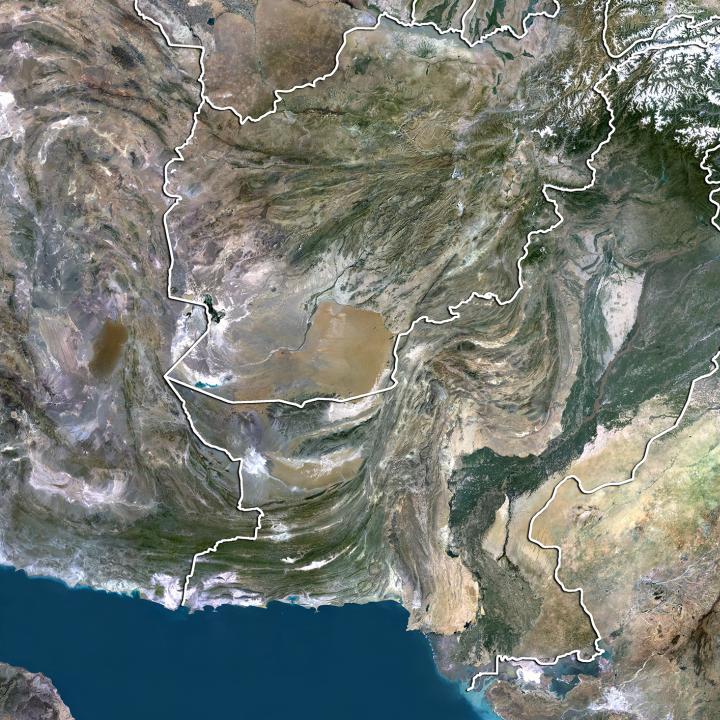
On February 26, the Taliban’s Islamic Emirate of Afghanistan conducted airstrikes against Pakistani military targets as part of a conflict that has intensified since the U.S. withdrawal from Afghanistan in August 2021. A main driver has been the Afghan Taliban’s backing of the Tehrik-e-Taliban Pakistan (TTP) insurgency in the ensuing four and a half years. Then, on February 28, the United States and Israel launched Operations Epic Fury and Roaring Lion against Iran, effectively continuing the military conflict begun during missile-exchange rounds in 2024 and the twelve-day war in June 2025. Despite the distinctness of these two conflicts, they carry linkages and could converge further, requiring a thoughtful policy response on multiple levels.
The AfPak Theater
Ever since the United States withdrew from Afghanistan, the Taliban’s allies in Pakistan—including TTP and smaller groups affiliated with al-Qaeda—have strengthened their insurgency. Previously, during the two decades of U.S. occupation in Afghanistan, Pakistan differentiated between what it described as the “bad” Taliban at home (TTP) and the “good” Taliban in Afghanistan, yet in recent years Islamabad has come to realize that the Afghan Taliban is assisting TTP and thus undermining the Pakistani state. Figures on attacks bear out this recognition: whereas in February 2021—before the U.S. withdrawal—TTP conducted 15 attacks in Pakistan, the number rose to 22 in February 2022, 29 in February 2023, 64 in February 2024, 147 in February 2025, and 352 this past month. This increasing strength has allowed TTP to begin recruiting in Bangladesh via a local jihadist faction called Jamaat al-Ansar fil Hind al-Sharqiya.
Rising alongside TTP are various al-Qaeda groups, affiliates, and cutouts. Since the Taliban’s return to power, al-Qaeda leader Saif al-Adel, who is based in Iran, and the group’s branch in the Indian subcontinent have resumed operations resembling those pre–September 11: that is, providing venture capital to “startup” jihadist groups and serving as military contractors involved in specialized training. In the latter capacity, al-Qaeda has helped the Afghan Taliban and TTP, respectively, to consolidate a state and build an insurgency. Al-Qaeda elements have also helped reinforce Ittihad Mujahidin Pakistan and Ansar al-Islam Pakistan in the past year as part of a broader effort to destabilize the Pakistani state. Assuming al-Qaeda remains a jihadist entrepreneur, it may want to expand such efforts by plotting attacks abroad as in the past. Thus, the context and environment might be different from that pre-9/11, but al-Qaeda and its peers deserve more attention at a time when policy initiatives are focused elsewhere.
Outside the jihadist context, the nationalist Balochistan Liberation Army is also carrying out an insurgency against Pakistan, alleged by the government to have Iranian backing. In turn, neighboring Iran has accused Islamabad of backing the Islamist-led Baluch insurgency in Iran. Associated tensions led to an exchange of missiles between the two countries in January 2024.
Al-Qaeda’s base in Iran could offer leverage in the war against Israel and the United States, especially given continued calls by the jihadist group for attacks against Jews and Westerners abroad. Moreover, since the October 7, 2023, massacre, al-Qaeda has become more sympathetic to Hamas’s cause, discarding past ideological differences with the group. Another angle exists, encompassing Pakistan and Saudi Arabia: after Iranian missiles struck the kingdom during the current war, Islamabad reminded Tehran of its mutual defense pact with Saudi Arabia. One can thus imagine the two zones of conflict merging, characterized by overlapping ethnic and religious terrorism and insurgency.
The Iran Theater
Although the Iran war could play out in any number of ways, one scenario worth considering is a civil war that not only damages Iran’s national fabric but undermines regional and global stability. In post-9/11 conflicts that saw U.S. involvement—notably, Afghanistan, Iraq, Libya, and Syria—civil wars became incubators for ethnic and religious tensions that produced these very consequences.
Iran itself hosts long-established separatist movements including the Kurds, Arabs, and Baluch that—in a civil war context—could militarize and establish zones of influence in competition with and possibly outside control of the state. External states and actors could try to push these dynamics toward undermining the Islamic Republic’s stability and power projection—whether Israel or Iraqi Kurdistan with the Kurds, the Gulf states with the Ahwazi (Khuzestani) Arabs, or possibly Pakistan with the Islamist Baluch, as described earlier in the tit-for-tat involving the group. An Ahwazi faction claims to have attacked Iranian security officials in the current war, and the two main Baluch actors in Iran—Jaish al-Adl and Ansar al-Furqan—have increased their attacks while calling for more Sunni recruits.
Another risk involves potential calls for an expanded Azerbaijani state, to include ethnically Azeri areas of Iran. Such a development would inevitably spark a military campaign between the two states. The broader notion of separatism also faces criticism from Iran’s traditional opposition in the diaspora and the domestic majority ethnic Persian population.
On the terrorism front, the Islamic State’s Khorasan “province” (ISKP) poses a serious risk. The group has already carried out three major attacks in Iran in recent years, killing hundreds. ISKP has used networks in the AfPak region and Turkey to execute these attacks as well as others that were ultimately foiled. While the IS branch is unlikely to garner broad-based support, it could nevertheless undermine stability throughout the country.
So far in the Iran war, direct proxies and supporters of the Islamic Republic have carried out high-profile missile attacks against Bahrain, Iraqi Kurdistan, Jordan, Kuwait, and Syria. They have also targeted U.S. diplomatic facilities in Bahrain, Iraq, and Pakistan, and possibly Canada and Norway. In Belgium, an Iranian proxy group claimed responsibility for a recent attack on a synagogue. Such activity comes in the context of U.S. announcements that Iran is activating sleeper cells in the West. Resulting plots might resemble the foiled 2011 assassination attempt against the Saudi ambassador in Georgetown or the stabbing of writer Salman Rushdie in western New York in 2022. Individuals may likewise be inspired to conduct attacks on Iran’s behalf out of religious fervor, following the IS model, or disapproval with U.S. foreign policy, as with the March 2026 shooter in Austin who killed four and injured fifteen.
What Policymakers Should—and Should Not—Do
In acknowledging that developments in the AfPak theater will likely affect Iran and vice versa, U.S. officials must ensure policy coordination across silos in the national security apparatus. While these locales both fall within the U.S. Central Command area of responsibility, bureaucracy could impede coordination within the State Department and other agencies more tightly organized by region.
- For Pakistan, this will require diplomatic engagement aimed at permanently dismantling the idea of a “good” versus “bad” Taliban. Washington should likewise explore increased counterterrorism intelligence cooperation with Islamabad—and could also offer to restart drone strikes in the AfPak theater to degrade threats from groups that threaten not only Pakistani but also regional and global security.
- For Iran, Washington must understand that a state undergoing civil war will expand the risk of terrorism from ISKP. The United States should in turn push for greater cooperation between Pakistan and Turkey on the ISKP regional threat, considering the U.S. limitations on engaging Iran and Afghanistan regarding these issues. Increased border security for both countries could help stop the potential movement of ISKP operatives.
The United States should also avoid certain types of activism—namely, the backing of separatist projects that could undermine the Iranian state should the Islamic Republic or its Islamic Revolutionary Guard Corps ever fall. Reflecting recent lessons from a fractured Syria, Washington should regard Iran holistically and not seek to Balkanize it, which could lead to years of national conflict and regional instability.
Finally, the United States must safeguard its diplomatic facilities and economic interests amid increased threats. This will entail strengthening the security of allies around the world where Iran has previously plotted attacks. To prevent attacks on U.S. soil, the United States should push for increased information sharing between the FBI and local law enforcement on immediate threats from Sunni and Shia jihadists alike.
However the conflicts in AfPak and Iran evolve, the United States must heed post-9/11 lessons learned related to terrorism and insurgency, even if the threat landscape might appear different today. Otherwise, it risks repeating mistakes made in Afghanistan, Iraq, Libya, Syria, and elsewhere.
Aaron Y. Zelin is the Gloria and Ken Levy Senior Fellow at The Washington Institute.