
TWI logo The Washington Institute for Near East Policy
logo
wordmark
Homepage

Main navigation

  • Analysis
  • Experts
  • About
  • Support
  • Maps & Multimedia
Trending:
  • Military & Security
  • Energy & Economics
  • Iran
  • Gulf States

Regions & Countries

  • Egypt
  • Gulf States
  • Iran
  • Iraq
  • Israel
  • Jordan
  • Lebanon
  • North Africa
  • Palestinians
  • Syria
  • Turkey

Issues

  • Arab & Islamic Politics
  • Arab-Israeli Relations
  • Democracy & Reform
  • Energy & Economics
  • Great Power Competition
  • Gulf & Energy Policy
  • Military & Security
  • Peace Process
  • Proliferation
  • Terrorism
  • U.S. Policy
TWI English
TWI Arabic: اللغة العربية Fikra Forum

Breadcrumb

  • Policy Analysis

Iran

Policy Analysis on Iran

Filter by:

Brief Analysis
Great Power Spillover from the Iran War: Implications for China, Russia, Turkey, and Europe
Washington Institute experts explain what U.S. officials and military planners should be on the lookout for as great power competitors and close allies outside the region consider their responses to the crisis.
Mar 6, 2026
◆
  • Grant Rumley
  • Henry Tugendhat
  • Anna Borshchevskaya
  • Soner Cagaptay
  • Souhire Medini
A USAF F-35 launches a missile in flight - source: Department of Defense
Brief Analysis
Assessing U.S. Progress in the Iran War
While the United States and Israel are winning based on measures like the degradation of Iran’s naval force and missiles, a broader victory will require securing domestic support and avoiding the maximalism that has hindered past American military efforts.
Mar 6, 2026
◆
  • Michael Singh
Map of Iran's Natanz nuclear facility after Israeli military strikes.
Articles & Testimony
The Abiding Question of the Iranian Bomb
The nuclear program is still the paramount threat, and both of the main options for permanently ending it are unpalatable—but Washington needs a plan nevertheless.
Mar 5, 2026
◆
  • Richard Nephew
Articles & Testimony
In the Middle East, Chaos Is Putin’s New Ally
Putin has been using his position in the region to chip away at Russia’s isolation during the Ukraine war, and another Middle East regime change won’t do much to change that strategy.
Mar 5, 2026
◆
  • Anna Borshchevskaya
Mojtaba Khamenei - source: Reuters
Brief Analysis
What Kind of Supreme Leader Would Mojtaba Khamenei Be?
Given his strong ties to the IRGC, Khamenei’s son might pursue extreme strategic options.
Mar 5, 2026
◆
  • Patrick Clawson
  • Farzin Nadimi
Protesters display Iranian, Syrian, Palestinian, and Hezbollah flags - source: Reuters
Brief Analysis
The Wartime Role of Iran’s “Axis”: Countering Proxy and Terrorist Threats
Washington Institute fellows assess how Hezbollah, the Houthis, Iraq’s Hashd, and other Iranian proxies and allies are responding to the war, as well as how the Trump administration and partner governments might counter the risk of terrorist attacks given Tehran’s long track record of foreign plots.
Mar 5, 2026
◆
  • Assaf Orion
  • Hanin Ghaddar
  • Michael Knights
  • April Longley Alley
  • Michael Jacobson
  • Matthew Levitt
President Trump meets with members of his administration, including Secretary of State Marco Rubio and chief of staff Susie Wiles, at the start of major combat operations against Iran in 2026 - source: White House
Articles & Testimony
The Confusion in Washington Spreads from the Top Down
There is the fog of war, and then there is the Trump administration.
Mar 3, 2026
◆
  • Simon Henderson
Smoke rises after an Iranian strike in Bahrain on March 2, 2026 - source: Reuters
Brief Analysis
War Comes to the Gulf
With Iran seemingly intent on continuing its strikes against Gulf targets and regional leaders mulling whether and how to respond, what can policymakers and military planners expect to see next in terms of likely target sets, risks to civilian areas, concerns over air defense munition supplies, and potential repercussions for energy and commercial shipping interests?
Mar 3, 2026
◆
  • Elizabeth Dent
  • Michael Eisenstadt
  • Noam Raydan
  • April Longley Alley
A flight deck crewman directs operations of an F-35 jet on board the USS Abraham Lincoln - source: Department of Defense
Video
Brief Analysis
The U.S. and Israel Strike Iran
Read or watch urgent insights into America’s objectives in Iran and the policies that would best advance U.S. security, help the Iranian people, and improve the prospects for long-term regional stability.
Mar 2, 2026
◆
  • Holly Dagres
  • Dennis Ross
  • Dana Stroul
  • Robert Satloff
Articles & Testimony
The Long, Sad History of U.S. Regime Change Promises
From FDR to the Bushes, Washington’s pledges to bring “freedom” to the Middle East have ended badly.
Mar 2, 2026
◆
  • Robert Satloff
Brief Analysis
Epic Fury and Roaring Lion: From War Scenarios to Pressing Postwar Questions in Iran
Washington Institute experts assess the immediate implications of U.S.-Israeli military strikes on Iran, including the regime’s future after major leadership losses, reactions inside Iran and Lebanon, the fallout for the Gulf states, the contours of potential diplomacy once the fighting stops, and more.
Mar 1, 2026
◆
  • Assaf Orion
  • Michael Eisenstadt
  • Holly Dagres
  • Patrick Clawson
  • Hanin Ghaddar
  • April Longley Alley
  • Richard Nephew
Iran's supreme leader, Ayatollah Ali Khamanei, gestures while speaking
Articles & Testimony
Ayatollah Ali Khamenei: An Obituary
Holly Dagres reflects on the rise and fall of Iran’s late leader, who maintained brutal theocratic rule at home and an anti-Western “axis of resistance” in the Middle East for decades.
Feb 28, 2026
◆
  • Holly Dagres
A man holds a newspaper featuring a photograph of U.S. President Trump and his Middle East advisor, Steve Witkoff, in Tehran - source: Reuters
Brief Analysis
Trump’s Best Options on Iran: Limited Strikes and Continued Military, Economic, and Diplomatic Pressure
Rather than choose between a narrow nuclear deal and open-ended war, the United States should conduct limited military strikes against Iran’s missile program and security services and double down on a pressure strategy that was working.
Feb 25, 2026
◆
  • Michael Singh
U.S. President Trump walks with Israeli President Herzog and Prime Minister Netanyahu after arriving in Israel - source: The White House
Brief Analysis
On War with Iran, a U.S.-Israeli Division of Labor?
Believing that conflict is more likely than a diplomatic deal and that Israel will be involved in the fighting, Jerusalem has been intimately coordinating its military planning with Washington despite certain differences in their policy priorities.
Feb 25, 2026
◆
  • Michael Herzog
A photo illustration of a bust of President Trump and an Iranian flag - source: Reuters
Articles & Testimony
Trump and Iran Are Playing a Game of Chicken
Neither side seems to want a war, but they fear the costs of backing down and are apparently convinced the other side will blink first.
Feb 24, 2026
◆
  • Dennis Ross
Israeli F-15I fighters, a U.S. B-2 bomber, and Iranian Shahab-3 missile
Maps & Graphics
In-Depth Reports
Deterrence and Escalation Dynamics with Iran:
Insights from Four Decades of Conflict and a Twelve-Day War
The conflict in June 2025 laid bare longstanding misconceptions about escalation management with the regime and could hold lessons as the United States contemplates further military action.
Feb 20, 2026
◆
  • Michael Eisenstadt
A photo illustration shows US and Iranian flags and an atomic symbol - source: Reuters
Brief Analysis
A “Good Deal” with Iran? Requirements for Preventing a Future Nuclear Breakout
Setting aside the broader array of deep Western policy concerns about Iran—including its terrorism sponsorship, direct and proxy aggression against Israel and the Gulf states, and brutal violence against its own people—what nuclear terms would negotiators have to insist on to avoid the setbacks of the JCPOA process and keep the regime from acquiring nuclear weapons for the long term?
Feb 12, 2026
◆
  • Zohar Palti
U.S. and Iranian flags
Brief Analysis
Another Iran “Deal” Is Less Important Than Exerting U.S. Leverage
U.S. envoys should be focused less on making a deal and more on how they can use the prospect of imminent military strikes to secure concessions on the nuclear issue, missile threats, treatment of protesters, and other matters.
Feb 4, 2026
◆
  • Michael Singh
  • Richard Nephew
Articles & Testimony
EU Takes Aim at Tehran: IRGC Terror Listing Opens New Front in Europe’s Iran Policy
Besides the welcome symbolic value of taking action amid bloody regime crackdowns inside Iran, the designation gives multilateral law enforcement agencies and individual member states a powerful new tool set for limiting terrorist plots and criminal activity on their soil.
Feb 3, 2026
◆
  • Michael Jacobson
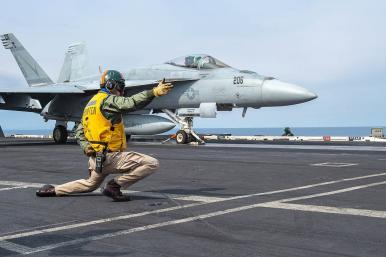
Flight deck crew issues commands to a U.S. Navy F/A-18 Super Hornet prior to launch from the carrier USS Harry S. Truman - source: Department of Defense
Brief Analysis
What If the United States Doesn’t Strike Iran?
No matter what President Trump may say about potentially securing “a good deal” from Iran, refraining from military action after weeks of dire U.S. warnings would likely convince Tehran that it can strike fear in other governments.
Feb 3, 2026
◆
  • Patrick Clawson

Pagination

  • Previous page ‹ Previous
  • First page « First
  • Page 1
  • Current page 2
  • Page 3
  • Page 4
  • Page 5
  • Page 6
  • Page 7
  • Page 8
  • Page 9
  • …
  • Last page Last »
  • Next page Next ›
Supported by the

Viterbi Program on Iran and U.S. Policy

Today, the Islamic Republic of Iran poses the most serious and urgent set of security challenges to the United States and its allies in the greater Middle East. Since the Khomeini revolution in 1979, Iran has sought to export its radical ideology through the use of terrorism, subversion, and support to ideological fellow-travelers throughout the Muslim world.

Sign Up for Email Updates from The Washington Institute

Never miss a breaking event on U.S. policy interests in the Middle East. Customize your subscription to our expert analysis, op-eds, live events, and special reports.

Sign up

Featured experts

Farzin Nadimi
Farzin Nadimi
Farzin Nadimi, a Senior Fellow with The Washington Institute, is a Washington-based analyst specializing in the security and defense affairs of Iran and the Persian Gulf region.
Holly Dagres
Holly Dagres
Holly Dagres is the Libitzky Family Senior Fellow in The Washington Institute's Viterbi Program on Iran and U.S. Policy.
Patrick Clawson
Patrick Clawson
Patrick Clawson is the Morningstar Senior Fellow and Research Counselor at The Washington Institute.
Background image with TWI branding
logo
wordmark
Homepage

1111 19th Street NW - Suite 500
Washington D.C. 20036
Tel: 202-452-0650
Fax: 202-223-5364

Footer contact links

  • Contact
  • Press Room
  • Subscribe

The Washington Institute seeks to advance a balanced and realistic understanding of American interests in the Middle East and to promote the policies that secure them.

The Institute is a 501(c)3 organization; all donations are tax-deductible.

Footer quick links

  • About TWI
  • Support the Institute
  • Alumni

Social media

  • The Washington Institute on Facebook facebook
  • The Washington Institute on X x
  • The Washington Institute on YouTube youtube
  • The Washington Institute on LinkedIn linkedin

© 2026 All rights reserved.

Footer

  • Employment
  • Privacy Policy
  • Rights & Permissions