- Policy Analysis
- Articles & Op-Eds
A Deal Could Leave Iran Fatally Weakened
Also published in Washington Post
The Trump administration won’t achieve all of its war goals, but it could still notch a strategic win with time.
No deal with Iran is ever simple to achieve. President Donald Trump keeps claiming that an agreement is close—even as the United States and Israel exchanged limited military blows with Iran—proving once again that current efforts to open the Strait of Hormuz and extend the ceasefire are no exception.
Only when the hostilities truly end will one be able to fully assess the scorecard. In the short term, Iran has proven surprisingly deft at using its leverage. But over the long haul, the internal incoherence and deep-rooted failures of the Islamic Republic may yet lead to historic changes for the better in Tehran.
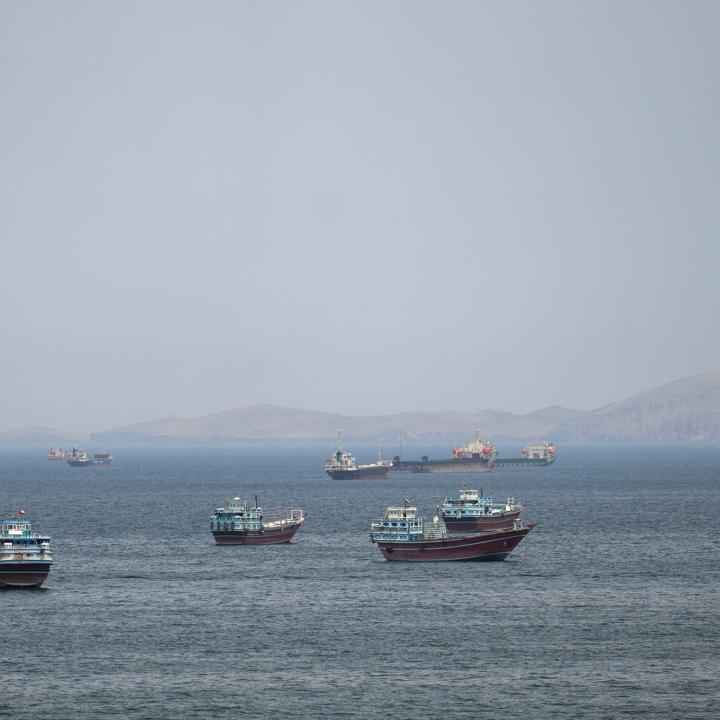
At this point, it’s clear that Iran has two powerful levers it did not think to apply before this conflict: disrupting transit through the Strait of Hormuz and attacking its Gulf Arab neighbors’ oil facilities. That newfound leverage provides Iran clear gains from the war.
But Iran has also suffered profound losses to its military capabilities and defense industrial base, not to mention to an economy that is near collapse. Once the war ends, Iran’s leaders will have to contend with the inner contradictions of the Islamic Republic and its failures to provide for the Iranian people—without the war as an excuse for failing to address them.
Few imagined that the Iranians would be able to assert so much leverage after the U.S. and Israel claimed to have hit more than 13,000 targets in Iran. It was Trump’s inability to decide whether his objective was regime change or just weakening the regime’s means to threaten others that helped produce this new reality. Had Trump targeted only Iran’s ballistic missiles, cruise missiles, drone inventories and production facilities—holding the threat against the regime’s leadership in reserve—he would have weakened Iran’s capabilities to threaten its neighbors even as he gave Iran’s leaders a reason not to close the strait.
Since 1987-88, the Iranians have made no effort to close the strait precisely because Iran’s leaders understood that to do so would produce a war that could threaten the regime. And regime survival has always been the Islamic Republic’s highest priority. But once Trump went for decapitation, Iran’s leaders knew they had nothing to lose, and closure became their major point of strategic leverage.
Trump belatedly acted to reduce Tehran’s leverage by imposing a blockade on its exports and imports. But only by using U.S. forces to reopen the strait—something he threatened briefly with the swiftly aborted Project Freedom—could Trump have denied Iran this lever and altered its calculus.
Opening the strait would have taken time, and was far easier to say than to do given the threat of Iranian mines, fast boats, drones and ballistic and cruise missiles. In addition, several Gulf states likely conveyed their concerns that trying to do so would trigger Iranian retaliation against them—and weren’t convinced that the U.S. could provide them sufficient protection. In any case, Trump backed down, as he did at several other points in the war, and in doing so further damaged his own diplomacy.
Moreover, even if the Iranians accept normal transit through the strait, no one should be surprised if, after a few months, they start challenging some shipping over violating Iranian rules or start requiring new “navigational fees.” The Iranians will play games to signal to their neighbors that they will not go back to the status quo ante—understanding (probably correctly) that Trump will not resort to force over “marginal” violations of agreements.
Much will depend on how much of an economic lifeline Trump provides to Iran in the form of sanctions relief or acceptance of a reconstruction fund. U.S. officials are saying there will be no real sanctions relief unless Iran proves responsive on the nuclear issue—especially the removal of Iran’s 440-kilogram stockpile of 60 percent highly enriched uranium. (It’s possible the deal will fall apart based on what seem to be different understandings on this very issue—as well as others, including a precarious ceasefire in Lebanon.)
But even if Trump doesn’t achieve his declared objectives—which have at various times included getting Iran’s “unconditional surrender,” limiting the rebuilding of Tehran’s ballistic-missile program and defense infrastructure and stopping Iran’s support for its proxy network—he may yet achieve more than he now seeks in one area: the potential for change inside Iran. The regime’s endemic corruption and massive mismanagement will be compounded by its new leadership’s attempts to rebuild its military and defense industrial base. That will require huge resources, which won’t be reconcilable with the needs of the civilian economy, the current crisis of mass unemployment and the regime’s chronic inability to meet the most basic requirements of governance: delivery of water, electricity and a currency that has any value.
After the 12-day war last June, Iranians started questioning the high costs incurred by the country, and the wisdom of the late Ayatollah Ali Khamenei’s strategy of supporting Tehran’s regional proxy network. Those voices have not disappeared, even if they, and a broader alienated public, are quiet for now. But as discontent inevitably builds, they won’t remain so. At a minimum, a smart deal would limit the sanctions relief to Iran as much as possible. Relief would only buy the regime time.
But even with aid, Tehran’s ability to manage its domestic woes will remain limited, and the internal pressures will build. They may not lead to the collapse of the regime, but they could produce what Khamenei greatly feared: the emergence of an Iranian Gorbachev—a leader who wants to prioritize domestic development, reach out to the public and end confrontation with the outside world as organizing principles.
There were surely better ways to exacerbate the contradictions within the Islamic Republic. But Trump’s war of choice may yet prove to be one that led, in time, to genuine change in Tehran.
Dennis Ross is the Davidson Distinguished Fellow at The Washington Institute and a former senior U.S. official in the Reagan, Bush, Clinton, and Obama administrations. This article was originally published on the Washington Post website.