

TWI logo The Washington Institute for Near East Policy
logo
wordmark
Homepage

Main navigation

  • Analysis
  • Experts
  • About
  • Support
  • Maps & Multimedia
Trending:
  • Military & Security
  • Proliferation
  • Israel
  • Iran
  • Lebanon
  • Syria

Regions & Countries

  • Egypt
  • Gulf States
  • Iran
  • Iraq
  • Israel
  • Jordan
  • Lebanon
  • Middle East
  • North Africa
  • Palestinians
  • Syria
  • Turkey

Issues

  • Arab & Islamic Politics
  • Arab-Israeli Relations
  • Democracy & Reform
  • Energy & Economics
  • Great Power Competition
  • Gulf & Energy Policy
  • Military & Security
  • Peace Process
  • Proliferation
  • Terrorism
  • U.S. Policy
TWI English
TWI Arabic: اللغة العربية Fikra Forum

Breadcrumb

  • Policy Analysis

Democracy & Reform

Policy Analysis on Democracy & Reform

Filter by:

Articles & Testimony
In the Regional Power Struggle, has Erbil Decided to Join the Sunni Bloc?
The security of the Kurdistan Region-Iraq (KRI) depends more on agreements between Erbil and Kurdistan’s neighbors than the KRI’s own security and intelligence capabilities. Whenever the regional powers surrounding the KRI have suspected that their interests are at risk, they have not hesitated to put the KRI’s security and stability
Jan 29, 2016
◆
  • Frzand Sherko
Articles & Testimony
The Case for Turkey’s EU Membership
Turkey is poised to become the most pivotal country of the Middle East. Turkey’s position as the geographical, historical, religious and cultural bridge between Europe and Asia leaves it uniquely situated in the region. It is also a close regional ally of Israel and the major Arab powers of Saudi
Jan 28, 2016
◆
  • Maurizio Geri
Articles & Testimony
Kemal Erdogan's Second Turkish Revolution
The Turkish leader seems intent on uprooting the Ottoman legacy and restoring Islam's central role.
Jan 25, 2016
◆
  • Soner Cagaptay
Articles & Testimony
The Truth About Sectarianism
Rather than postulating alternatives to centuries-old sectarian doctrines, Washington should focus on preventing exploitative actors from institutionalizing their violent vision through schools and bureaucracies.
Jan 25, 2016
◆
  • Jacob Olidort
Articles & Testimony
Biden Should Ask Turkey to Double Down on Its Commitment to the West
Although Ankara is seemingly responding to westward-oriented pressures at home and abroad, it could still swing Turkey back to the right if it continues to pursue the politics of religion, especially while the Islamic State looms on its borders.
Jan 23, 2016
◆
  • Soner Cagaptay
Articles & Testimony
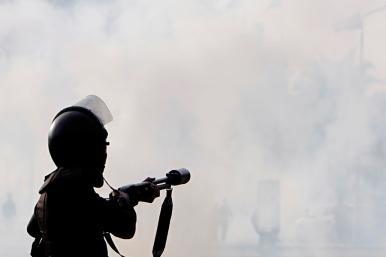
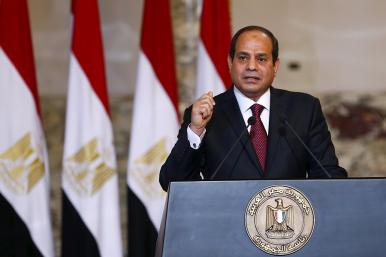
Sisi's Fracturing Regime
Egypt's strongman is cracking down ahead of the revolution's fifth anniversary, but the real threat he faces isn't from protests.
Jan 22, 2016
◆
  • Eric Trager
Brief Analysis
Iran's Parliamentary Elections: Inside the Candidate Approval Process
As in past elections, the Guardian Council seems poised to disqualify thousands of registered Majlis candidates, and its procedures for doing so are revealing.
Jan 22, 2016
◆
  • Patrick Schmidt
Articles & Testimony
Facts and Fictions: A Defense of the U.S.-Saudi Relationship
Despite very different values and tactical preferences, Washington and Riyadh continue to share important strategic interests, and it would be the height of folly to throw them overboard because of misguided reactions to recent events.
Jan 21, 2016
◆
  • David Pollock
Articles & Testimony
Saudi Female Victory in Municipal Elections: Overrated or Underestimated?
Around twenty Saudi women won municipal elections last month, and the news of Saudi women making history through political participation went viral. Talk shows discussed Saudi women’s victory and social media networkers congratulated Saudi women for their remarkable accomplishment. While some commentators overrated women's gain on the political level, others
Jan 20, 2016
◆
  • Heba Albeity
Articles & Testimony
The Brotherhood Breaks Down
Although the group's vision for establishing an Islamist state in Egypt won't evaporate, the rigid internal discipline that defined its decisionmaking and mobilization is now a thing of the past.
Jan 17, 2016
◆
  • Eric Trager
  • Marina Shalabi
Articles & Testimony
A Counterterrorism Restructuring That Can't Work Without Funding
The recent reorganization of U.S. government efforts to counter violent extremism is a good step in terms of aligning people and objectives, but the serious money required to get an initiative like this off the ground has yet to materialize.
Jan 16, 2016
◆
  • Matthew Levitt
In-Depth Reports
The Islamic State's Territorial Methodology
In this new study, jihadi expert Aaron Y. Zelin provides a framework for understanding how the Islamic State goes from no control to full consolidation of control in a particular area. Three case studies show how this framework plays out ...
Jan 15, 2016
◆
  • Aaron Y. Zelin
Brief Analysis
The Tunisian Democratic Experiment Five Years In
The lone Arab Spring success story has much to be proud of, but considerable challenges remain, and Tunisia will need significant American assistance for the foreseeable future.
Jan 13, 2016
◆
  • Sarah Feuer
Brief Analysis
Egypt's New Parliament Convenes: Making Sense of the Salafi Members-Elect
For now, the handful of Nour candidates who won seats are seemingly content to continue endorsing the Sisi government, but political opposition and violence outside parliament may prove much more significant to how Egypt's Salafis divide in the future.
Jan 8, 2016
◆
  • Jacob Olidort
Articles & Testimony
America May Have Unlocked a Key to Fighting Terrorism -- and It Doesn't Involve Drones
A holistic approach to counterterrorism demands more than just a 'capture and kill' posture, and new funds for relevant State Department programs are a step in the right direction.
Jan 8, 2016
◆
  • Matthew Levitt
In-Depth Reports
The Algerian Conundrum:
Authoritarian State, Democratic Society
This essay, the third in a series exploring prospects for political reform throughout the region, considers the strengths and limitations of democratic-style reformers in Algeria today.
Jan 5, 2016
◆
  • John P. Entelis
Brief Analysis
Riyadh's Message Is to Washington as Well as Tehran
Unless the Obama administration demonstrates stronger resolve in responding to Iranian aggression, the Saudis and other Gulf monarchies will continue to take vigorous action of their own, likely in ways Washington finds unhelpful.
Jan 4, 2016
◆
  • Patrick Clawson
Articles & Testimony
The Right Question About the Islamic State's Ideology
Efforts to defeat the Islamic State cannot succeed without making clear to the group's adepts that their vision for society has no chance of remaining an effective battle cry in the long term, much less becoming a functioning state.
Dec 24, 2015
◆
  • Jacob Olidort
Brief Analysis
Sanctions Relief Is Not the Key to Iran's Economy
Rouhani's election pledge to improve the economy by resolving the nuclear issue is not working particularly well because of the many domestic policy challenges.
Dec 23, 2015
◆
  • Patrick Clawson
Articles & Testimony
The Use of Violence in Libya
While the onus of change is on Libyans themselves, the international community must also take a stand against the various extremist political movements impeding a peaceful solution, whether they are Islamist or 'liberal.'
Dec 18, 2015
◆
  • Nisreen Amer

Pagination

  • Previous page ‹ Previous
  • First page « First
  • …
  • Page 54
  • Page 55
  • Page 56
  • Page 57
  • Current page 58
  • Page 59
  • Page 60
  • Page 61
  • Page 62
  • …
  • Last page Last »
  • Next page Next ›
Supported by the

Project Fikra: Defeating Extremism through the Power of Ideas

Fikra n. [Arabic] "Idea"

The Washington Institute's Project Fikra is a multiyear program of research, publication, and network-building designed to generate policy ideas for promoting positive change and countering the spread of extremism in the Middle East.

Sign Up for Email Updates from The Washington Institute

Never miss a breaking event on U.S. policy interests in the Middle East. Customize your subscription to our expert analysis, op-eds, live events, and special reports.


Sign up

Featured experts

Catherine Cleveland
Catherine Cleveland
Catherine Cleveland is The Washington Institute's Croft-Wagner Family Senior Fellow and managing editor of Fikra Forum.
Ben Fishman
Ben Fishman
Ben Fishman is the Steven D. Levy Senior Fellow in the Linda and Tony Rubin Program on Arab Politics at The Washington Institute, where he focuses on North Africa.
Background image with TWI branding
logo
wordmark
Homepage

1111 19th Street NW - Suite 500
Washington D.C. 20036
Tel: 202-452-0650
Fax: 202-223-5364

Footer contact links

  • Contact
  • Press Room
  • Subscribe

The Washington Institute seeks to advance a balanced and realistic understanding of American interests in the Middle East and to promote the policies that secure them.

The Institute is a 501(c)3 organization; all donations are tax-deductible.

Footer quick links

  • About TWI
  • Support the Institute
  • Alumni

Social media

  • The Washington Institute on Facebook facebook
  • The Washington Institute on X x
  • The Washington Institute on YouTube youtube
  • The Washington Institute on LinkedIn linkedin

© 2026 All rights reserved.

Footer

  • Employment
  • Privacy Policy
  • Rights & Permissions