Skip to main content
The Washington Institute for Near East Policy
Menu
Toggle Main Menu
Homepage
Main navigation
Analysis
Experts
About
Support
Maps & Multimedia
Trending:
Terrorism
Great Power Competition
Iran
Lebanon
Gulf States
Toggle List of
All Regions & Issues
Regions & Countries
Egypt
Gulf States
Iran
Iraq
Israel
Jordan
Lebanon
North Africa
Palestinians
Syria
Turkey
Issues
Arab & Islamic Politics
Arab-Israeli Relations
Democracy & Reform
Energy & Economics
Great Power Competition
Gulf & Energy Policy
Military & Security
Peace Process
Proliferation
Terrorism
U.S. Policy
Close List of All Regions and Issues
Close
Search Policy Analysis
TWI English
TWI Arabic:
اللغة العربية
Fikra Forum
Close Menu
Close
Search Policy Analysis
Search
Policy Analysis
Filter by:
Keyword
Region
- Any -
Egypt
Gulf States
Iran
Iraq
Israel
Jordan
Lebanon
North Africa
Palestinians
Syria
Turkey
Issue
- Any -
Arab & Islamic Politics
Arab-Israeli Relations
Democracy & Reform
Energy & Economics
Great Power Competition
Gulf & Energy Policy
Military & Security
Peace Process
Proliferation
Terrorism
U.S. Policy
Media type
- Any -
Audio
Maps & Graphics
Multimedia
Video
Date Published
- Any -
Past 7 Days
Past 30 Days
Past Year
Custom range...
Start date
End date
Type
- Any -
Articles & Testimony
Brief Analysis
In-Depth Reports
Sort by
Oldest first
Newest first
Found
12209
results
Brief Analysis
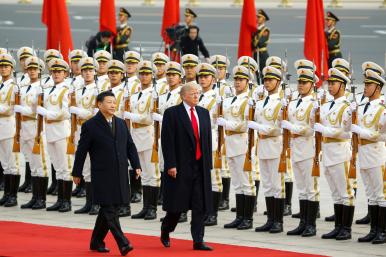
What Will Trump and Xi Have to Say About the Middle East?
Washington should use this summit to convince China to put more pressure on Iran and establish safeguards on AI, but without conceding on other critical issues like Taiwan.
Sep 22, 2026
◆
Grant Rumley
Elizabeth Dent
Brief Analysis
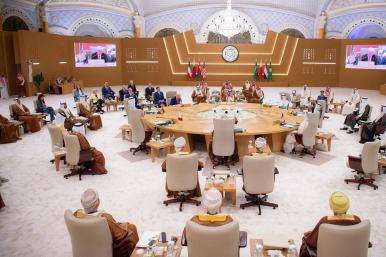
Trump’s GCC Meeting: A Path Out of the Conflict
Given this month’s shifting threat picture, the administration should push for another compromise deal similar to the June MOU—though getting Iran back to the table will require accepting certain escalatory risks and providing more concrete security guarantees to increasingly vulnerable Gulf partners.
Sep 21, 2026
◆
James Jeffrey
Brief Analysis
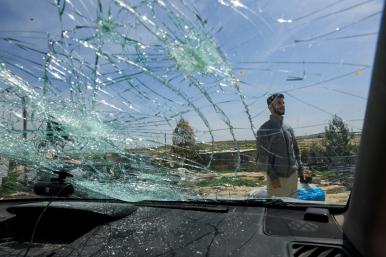
Extremist Settler Terrorism and Violence in the West Bank: New Data Calls for a New Strategy
Acts of violence by extremist settlers have risen sharply in scale and severity, shifting from largely reactive incidents to a more proactive, strategic effort aimed at displacing Palestinian communities and seizing territory.
Sep 18, 2026
◆
Neomi Neumann
Brief Analysis
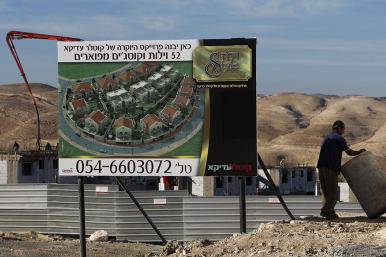
Settlements Trade Ban: Europe and Israel on a Collision Course Over the West Bank
Although the unprecedented decision to jointly prohibit trade with settlements raises difficult diplomatic and political questions amid a weighty Israeli election cycle, the announcement will also have important effects beyond that date, signaling that many countries will prioritize this issue in their relations with whatever government voters choose.
Sep 18, 2026
◆
Pierre-Arnaud Blanchard
Brief Analysis
Iraq’s Militia Balancing Act Gets Trickier Amid Deadlines and Saudi Attacks
As the September 30 disarmament deadline for PMF militias approaches, Washington should support the Zaidi government’s efforts and ensure that the militias’ concessions are real.
Sep 18, 2026
◆
David Schenker
Articles & Testimony
Hormuz Shuttle Tankers: An Evolving Trend Amid the Iran War
Ship-to-ship transfers in the Gulf of Oman have provided a helpful export alternative for regional oil producers, but this shuttle trade will likely remain a target for Iranian attacks.
Sep 17, 2026
◆
Noam Raydan
Articles & Testimony
The Real U.S.-Saudi Nuclear Deal Is Better Than We Thought
Some textual concerns persist, such as how to handle the risk of Saudi cheating and avoid setting bad precedents, but the official agreement has several worthwhile provisions that reduce the intrinsic risk of nuclear trade.
Sep 17, 2026
◆
Richard Nephew
Articles & Testimony
Jordan’s Strategic Importance to Washington Increases
Given the heavy damage inflicted on more vulnerable facilities closer to Iran, Jordan has emerged as perhaps the most critical center for America’s regional military activities for the current crisis and beyond.
Sep 17, 2026
◆
David Schenker
Brief Analysis
Building an Effective Train-and-Equip Mission for Lebanon Post-UNIFIL
Authorities should view the end of UNIFIL not as a prelude to a security vacuum, but as a chance to establish a workable U.S.-led transition mechanism that brings in Arab, European, and international partners, with the ultimate goal of helping Lebanon exercise full sovereignty over its territory without the support of foreign forces.
Sep 16, 2026
◆
Zohar Palti
Brief Analysis
How Iran Might Rebuild Its Devastated Military: Courting Risk by Reinforcing Success
Tehran will likely double down on missiles and drones—its most effective weapons during recent conflicts—creating path dependencies that could become critical vulnerabilities if U.S. and partner countermeasures improve further.
Sep 15, 2026
◆
Michael Eisenstadt
Farzin Nadimi
Brief Analysis
Iraq’s Islamic State Trials: The U.S. Role
As Baghdad moves to the next phase for IS-linked detainees transferred from Syria, Washington should encourage repatriation, fair trials, and cooperation between partners on building a sustainable longer-term framework.
Sep 14, 2026
◆
Devorah Margolin
Articles & Testimony
Sudan’s Fractured Fighters
The conditions that created the war will likely recur if Sudan’s military stays fragmented between so many semi-autonomous armed groups.
September 2026
◆
Areig Elhag
Articles & Testimony
Getting Iran Policy Back on Track
Despite its underwhelming results, the war has demonstrated that many American partners in the region are able and willing to shoulder a greater burden in securing common interests—though that may not mean much without a more careful and collaborative U.S. policy planning process.
Summer 2026
◆
Michael Singh
Articles & Testimony
Iran’s Second Front
The latest Houthi offensive has shattered the status quo along Yemen’s west coast, upended a years-long truce, and set the stage for further consolidation of their control in the north—but the victory is also Iran’s.
Sep 11, 2026
◆
April Longley Alley
Allison Minor
Articles & Testimony
9/11 Led to an Explosion of Counterterrorism Expertise. Are We Squandering It?
America’s institutional knowledge about global jihadist terrorism took decades to accumulate, but it could disappear much faster.
Sep 9, 2026
◆
Aaron Y. Zelin
Articles & Testimony
Twenty-Five Years After Sept. 11, We’re Losing Sight of the Threat
The United States is safer from catastrophic terrorism, but emerging technologies, weakened international partnerships, and allied military drawdowns in Africa are creating new blind spots.
Sep 10, 2026
◆
Michael Jacobson
Scott Allan
Video
Brief Analysis
25 Years After 9/11: NCTC Directors Assess Progress and Remaining Challenges
Three top former counterterrorism officials look back on a quarter-century of combating the global terrorist threat, discussing how their setbacks and successes can help Washington fill gaps in its current CT approach.
Sep 9, 2026
◆
Christine Abizaid
Matt Olsen
Nicholas Rasmussen
◆
Counterterrorism Lecture Series
Brief Analysis
Countering Hezbollah’s Reconstruction Politics and the Council for South Lebanon
Hezbollah and Amal are already manipulating where donor funding goes and who gets credit for reconstruction, so Washington and its partners should coordinate ways to bypass them before the country’s wider reconstruction effort begins in earnest—starting with the first batch of “pilot zones.”
Sep 9, 2026
◆
Hanin Ghaddar
Articles & Testimony
Why US Aid to the Lebanese Armed Forces Should Come with Conditions
Given the lack of Lebanese political will on display so far, the Trump administration and Congress need to take a tough-love approach.
Sep 9, 2026
◆
David Schenker
Articles & Testimony
The Fate of Global Jihadism Today: Internally Resilient, Strategically Deprioritized
Although America’s defensive and preventive mechanisms are much stronger today, the global jihadist situation in 2026 is uncomfortably similar to the 1990s, when the movement was treated as a manageable nuisance even as it quietly consolidated sanctuaries, built financial autonomy, and experimented with new methods of attack.
September 2026
◆
Aaron Y. Zelin
Pagination
Previous page
‹‹
First page
« First
Page
1
Current page
2
Page
3
Page
4
Page
5
Page
6
Page
7
Page
8
Page
9
…
Last page
Last »
Next page
››