- Policy Analysis
- PolicyWatch 4240
Changing Iran’s Coercive Calculus Requires More Than Massing U.S. Forces
Jul 24, 2026
Also available in
About the Authors

Brief Analysis
Regardless of where the current round of escalation goes, Tehran will continue using ceasefires, front-loaded sanctions waivers, and tit-for-tat attack cycles as opportunities to reconstitute its forces until Washington imposes hard, verifiable limits on its fastest-recovering asymmetric capabilities.
A week after the U.S.-Iran memorandum of understanding (MOU) collapsed, military hostilities are once again escalating rapidly. Even amid funeral ceremonies for the deceased Supreme Leader Ali Khamenei, Iran launched missile and drone attacks on vessels using the Omani corridor in the southern part of the Strait of Hormuz, punishing Muscat for refusing to accept the regime’s demands on monetizing the international waterway. This prompted renewed U.S. strikes on Iranian coastal surveillance assets, air defenses, antiship missiles, drone facilities, command and communications nodes, small boats operated by the Islamic Revolutionary Guard Corps (IRGC), and dual-use harbors. The regime then retaliated with strikes against bases hosting U.S. personnel, logistics, and infrastructure in Kuwait, Bahrain, Jordan, Oman, the Kurdistan Region of Iraq, and Qatar. The cycle culminated in the full reinstatement of the U.S. naval blockade against Iran on July 13 and the revocation of General License X (GLX), which had briefly waived sanctions on the regime’s oil industry.
The Trump administration’s latest statements and military deployments indicate that further escalation may be imminent. Yet no U.S. or allied operations are likely to succeed in broader strategic terms unless they include more coherent, wide-ranging plans for countering both the military assets and procurement networks that enable Iran to continue threatening commercial shipping traffic and other regional targets.
The Current Situation
The conflict has already entered a more dangerous phase of sustained attrition since the MOU faltered. On one side, the United States has been gradually degrading Iran’s military capabilities, especially its ability to deploy the coastal missile and drone forces that pose the greatest maritime threat. This is the primary operational design set forth by U.S. authorities—though some observers have interpreted Washington’s pace of operations as reactive because recent strikes have seemingly followed Iranian attacks in a tit-for-tat cycle that gives the regime its choice of timing and targets.
On the other side, Iran is conducting a deliberate counter-force campaign focused on imposing greater costs on U.S. command, radar, and logistics nodes across the region. These efforts are likely aided by Russian and Chinese intelligence and technical support, as suggested by Western assessments of improved Iranian targeting precision. Tehran’s aim is to raise the price of the American presence without triggering a wider war that would bring Israel back into direct combat.
This escalation has quickly affected the energy and commercial sectors. For instance, various shipping data shows a further drop in the already limited traffic passing through the Strait of Hormuz, and Qatar is holding larger volumes of liquefied natural gas in floating storage. Meanwhile, Iran’s Houthi partners in Yemen have been projecting defiance again by announcing a blockade of Saudi ports via another key chokepoint, the Bab al-Mandab Strait, and firing on at least one Saudi tanker. In response, vessels bound for the kingdom’s Red Sea facilities have been turning around.
This crystallizes both the risks and partial effectiveness of Tehran’s approach. Its campaign violates international law, harms Iran’s own exports, draws pushback from Oman and the Gulf states, and may wind up triggering further major hostilities with the United States and Israel. Yet Iran is also achieving measurable effects: it has roiled U.S. domestic politics by killing Americans and forcing responses to its strikes; strained Washington’s logistics by forcing it to move some regional assets farther away; imposed costs on U.S. partners in the Gulf; reaped billions in sanctions relief during the brief MOU period; kept Israel out of the fight (though perhaps not for long); and continued to complicate freedom of navigation. Unless the Trump administration articulates and demonstrates a clear counter-strategy and robust coalition arrangements (including with Israel), Tehran will presumably continue this attritional approach while reconstituting its war-damaged capabilities—something it has repeatedly proven capable of doing under pressure.
Military Reconstitution Even Under Fire
Many of Iran’s most threatening capabilities depend on a dizzying assortment of military and dual-use procurement activities at home and abroad, the majority of which have persisted throughout the war, the MOU period, and the current post-MOU period. Although military strikes, port blockades, and sanctions help curtail these activities to varying degrees, the regime’s network of front companies, dual-use commercial channels, grey markets, and industrial workshops has nevertheless proven resilient.
Notably, large portions of the relief imparted by GLX were front-loaded. According to TankerTrackers.com, about 80 million barrels of Iranian crude worth over $6 billion were shipped during the twenty-six days after the MOU was announced, including roughly 35 million barrels drawn from floating storage. That revenue has almost certainly been funding military reconstitution.
For now, Tehran is seemingly prioritizing the cheapest, fastest-to-field asymmetric systems that are producible in dispersed dual-use workshops or hardened tunnel complexes, alongside some reconstitution efforts in more visible locations. These systems include Shahed-type one-way attack drones, jam-resistant fiber-optic first-person-view (FPV) systems, 358-type loitering antiaircraft missiles, and navigation and swarm coordination systems that employ machine learning and artificial intelligence to navigate environments where global navigation satellite system usage is denied. As such, its foreign procurement activity will likely focus on missile seekers and propulsion, inertial navigation, specialized machine tools, drone engines, high-grade composites, mine fuses, underwater navigation equipment, autonomy processors, and other AI chips. Much of this activity already flows through commercial sources and grey-market networks that have adapted to sanctions and attacks. Given the reinstated U.S. naval blockade, the regime can be expected to rely more heavily on air and land routes to obtain these imports or direct them to its partners.
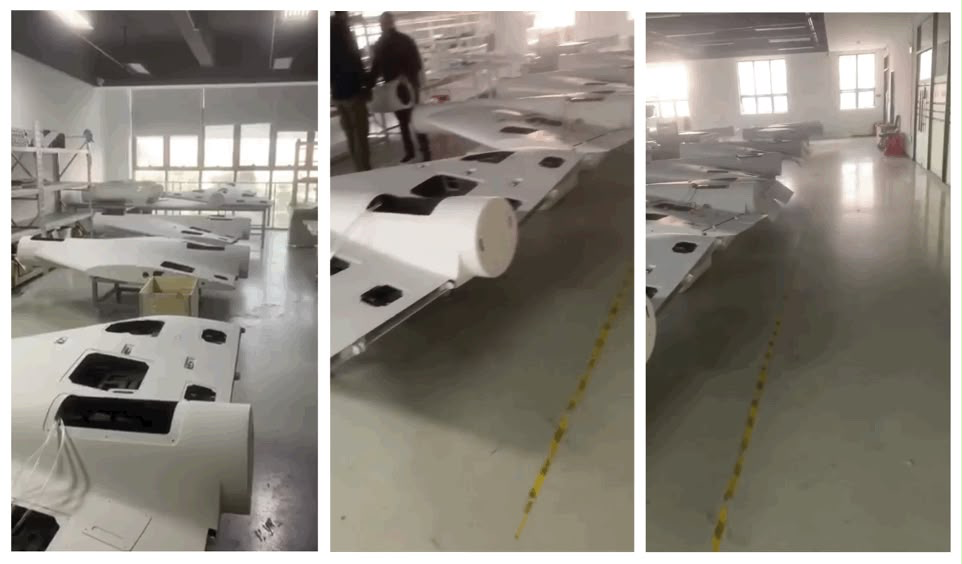

Tehran values the above weapon systems because they can deliver substantial tactical effects at low unit cost and be moved easily across theaters—a pattern underscored by recent seizures in Syria and Yemen of newly produced FPV drones, antitank missiles, and 358 loitering missiles en route to militia partners. Reports also indicate that Russia began delivering its own Geran-2 version of the Shahed-136 to Iran in March, incorporating combat modifications field-tested in Ukraine.
As for missiles, Iran possessed a large arsenal of short- and medium-range ballistic systems before the war and claims to have continued producing them at scale. U.S. and Israeli strikes are estimated to have eliminated about half of its production facilities, storage sites, and ready inventories, but the regime’s dispersed and hardened assets prevented total destruction. Moreover, the initial GLX revenue will likely enable Tehran to accelerate reconstitution of these missile types, incorporate limited upgrades, and produce more low-cost maritime denial tools such as mines and unmanned vessels.
For now, the regime is not expected to rapidly field new intermediate-range ballistic missiles (i.e., 3,000-5,500 kilometer range) or more advanced hypersonic systems. If U.S. pressure is sustained, it will likely limit the production of such systems for roughly one to three years, forcing Tehran to rely on its existing arsenal. Similarly, efforts to reconstitute its conventional airpower and large surface ships lag even further behind. Yet shorter-range missiles, drones, and other systems have proven more than capable of perpetuating a state of crisis in the Gulf for as long as the regime wishes, and the IRGC’s Qods Force has been sustaining its foreign militia partners on tighter budgets using existing stockpiles.
As for the nuclear program, it is unclear whether Tehran might pursue a crash weaponization effort anytime soon given escalation risks and concealment difficulties. Although fully assessing this threat is a subject for a separate analysis, U.S. officials will need to stay abreast of developing longer-term threats on this front as they formulate plans to address more immediate threats. Most notably, recent intermediate-class missile tests show continued progress on theoretical long-range nuclear delivery, while other program capabilities could be reconstituted inside the deeply hardened complex at Pickaxe Mountain.
One encouraging development is worth highlighting amid this litany of concerns: the cumulative damage wrought by months of allied strikes has likely left Tehran more dependent on foreign procurement and more vulnerable to external pressure. This is a vulnerability that Washington can—and must—exploit.
Elements of an Effective U.S. Counter-Strategy
Unless current U.S. operations are a prelude to a well-planned campaign with clear, effective objectives, Iran is likely to absorb the added pressure without returning to meaningful negotiations that involve surrendering its ability to constrict the Strait of Hormuz. Accordingly, the Trump administration will need to raise the political and operational costs of the regime’s attempts at coercion to the point where Tehran proves willing to let go of that lever. Threats of stronger military action against Iranian infrastructure are unlikely to reach that goal—at least not on their own, and not without raising the prospect of major costs and risks for the United States, its allies, and the global economy. Whatever type of military and/or diplomatic action the administration decides to take in the coming days and weeks, it will need to include the following measures in some fashion if it hopes to meet its objectives:
- Make force protection paramount. This entails blunting the regime’s counter-force campaign with robust “left of launch” effects deep inside Iran—i.e., measures that help prevent drone/missile attacks before they are launched. For example, U.S. forces could conduct more cyber operations, electronic warfare, and precision kinetic strikes on high-value Iranian nodes, while using dispersal, hardening, and deception to reduce the likelihood and impact of Iranian strikes on American nodes. At the same time, current U.S. hypersonic weapon inventories remain limited and are not yet suitable for large-scale employment against Iran’s mobile launchers; they should be considered as an emerging capability for selective left-of-launch use against critical fixed and semi-fixed targets as production scales.
- Make clear that Iran will have no control over Omani territorial waters, and that unobstructed shipping must resume via the existing traffic separation scheme as soon as possible. Given the ongoing, still-uncertain mine threat in the main prewar route through the Strait of Hormuz, fulfilling this principle in the near term will require stronger allied protection of the alternate southern route along Oman’s coast, which entails joint coordination with Muscat, the International Maritime Organization, and other partners. In addition, Washington should establish automatic triggers for responses to attacks, expand intelligence sharing and joint planning with Israel, and ensure that all public attributions assign responsibility for the ongoing crisis to Tehran.
- Target reconstitution bottlenecks through aggressive secondary sanctions, especially on Chinese dual-use suppliers and banks, cryptocurrency networks, and informal value-transfer networks. The administration should also emphasize liability rules and restrictions for entities that provide relevant assistance to the regime, including insurers, logistics providers, and academic and technical networks. In addition, U.S. forces should be prepared to conduct strikes on high-value Iranian military nodes where necessary and proportionate. Washington should also engage Beijing directly on these issues, since China remains Iran’s primary source of critical components and a major buyer of its oil.
- Make any future sanctions relief strictly conditional. Given what happened with the front-loaded GLX, no further financial relief should be activated—let alone fast-tracked—until after Iran verifiably steps back from America’s red lines. That is, Tehran must stop all attacks on shipping and infrastructure, cease coercive behavior in the Strait of Hormuz (and the Bab al-Mandab if new Houthi attacks continue there), and allow vessels to transit Hormuz free of charge.
- Accelerate regional defensive efforts, particularly those related to counter-drone systems, distributed defenses, and the logistics that facilitate allied resiliency.
- Preserve the diplomatic horizon by honestly assessing the costs (on all sides) of military escalation, favoring kinetic actions that minimize Iranian civilian casualties, keeping direct lines of contact with the Iranian people, and maintaining clear political off-ramps.
In implementing such measures as part of a more coherent strategy, U.S. officials should fixate on the most important goal after months of crisis: raising the cost of Iranian attacks on U.S. forces and international shipping to the point where more pragmatic elements in Tehran conclude that unilateral control of the Strait of Hormuz is no longer viable. If the Trump administration opts to reopen talks—whether after or in place of another military campaign—it must ensure that any future ceasefire agreements use clearer language, lock in verifiable restraints, and spur the regime toward strategic reassessment rather than subsidizing its next round of coercion.
Farzin Nadimi is a senior fellow at The Washington Institute, specializing in the security and defense affairs of Iran and the Gulf region.
Share