Michael Jacobson is the Mark and Wayne Levy Senior Fellow in The Washington Institute's Jeanette and Eli Reinhard Program on Counterterrorism and Intelligence.
Articles & Testimony
With the terrorist threat landscape looking ominous in Africa and other seemingly distant locales, officials should not downplay the potential risks to the U.S. homeland or discount “outside the box” insights from experts in the private sector.
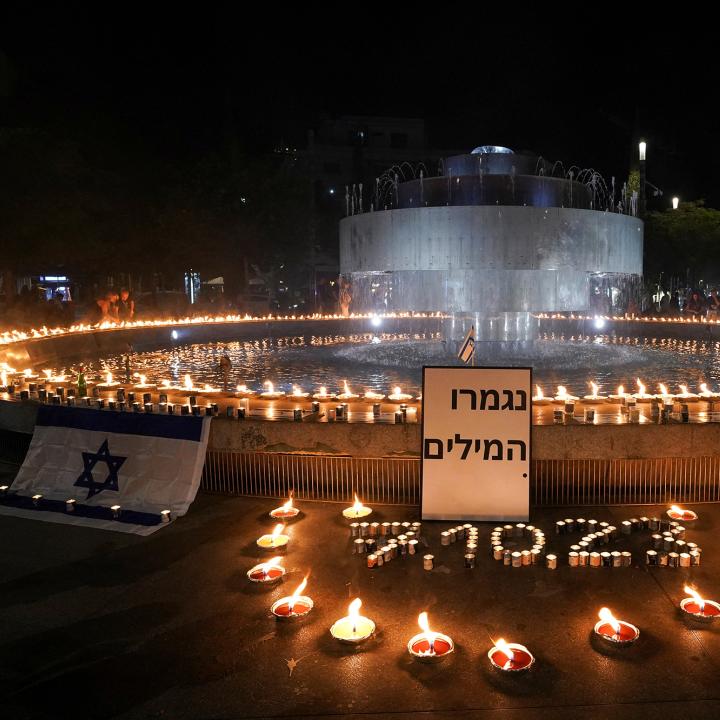
Amid the third anniversary of Hamas’s devastating October 7, 2023, attack, Israelis have been arguing about the lessons their government should learn from this tragedy. But the United States should be learning from October 7 too—not least because Hamas’s assault killed and injured more Americans than any other terrorist attack since 9/11. October 7 can hardly be seen as primarily an American intelligence failure, but the U.S. should still incorporate several key takeaways into its counterterrorism approach and posture.
First, Washington should recognize that terrorist attacks can have an outsized impact and force dramatic shifts in U.S. foreign policy priorities. As such, counterterrorism must be adequately resourced to monitor and track threats, particularly those tied to global jihadist organizations—even when the terrorist risk directly to Americans may appear to be low.
President Biden spent the early months of his term focused on competition with China, Russia’s invasion of Ukraine, cybersecurity, and COVID. But in the wake of October 7, the Middle East once again returned to center stage and remained there for the rest of his time in office.
The threat landscape from ISIS and al Qa’ida is currently ominous in parts of Africa, and again in Afghanistan, but many analysts and officials see the threats as primarily to local governments and populations. We shouldn’t be complacent, however, with terrorist organizations that have a clear and long-standing anti-U.S. agenda, and we must dedicate sufficient resources to ensure that we have the best available intelligence picture. The U.S. military’s top commander for Africa recently testified that Africa is now an intelligence “black hole” despite the increasing threat, due to the major resource reductions. This is dangerous. We must be better prepared should radical groups shift their focus once again to targeting the U.S.
The second lesson is that the U.S.—including not only intelligence officials but also senior policymakers—must regularly challenge its counterterrorism assumptions. Before October 7, the consensus thinking in Israel and beyond was that Hamas did not want a major confrontation at that stage. Israel saw Hamas’s training and planning activities largely as long-term preparations as opposed to imminent attack planning, despite the cries of lower-level Israeli intelligence personnel warning of impending danger. Hamas made clear again after October 7 how unpredictable it could be by embarking on terrorist plotting in Europe for the first time. In late 2023, German authorities discovered caches of prepositioned Hamas weapons, and in 2025 European authorities uncovered a Hamas plot to conduct attacks timed to coincide with the second anniversary of October 7. While these networks were disrupted despite the element of surprise, numerous other examples, including September 11 itself, show the risks of the U.S. failing to adequately anticipate what terrorist groups might be planning.
To address this potential gap, the U.S. should be having out-of-the-box conversations about terrorist groups’ potential plans and targets not only internally but also with other partners, including foreign governments, and outside experts. Governments have the most access to sensitive intelligence, but both October 7 and September 11 demonstrated that government officials—particularly senior policymakers—are often too constrained in their thinking. Nongovernmental experts may well have less conventional perspectives, drawing on very different sources of information.
The U.S. and our allies are facing serious new threats, including the dangers of having artificial intelligence, cybertechnology, or drones in the hands of terrorist actors. Yet with all these tools, the most developed thinking about their nefarious potential usages will likely be done by the companies that make them, as well as others in these fields.
These threats are no longer in the distant future. For example, a report recently issued by one major AI company revealed that the Houthis had already attempted to use Anthropic’s Claude AI assistant to develop and improve their missile-guidance systems. And Iran was implicated in major coordinated cyber attacks on water systems in 12 American states. The U.S. should be consulting extensively with AI, cyber, and defense firms to imagine potential new attacks—and try to prevent them or brace for their possible impact.
Finally, October 7 showed the ongoing danger to the U.S. and its interests posed by groups armed, trained, and equipped by Iran. We should not underestimate the organizations in this network. The Trump Administration’s approach to this threat, however, has been disjointed and incoherent.
On the one hand, with the launch of the war against Iran, President Trump made clear that he recognized the dangers Iran and its proxies pose to the international order. On the other hand, the Trump Administration’s counterterrorism strategy does not mention Iran as one of the top three priorities, instead choosing to focus on cartels, gangs, and left-wing groups. And according to news reports, the FBI fired a number of agents working on Iran-related investigations in the lead up to the war, and the Justice Department’s National Security Section lost approximately two thirds of its personnel as of last summer. These moves would all limit DOJ and FBI’s ability to investigate Iran and its proxies’ nefarious activities and schemes, including not only terrorist plots, but also weapons and dual use technology procurement, fundraising, and sanctions evasion.
Iran has spent years—and sometimes decades—building up the capabilities of these partners and proxies. While both Israel and the U.S. have inflicted serious blows against some of them since 2023, their threat remains. The Houthis’ recent rapid takeover of a key Red Sea port and their threats to shipping in the region demonstrate how dangerous this Iran-sponsored group still is. IRGC advisers have reportedly been on the ground in Yemen providing guidance to the Houthis on their military strategy and approach. The IRGC is also providing robust support to Hezbollah in Lebanon, including extensive efforts to rearm and finance the battered Shia terrorist group and militia.
Iran has also continued to engage in terrorist plotting, both in Europe and the U.S. In late 2025, Israeli intelligence says it uncovered a well-developed Iranian plot to assassinate Israeli Prime Minister Binyamin Netanyahu’s son, who was then living in Miami. He was quickly whisked out of the U.S. to prevent the Iranians from following through. Additionally, in the months after the Iran war began, Tehran was reportedly involved in a series of attacks in Europe through a new front group known as Harakat Ashab al-Yamin al-Islamiyya. A senior commander for Kataib Hezbollah, one of Iran’s closest Iraqi militia allies, is now facing charges in the U.S. for his role in this plotting.
Last month, the U.S. marked 25 years since the 9/11 attacks with a renewed look at the progress we’ve made since then on counterterrorism, the challenges that remain, and the ways we might have responded more wisely. The third anniversary of October 7 will not prompt the same type of widespread review and reflection in the U.S., but counterterrorism officials should still try to use this grim milestone to ensure America does not repeat Israel’s tragic mistakes.
Michael Jacobson is the Mark and Wayne Levy Senior Fellow at The Washington Institute and former director of strategy, plans, and initiatives in the State Department’s Counterterrorism Bureau. This article was originally published on the Homeland Security Today website.