Samand Muhammadshahi is an independent researcher and writer. He holds an M.Phil. in Government and Public Policy. He can be found on X at@SamandKhan.
Brief Analysis
Recent crackdowns against Iran's Baloch minority over tensions around mining in the province suggest that the rift between the regime and many Baloch is deepening in the post-war period.
As Iran spars with the United States while testing a fragile ceasefire, it is exploiting the situation to step up its crackdown on dissent at home. Since Tehran’s ceasefire with Washington, the restive Sistan and Baluchestan region in southeastern Iran has witnessed increased political repression and violent suppression of dissent. The emerging scenario validates the apprehensions of Baloch groups that the regime, to compensate for the reduction of its power as a result of the war, will carry out reprisals against minority nationalities in a show of force.
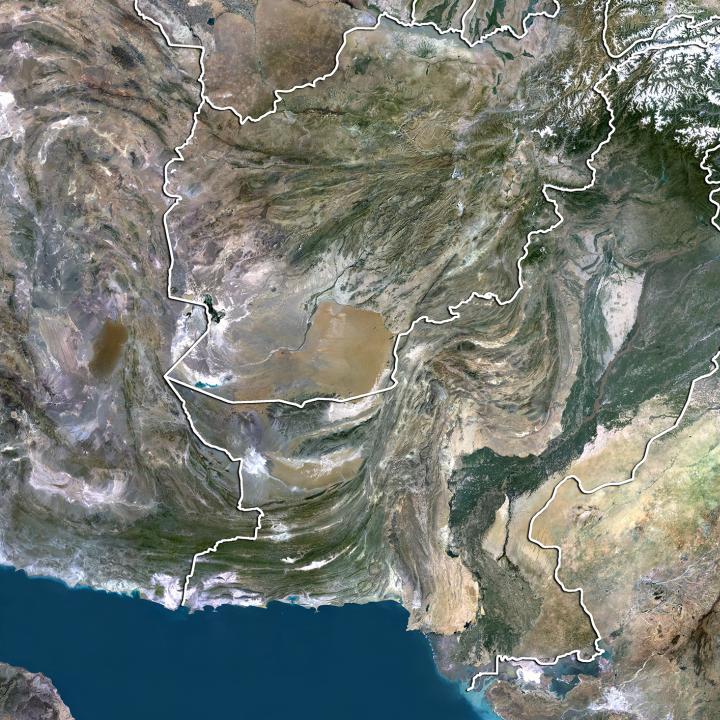
Baluchestan is Iran’s least developed and poorest region with the country’s highest unemployment rate. The Baloch people, as a Sunni ethno-religious minority, are excluded from Iran’s administrative structures and suffer disproportionately from state atrocities. Sistan and Baluchestan province shares two long and porous borders, one with Afghanistan, the other with Pakistan’s Balochistan province, which serve as key routes for illicit trade in consumer commodities, drug trafficking, and human smuggling. Informal trade provides a livelihood for thousands of families in these areas due to high levels of poverty and unemployment.
The porous borders also allow insurgents to infiltrate. Iran faces an armed insurgency in Sistan and Baluchestan, while Pakistan faces one in Balochistan, with each alleging that the insurgents have sanctuaries across the border. The Iranian regime has cracked down forcefully on the insurgency: While the Baloch people comprise about 5 percent of Iran’s population, every year the number of Baloch executed by Tehran is many times greater than their share in the population. Between 2010 and 2025, 27 percent of Iranians executed for alleged affiliation with banned political and armed groups were Baloch.
Iran frequently justifies crackdowns on the broader Baloch community by claiming that it is countering smuggling, combating militancy, and maintaining security. Last year, after the war with Israel, Iran exploited the security situation to intensify repression in Baluchestan. In one incident, two women were killed and ten injured by Iranian security forces during a raid in the village of Gonich, sparking widespread unrest across Baluchestan. The victims and their families have still not received justice.
Now, the war with Israel and the United States has again provided the regime a pretext for continuing its repressive policies against the Baloch under the guise of protecting national security, causing increased tensions in Baluchestan. Since the war began, Iran claims it has arrested or killed more than 100 people in Baluchestan with ties to terrorism, alleging that they were affiliated with Israel and the United States. Meanwhile, more than 20 Iranian security personnel have been killed in multiple attacks by insurgents.
In the past few weeks, the regime’s crackdown on dissent has been stepped up, and the Iranian security apparatus has taken violent and highhanded measures to suppress peaceful protests by Baloch women against irresponsible mining activities in their area. A major grievance in Baluchestan is that the population has been denied the benefits of local mineral resources. The Taftan gold mine, with proven reserves of some twenty-four tons of pure gold, has been steeped in controversy since its inception. In 2022 and 2023, protesters shut down operations multiple times. Since then, protests have continued against the lack of economic benefits accruing to the local people and the environmental degradation caused by the mine.
In 2024, a judicial official visited the mine along with administrative and security officials, vowing to prevent its closure and never to allow “regime opponents and dissidents to create obstacles.” On the other hand, Sheikh Maulana Abdolhamid, Iran’s most prominent Sunni religious leader and Friday prayer leader at Makki Mosque in Sistan and Baluchestan’s capital Zahedan, demanded a halt to operations at the mine. He strongly criticized the excessive exploitation of mines in Baluchestan and the environmental degradation they cause, asserting that their economic benefits do not remain in the region while the environmental damage does. Despite tensions on this issue for years, no meaningful steps have been taken to address the local people’s concerns and demands. While the Taftan gold mine is operational, mining activities at Pashmoki chromite mine have been suspended for almost three years due to tensions between local people and the mine’s operators.
In June of this year, in two separate incidents on two consecutive days, Iranian security personnel violently suppressed peaceful protests, insulting, injuring, and arresting several participants. Videos of the incidents flooded Baloch media and drew strong reactions from all quarters of society, further raising sociopolitical tensions in an already volatile region.
On June 16, a group of Baloch women from the village of Pashmoki in Faryab county, Kerman province, demonstrated peacefully in front of a chromite mine, protesting the local population’s being denied the benefits of their land’s natural resources, demanding accountability, and calling for transparency and justice.
When the women continued their protest the following day, police and security personnel assaulted them. Videos of the incident show uniformed personnel beating, pushing, and dragging the women. At least eight women were injured, including Narges Bameri, who suffered a miscarriage. Additionally, six people, three of them women, were arrested.
The incident in Pashmoki followed a related event on June 16 in the village of Sarsiah in Taftan county, where Baloch women protested against the negative impact of mining in the Taftan gold mine. Protesters objected to the disruptions to daily life and the loss of livelihoods caused by damage to water resources, some of which have dried up, as well as to agriculture, livestock, and the environment. Police and mine security personnel reportedly engaged in violent confrontations with the protesters, threatening, insulting, and beating them and injuring a woman named Bibi Nour Rigi.
Simultaneously, the director general of Sistan-Baluchestan’s Department of Industry, Mining, and Trade announced plans by the Iranian government to invest 257 trillion tomans (about US$1.5 billion) in the mining sector of the province. He also stated that the previous year, 70 percent of Iran’s total investment in the mining sector was allocated to Sistan-Baluchestan. The brutal treatment meted out to the unarmed protesters might be seen as a signal from authorities that they will not tolerate attempts by the local population to position themselves as stakeholders in mining activities, nor will they allow the creation of obstacles through demands for inclusion in benefits or discussion of environmental concerns.
This signal was not well received in Baluchestan, as the scenes of violence employed against women protesters went viral on social media, mobilizing public opinion against the regime’s policies in the region. This not only rekindled the debate about the lack of benefit the local population receives from its land and resources; it also highlighted the broader question of the Baloch’s subjugation by a repressive administrative structure controlled absolutely by the regime in Tehran, which keeps local residents marginalized and subjected to violence even for demanding the basic right to a livelihood.
Despite severe curbs on freedom of expression, the Baloch community reacted strongly to the recent incidents, with Sheikh Abdolhamid calling the treatment of women protesters humiliating and urging authorities to investigate and listen to the women’s demands. He pointed out that “until their voice is heard and their rights and interests are respected, such protests may surface again.” Other religious scholars including Abdul Quddus Salarzehi, Abdul Basit Sajestani, and Abdul Aziz Naroei also strongly condemned the assault on the women and demanded action against the perpetrators.
Sardar Yousef Naroei, a Baloch tribal elder, warned that “Baloch women are our red line,” adding: “Everyone’s patience has its limits, and every silence has its dignity. These acts of disrespect must be investigated immediately and justice must be served.” Similarly, Baloch notable Haji Hamid Gomshadzehi sharply criticizedthe conduct of security personnel, stating that the scenes sparked widespread anger. He highlighted the issue of resource extraction and the denial of the rights of local people in Baluchestan and supported the protesters’ demands.
The Balochestan People’s Party also strongly condemned the attacks on those peacefully protesting the "plunder of the region’s natural resources” and the consequences of irresponsible mining. Similarly, Mohim Sarkhosh, secretary-general of the Balochestan National Solidarity Party, said that women’s dignity is a cultural and national red line for the Baloch, adding that “the occupying and repressive regime must know that the usurpation of Baloch lands, the destruction of Baluchestan’s environment, and the suppression of protesters will never break the Baloch nation’s will to defend its homeland.”
Provincial authorities and official Iranian media initially did not pay attention to the incident, but growing public resentment forced them to take note of it afterwards. The chief justice of Sistan and Baluchestan province issued an order for a judicial investigation into its scope, stating: “If investigations show that this incident occurred in the jurisdiction of Sistan and Baluchestan, the perpetrators will be dealt with decisively in accordance with legal regulations and without any leniency.” Reportedly, a case was also opened regarding the Faryab incident and is being investigated by Kerman province judicial authorities.
However, it is highly unlikely the judiciary will take concrete action against those involved in violence against the protesters. Past experience shows that such statements are used only to quell public outrage, and in practice, all organs of the repressive state complement each other in reinforcing their shared impunity.
Previously, even in highly consequential cases like the killing of Mahsa Amini and the 2022 massacre of Zahedan—also known as bloody Friday, in which Iranian security forces killed more than one hundred Baloch protesters and injured hundreds more—the regime maintained its culture of impunity for perpetrators of state atrocities. It was therefore no surprise when the Kerman province Police Command declared police officers’ treatment of the women protesters to be “appropriate to the circumstances.”
Widespread resentment caused by the Taftan and Faryab incidents forced provincial authorities and state-affiliated media to change their tune and to recognize that mining projects must also benefit local communities. Previous commitments to include them failed to materialize, and the regime’s unresponsiveness to Baloch demands made its mining projects controversial. Additional extractive mining in Baluchestan would risk further alienating the local population.
This is the second time within a year that Iranian forces have assaulted and otherwise mistreated Baloch women protesters, a serious violation of local custom and traditions. While Baloch social and political circles have reacted strongly, given past experience, there is little chancethey can force the regime to end the security forces’ impunity. To prevent this from becoming the new normal, some in the local Baloch community are urging internal unity and resistance to face these challenges, rather than focusing on demands for justice from the regime.
After tensions increased in Baluchestan due to increased regime repression, religious scholar Maulana Fazlur Rehman Kohi, a former political prisoner who recently left Iran, stated that the Baloch community will not remain silent and warned Iranian security institutions not to force the people to take to the streets in protest. Following the bloody Friday massacre of 2022, Baloch protesters demonstrated against regime repression every Friday for almost a year but could not convince the regime to deliver justice. However, the protest movement increased Baloch political awareness and promoted national consciousness.
In a suffocating political environment, the Baloch people are using the windows of opportunity presented by events involving repressive regime measures to express their sentiments and promote feelings of communal solidarity. These limited avenues for political expression cannot suffice for an organized political movement. However, they do cause public opinion to converge around mutual grievances and build consensus on holding the regime responsible for Baloch suffering. In certain cases, they have even produced significant, if symbolic, results, as in 2024, when for the first time, the Islamic Republic appointed a Baloch as governor of Sistan and Baluchestan province.
Thus, while the regime appears to be using the post-war situation to strengthen its control by intensifying political repression and taking revenge on opponents, incidents of highly visible injustice have also served to rally the Baloch people to defend their fundamental rights and demand an end to systemic marginalization. If the regime continues its oppressive policies and colonial approach toward Baluchestan, it risks drawing more widespread protests and broader resistance.