- Policy Analysis
- PolicyWatch 4250
Israel and Lebanon’s Hesitant Steps on the Long Road to Peace
The more the LAF demonstrates it can enforce state authority in disarming Hezbollah, the less Israel will be compelled to continue its operations, and the more it will be inclined to gradually withdraw—though neither side can succeed without sustained U.S. leadership, a clear verification mechanism, and appropriate limits on international involvement.
The trilateral framework agreement between Israel and Lebanon offers an opportunity to break the vicious cycle that has trapped both countries for decades. Time and time again, weaknesses in the Lebanese state have resulted in power vacuums that invite foreign intervention and generate threats to Israel, while Jerusalem’s military responses and subsequent withdrawals have simply exacerbated these governance problems and vacuums.
With U.S. mediation, the parties now seek to replace conflict management with a framework built on Lebanese sovereignty and regional security. The objective is to strengthen the state, weaken and eventually disarm Hezbollah, and advance bilateral relations. This effort will face multiple tests, and success will depend on a wide range of prerequisites: political determination in Beirut; effective performance by the Lebanese Armed Forces (LAF); verified Hezbollah disarmament; the right mix of Israeli resolve and flexibility; clear limits on Iranian influence; sustained U.S. leadership; and appropriate regional and international support.
The Political Test
Over the past year, Lebanon has agreed to a landmark series of direct negotiations with Israel, formally banned Hezbollah and Iran’s Islamic Revolutionary Guard Corps (IRGC) from engaging in security activities on its territory, signed the historic June 26 framework agreement, and steadily negotiated its implementation. Yet enforcement remains limited—the government has done little to stem Hezbollah’s military reconstitution, its ability to attack Israelis, or its continuous domestic threats. The past few rounds of talks have mostly focused on exchanging statements and avoiding direct collision, reflecting the LAF’s fear of conflict at home.
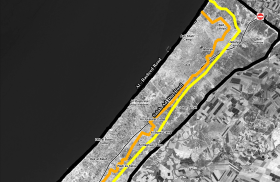
Recent White House meetings highlighted the signatories’ differing priorities. On July 21, President Joseph Aoun thanked President Trump for signing the framework agreement and called for full withdrawal by the Israel Defense Forces (IDF), though he seems to understand that this will not happen in the near future. For its part, the LAF is in no hurry to deploy and assume responsibility for traditional Hezbollah areas of control, including the second “pilot zone” encompassing the municipalities of Froun and Ghandouriyeh (see below for more on these zones). Hence, Aoun’s most urgent priority is to accelerate funding and support for the LAF.
Meanwhile, Prime Minister Binyamin Netanyahu’s Washington meeting a week later reaffirmed that Israel will condition any further withdrawals on Hezbollah’s disarmament and dismantlement. He also clearly wants to avoid making concessions before Israel’s October election. Washington favors gradual progress without making firm commitments or putting American boots on the ground.
The core tension is between Lebanese sovereignty and Israeli security. Beirut demands an end to Israeli military operations—the stance it must take in public even though these same operations help pressure Hezbollah and reinforce the government’s message that the alternative to diplomacy is renewed war. Beirut is also pressing for the withdrawal of IDF units, the return of Lebanese civilians displaced by the fighting, and reconstruction. Israel prioritizes dismantling Hezbollah’s military capabilities, which threaten both countries’ security as well as Lebanon’s sovereignty.
The result is another variation of the vicious bilateral cycle—Israel argues that IDF operations are necessary to eliminate threats emanating from Lebanon, while Hezbollah justifies its “resistance” as a response to Israeli military actions. This same dynamic enables Hezbollah to portray the Lebanese government as ineffective or in league with Israel. Yet while a reduction in the IDF’s operations and presence would strengthen Beirut politically, it could also give Hezbollah room to fully rebuild its arsenal as it has in the past, stoking Israeli domestic political criticism in the process.
The long-term goal of the current framework negotiations is to break this cycle. In the meantime, U.S. officials are endorsing Israel’s presence in Lebanon while simultaneously asking it to restrain its operations and plan for future withdrawal.
In addition to identifying Hezbollah disarmament and Israeli withdrawal as the main objectives, the new framework makes Beirut and Jerusalem primarily responsible for implementation, with oversight by Washington. Notably, the United Nations and France—who were central to Security Council Resolution 1701 and the November 2024 ceasefire—have been excluded from the framework after failing to implement 1701 and losing all credibility in the process.
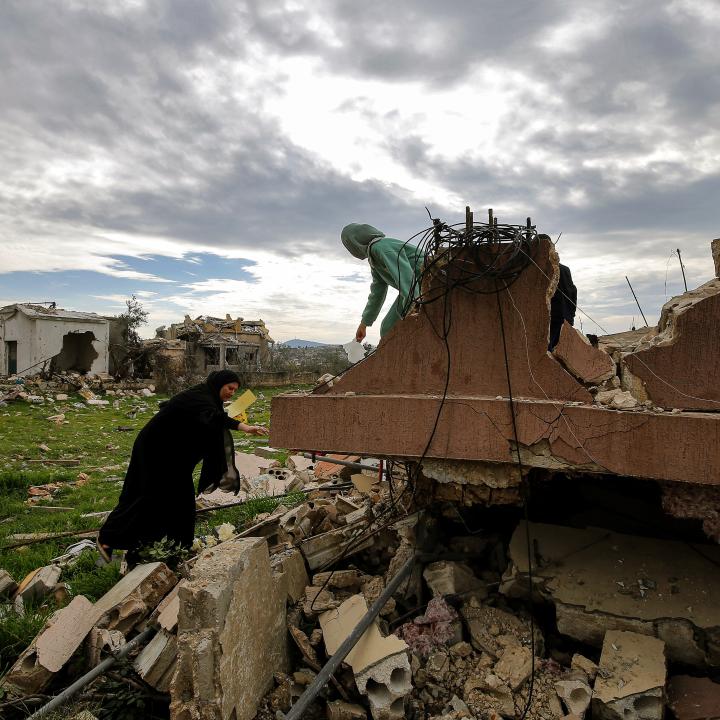
The principal obstacles to this new process are Hezbollah’s military capabilities and its political influence in Beirut, led by allies like Speaker of Parliament Nabih Berri. Moreover, about a million displaced Lebanese residents—mostly Shia from the south—are straining the country’s stability, so returning them home has become a key legitimacy test for the young government. Although these displaced communities may give Israel additional leverage to push for Hezbollah disarmament, Jerusalem also sees them as a potential threat. The predominantly Shia villages that dotted the border zone have long been a major operating environment for Hezbollah, so the group will no doubt try to exploit any large flow of returnees as both a boost to its domestic support and a human shield for its fighters and assets.
The Military Test
The parties agreed to begin implementation via pilot zones in which the LAF establishes control and dismantles any military assets that do not belong to the state. On July 20, following an IDF withdrawal, the LAF entered Zawtar al-Gharbiyeh, and Prime Minister Nawaf Salam himself planted the Lebanese flag there. A shooting incident the same day demonstrated gaps in liaison, coordination, and command, while two other incidents reflected the risks in the process: a July 18 Hezbollah attack that resulted in LAF casualties, and an IDF strike that killed an LAF soldier in al-Mansouri on August 7. Yet the LAF’s discovery of a Hezbollah weapons cache suggested that the model can produce some results.
Beirut is now proposing to expand the pilot zones to two border areas—Bint Jbail and al-Khiam—while accelerating IDF withdrawals. Israel prefers to broaden Lebanese control in areas where the IDF is not deployed, and only after verified effective performance by the LAF.
The central question is whether the LAF will truly dismantle Hezbollah’s military infrastructure and prevent its fighters from reentering the area by hiding among civilian returnees. The IDF and U.S. Central Command remain vigilant given the LAF’s uncertain credibility and reluctance to act against Hezbollah strongholds around Nabatiyah.
As for the verification mechanism that will monitor the LAF’s performance, Washington opposes using American troops in this role. Other options have been raised that could include participation by Indonesia, Italy, Switzerland, the United Kingdom, and others, but neither the mechanism’s architecture nor its relationship to the Military Coordination Group for Lebanon (MCG4L) has been hammered out.
Beirut (correctly) argues that the LAF still lacks the capabilities to complete the mission and needs assistance, materially and professionally. Dismantling military infrastructure requires intelligence, engineering, and logistics; preventing Hezbollah’s return depends on good policing; border security requires situationally aware light forces; and many soldiers still lack sufficient wages and basic arms. Each of these elements should indeed be provided—but only after the LAF makes more progress on the agreement’s initial goals. Ultimately, success will depend on political will regardless of whatever security assistance is provided.
In the meantime, Hezbollah continues to rebuild its own capabilities in the south and smuggle arms through Syria, some of which have been interdicted by Damascus. It has mostly stopped its attacks since the June 26 agreement, apart from two drone strikes and a bombing in Majdel Zoun that killed two IDF soldiers and injured four. Beirut’s response has been cautious—both the government and the LAF seek to avoid a confrontation with Hezbollah that could fracture the army, since some LAF personnel remain sympathetic to the group.
For its part, the IDF has continued destroying Hezbollah infrastructure and occasionally striking its operatives, while also maintaining a security zone roughly ten kilometers inside Lebanon. Yet it has so far heeded U.S. requests to lower its operational tempo and refrain from weightier actions for now, such as striking Beirut again or seizing the Ali al-Taher tunnel complex near Nabatiyah.
Regional and International Dynamics
The framework’s success depends on insulating Lebanon as much as possible from the U.S.-Iran confrontation. Tehran’s channels of influence—including civilian flights, weapons smuggling, financial transfers, reconstruction funding, and military support for Hezbollah—should be steadily reduced via U.S. and Lebanese sanctions, legal actions, seizures, and arrests. Reconstruction is a particularly important arena of contest, since whoever rebuilds Lebanon—be it Iran/Hezbollah, the Gulf states, or Beirut—will likely win the lion’s share of influence and political support there. For Israel, reconstruction is only acceptable if Hezbollah cannot use it to rebuild or re-embed its military.
In this context, Saudi Arabia and the United Arab Emirates could play larger roles by counterbalancing Iranian influence through various financial and political efforts. And Syria can contribute by expanding its anti-smuggling efforts against Hezbollah, which could be enhanced by Israeli and U.S. intelligence support. Although Damascus should not be militarily involved in fighting Hezbollah inside Lebanon, it could help diplomatically by broadening its security cooperation with Beirut and resolving border disputes that Hezbollah tends to exploit as “resistance” causes (e.g., Shebaa Farms).
The UN is still considering ways to deploy potentially thousands of peacekeeping troops to replace the outgoing UN Interim Force in Lebanon (UNIFIL), while France, Italy, Turkey, the European Union, and other partners are exploring alternatives outside the UN framework. Yet Israel opposes another UN mission and flatly rules out a security role for Paris and Ankara, seeing France as pro-Hezbollah and Turkey as dangerously hostile. The latter factor could also complicate Saudi involvement in Lebanon given the kingdom’s growing defense relations with Ankara.
More broadly, while international involvement could help strengthen the LAF, support implementation, and avoid U.S. ground commitments, it could also increase the mission’s political complexity and encourage Lebanon to shift responsibility to external actors, repeating a pattern that characterized the failed UNIFIL era. Given these complexities, sustained U.S. leadership will be essential to synchronize multinational efforts.
Policy Recommendations
First and foremost, implementation of the trilateral framework should continue through gradual expansion of the pilot-zone model, with each phase conditioned on LAF performance and verification by an agreed mechanism. Priority should be given to Hezbollah’s strongholds around Nabatiyah. The more the LAF demonstrates it can enforce state authority, the less the IDF will be compelled to take enforcement actions, and the more it will be inclined to withdraw. Ultimately, however, the IDF will always be the final backstop in protecting still-vulnerable communities in northern Israel, so it must stay prepared for renewed escalation.
International financial, training, and material assistance to the LAF should be directed toward the most relevant units and tailored to the force’s current mission as laid out in the framework agreement. Any further assistance should also be conditioned on verified LAF performance in dismantling Hezbollah’s military infrastructure, preventing its rearmament, and enforcing state authority.
At the diplomatic level, the Lebanese track should be kept insulated from the U.S.-Iran confrontation, including any future ceasefire memorandums. International efforts should focus on reducing Iran’s influence in Lebanon across all channels, including financial transfers, reconstruction funding, weapons smuggling, civil aviation, and military support for Hezbollah. Down the road, diplomacy should expand beyond immediate security arrangements toward broader political understandings and, ultimately, peaceful relations between Israel and Lebanon.
As for the post-UNIFIL security architecture, any efforts that involve simply replacing one defunct UN mission with another should be vetoed. Instead, the framework’s signatories should aim for a smaller mechanism modeled on the Multinational Force & Observers (MFO) in the Sinai Peninsula. The United States, Israel, and Lebanon should form the core of this mechanism; additional partners could help with monitoring, training, logistics, engineering, and force development. Verification could be conducted by a civilian observer unit (perhaps contracted to a private security company) or a credible multinational military force composed of mutually agreed, trustworthy countries.
Through it all, only the United States is capable of coordinating the political, military, regional, and international dimensions of this process. And only Washington can do so in a manner that preserves momentum and prevents spoilers from derailing an opportunity to replace decades of ineffectual conflict management with a more durable security framework.
Brig. Gen. Assaf Orion, IDF (Res.), is The Washington Institute’s Rueven International Fellow, a senior research fellow at INSS, and former head of the IDF Strategic Planning Division.