Patrick Clawson is the Morningstar Senior Fellow and Research Counselor at The Washington Institute.
Brief Analysis
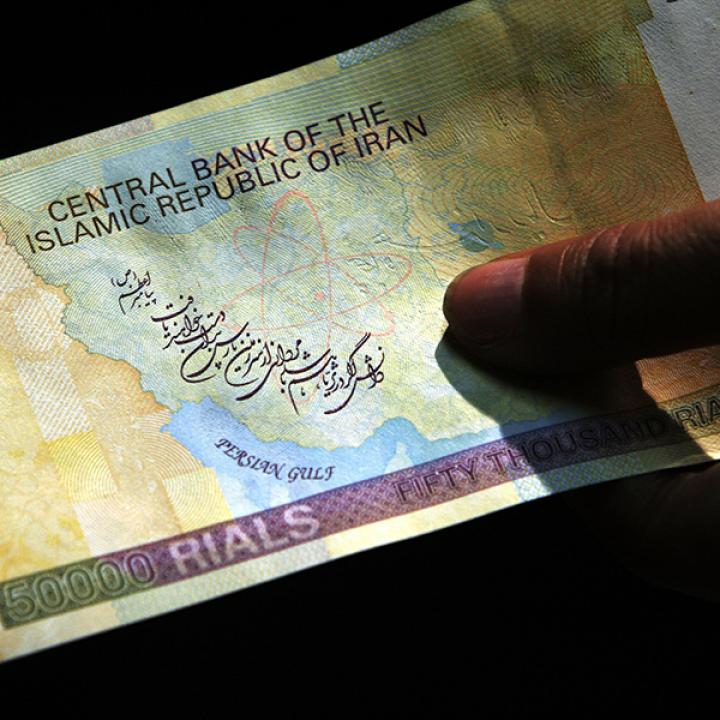
The heftiest portion of the theoretical financial windfall discussed in the U.S.-Iran agreement is unlikely to materialize, let alone have a big economic or political impact inside the Islamic Republic.
For differing reasons, many observers and officials have outsize expectations about the potential effects of the $300 billion reconstruction and development plan called for in last month’s U.S.-Iran memorandum of understanding. In reality, the results will likely be minimal, in part because all of the political and economic obstacles that prevented significant past investments in Iran remain in place today.
Why Has Foreign Investment Been So Limited?
The reason these grand plans have led nowhere is the Islamic Republic’s perennially bad business environment. The best litmus test for this environment is a simple question: do foreign investors take advantage of business opportunities there? The record is clear: they do not.
For example, although Beijing pledged to invest $400 billion in Iran as part of their 2021 Comprehensive Strategic Partnership agreement, actual commercial investment has been less than 1 percent of that amount, in contrast to substantial Chinese infrastructure projects since then. Similarly, Saudi Arabia has not made significant investments in Iran since their March 2023 reconciliation agreement, despite announcing that it would at the time. The 2015 nuclear deal brokered by Washington did not fare much better—contrary to the expectations of many Iranian and U.S. officials, it had only modest effects on foreign investment.
The reasons for these shortcomings are numerous:
IRGC entrenchment. Iran’s Islamic Revolutionary Guard Corps has expanded its already tremendous influence over all aspects of government decisionmaking, including in the economic realm. Some might argue that this is less of a problem for investors than it was in the past, pointing to the many Iranian companies that have transferred ownership from the government to quasi-state entities over the past decade. Yet this is a change without a difference—under the new arrangements, the IRGC directly or indirectly controls much of the economy.
Unclear ownership. Relatedly, it is not at all certain who calls the shots at a great many Iranian companies, with nominal ownership being in the hands of investment funds controlled by IRGC interests or disguised government operations (e.g., retirement funds beholden to the state rather than retirees). Not knowing exactly who a firm’s beneficiary owners are creates inherent problems under current U.S. sanctions, which prohibit transactions with IRGC-controlled entities. Even if Washington changes its rules, investors may still be hesitant to place their money in such opaque companies. Moreover, the accounting practices of these entities are often not up to U.S. standards, making it unclear how much profit they actually make and who gets that money.
Systemic corruption. In addition to highly publicized cases of thefts mounting into the billions of dollars, corruption has become the norm in dealings with Iranian officials at all levels. Although the Trump administration has been less active than its predecessors in enforcing the Foreign Corrupt Practices Act, many businesses remain leery of the risks of doing business in the Islamic Republic regardless of U.S. policy. Even aside from the major reputational risk of being seen as complicit in corruption, paying off corrupt officials could drain much of the profit that any enterprise would make.
Poor economic policies. Iran’s mass protests in January were sparked by a perfect storm of government incompetence, including inflation running at more than 60 percent a year, periodic unannounced electricity cuts, repeated warnings that water shortages could compel evacuation of the entire capital, natural gas shortages that required shuttering many industries, air pollution so bad that many schools had to close for more than 100 days a year, and persistently long lines for gasoline (despite spending $6 billion per year on fuel imports and maintaining absurd subsidies that spurred the smuggling of billions more in gasoline to neighboring countries). Obviously, it would be very hard to reap investor profits from a business without knowing if there will be enough electricity, gas, water, or clean air to avoid shutdowns.
Ideological opposition to foreign investment. Even five decades after the Islamic Republic’s founding, this factor infects every transaction with the government. Ideologues have long criticized those who talk about improving economic conditions by accepting sanctions relief and greater access to funds, accusing them of downplaying “revolutionary principles” and expecting too much from the untrustworthy West.
Deep denial that changes are needed in Iran’s business environment. Iranian officials often claim that access to their country is intrinsically attractive, and that businesses would come if only the U.S. government would get out of the way. As such, Speaker of Parliament Muhammad Baqer Qalibaf and other senior figures argue that Tehran’s priority should be improving the economy. Yet they do not propose any steps the government would take to actually attract foreign investment. Meanwhile, much of the country’s domestic commentary about the $300 billion suggests that the money would be treated as a slush fund of grants available for Tehran to use as it sees fit, without any discussion of changes it would have to make to attract investors.
What Would Signal Change in Iran’s Economic Approach?
Some Trump administration officials have said that the memorandum of understanding will incentivize Tehran to implement economic changes. What developments might serve as evidence of such a shift?
One key sign would be Iran taking steps to bring its financial systems in line with international regulatory standards on bank supervision (e.g., the Basel Accords), tax evasion, transparency of accounts and ownership, and related issues. Some officials in Tehran have been particularly intent on getting off the blacklist maintained by the multinational Financial Action Task Force—a status that has drastically limited Iranian banks’ access to global financial markets. Yet hardliners have adamantly opposed the modest compliance measures that FATF requires, even though the organization would almost certainly be satisfied with empty pledges that the government does little to implement.
Perhaps now that IRGC elements have taken fuller control of the economy during the war, they will be less worried about businesses developing into a political risk to their power, and more comfortable with making changes that attract foreign investment and further enrich them and their cronies. There are no signs of that so far, however.
Moreover, some Gulf countries may decide to make grand announcements about how much they are prepared to invest in postwar Iran. Yet any such pledges should be treated with at least as much skepticism as those made during President Trump’s May 2025 Gulf tour, when Saudi, Emirati, and Qatari officials announced they would invest $2 trillion in the United States, little of which has materialized more than a year later. Those pledges appear to have been designed more for their immediate political impact than their follow-through, and the same may hold for any regional announcements about investments in Iran.
Conclusion
Given the unbroken record of past failures to spur economic change in the Islamic Republic, the U.S. government should structure the $300 billion plan to include early steps Tehran must take to improve its business environment. At the very least, Iran should be required to meet its international obligations to FATF and similar regulatory entities. Washington should also vigorously point out that the Western business community will not change its attitude toward Iranian markets until the regime addresses the other challenges cited above, such as corruption, unclear ownership, and ideological hostility to foreign investment. In the unlikely event that Tehran takes the necessary steps in the business sector, Washington and its partners would face the difficult political question of whether to proceed with economic normalization—especially if the regime’s economic reforms are not accompanied by similarly deep changes on crucial issues like the nuclear program, missile/drone production, human rights, and opposition to Israel’s existence.
Patrick Clawson is the Morningstar Senior Fellow at The Washington Institute and director of its Viterbi Program on Iran and U.S. Policy.