


TWI logo The Washington Institute for Near East Policy
logo
wordmark
Homepage

Main navigation

  • Analysis
  • Experts
  • About
  • Support
  • Maps & Multimedia
Trending:
  • Arab-Israeli Relations
  • Military & Security
  • Israel
  • Iran
  • Syria

Regions & Countries

  • Egypt
  • Gulf States
  • Iran
  • Iraq
  • Israel
  • Jordan
  • Lebanon
  • Middle East
  • North Africa
  • Palestinians
  • Syria
  • Turkey

Issues

  • Arab & Islamic Politics
  • Arab-Israeli Relations
  • Democracy & Reform
  • Energy & Economics
  • Great Power Competition
  • Gulf & Energy Policy
  • Military & Security
  • Peace Process
  • Proliferation
  • Terrorism
  • U.S. Policy
TWI English
TWI Arabic: اللغة العربية Fikra Forum

Breadcrumb

  • Policy Analysis

Proliferation

Policy Analysis on Proliferation

Filter by:

TWI Series on the JCPOA at One Year
Assess how the Joint Comprehensive Plan of Action (JCPOA), the nuclear agreement with Iran, has affected various U.S. interests one year after its announcement on July 14, 2015.
Jul 6, 2016
◆
  • James Jeffrey
  • Dennis Ross
  • Patrick Clawson
  • Anna Borshchevskaya
  • Matthew Levitt
  • Simon Henderson
  • Mehdi Khalaji
  • Olivier Decottignies
  • Katherine Bauer
  • Michael Herzog
Brief Analysis
The JCPOA'S Regional Impact: Sinking Confidence in the U.S. Balancing Role
Left to their own devices and faced with an Iran on the march in multiple theaters, regional states have responded to the deal in an incoherent and dangerous fashion.
Jul 5, 2016
◆
  • James Jeffrey
Brief Analysis
Egypt's Costly Nuclear Project
Cairo's expensive nuclear deal with Moscow will likely increase the country's economic burden and susceptibility to Russian influence.
Jun 16, 2016
◆
  • Eric Trager
Brief Analysis
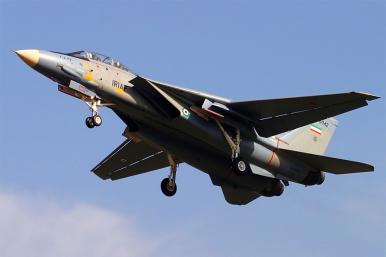
Iran's Air Force Overshadowed by the IRGC
A recent crash highlights the air force's struggles to maintain its readiness and budget at a time when Revolutionary Guard leaders are pushing for a deterrence posture based solely on their own ballistic missile arsenal.
May 27, 2016
◆
  • Farzin Nadimi
Brief Analysis
Turkey's War of Attrition With the Islamic State: The Rocket Threat
Ankara's terrorist adversaries have expanded their destructive reach with mobile rocket launchers and other formidable weapons, so deterring the threat will require a similarly robust Turkish approach to procurement, development, and deployment of various military systems.
May 17, 2016
◆
  • Can Kasapoglu
Articles & Testimony
The View from Tehran's Twilight Zone:
Iran's Continued Illicit Finance Activities and Their Implications
In Tehran's alternative reality, there is no risk to doing business in the Islamic Republic because sanctions no longer exist, yet such claims ignore the role that the regime's own actions play in scaring foreign banks away.
May 11, 2016
◆
  • Matthew Levitt
Articles & Testimony
One Year After the Nuclear Deal: Is Iran Moderating?
While Western officials should remain true to their longstanding support for human rights and civil liberties in Iran, they should nevertheless be cautious about their ability to shape the country's internal dynamics, focusing instead on influencing its regional and foreign policies through a mixture of pressure and engagement.
Apr 29, 2016
◆
  • Michael Singh
Articles & Testimony
Iran Nuclear Deal: Meeting vs. Exceeding U.S. Obligations
Washington shouldn't rush to resolve issues such as banking restrictions and heavy-water stockpiles without prodding Tehran to take helpful steps of its own.
Apr 29, 2016
◆
  • Michael Singh
Brief Analysis
Misleading Claims About U.S. Barriers to Iran-Europe Financial Ties
Few people understand that Iranian banks do not live up to the standards U.S. agencies require of all foreign financial institutions, and that this shortcoming has nothing to do with the nuclear deal.
Apr 27, 2016
◆
  • Patrick Clawson
Articles & Testimony
Red Line Revisited: The Costs and Benefits of Not Striking Syria
Rather than debate the hypothetical results if the administration had ordered strikes in 2013, it is more instructive to examine the policy it did execute, which delivered questionable results at significant cost.
Apr 22, 2016
◆
  • Michael Singh
Articles & Testimony
What the U.S. Has and Hasn't Learned From Imposing Sanctions
By heeding the lessons garnered from past experience and empirical studies, Washington can mitigate concerns about sanctions overreach and greatly increase their effectiveness.
Apr 15, 2016
◆
  • Michael Singh
Brief Analysis
Potential U.S. Clarification of Financial Sanctions Regulations
Proposals for clarifying or relaxing certain U.S. financial restrictions would be a cumbersome way for Iranian trading partners to access U.S. dollars, but would give Iran modest, unreciprocated benefits.
Apr 5, 2016
◆
  • Katherine Bauer
Brief Analysis
Saudi Snub at the Nuclear Summit?
What with Yemen, Iran, Syria, and oil, U.S.-Saudi relations appear to have many dimensions these days, so there is little time for questionable diplomatic gestures that could complicate the imminent nuclear and GCC summits.
Mar 30, 2016
◆
  • Simon Henderson
Iran's Supreme Leader Ali Khamenei delivers public remarks.
Brief Analysis
Khamenei Intensifies His Anti-Americanism to Weaken President Rouhani
The Supreme Leader used his Nowruz address to launch a strong attack on the United States and make Rouhani the scapegoat for continued American pressure, which augurs poorly for U.S.-Iranian cooperation.
Mar 21, 2016
◆
  • Mehdi Khalaji
Articles & Testimony
Why the Nuclear Deal Hasn't Softened Iran's Hard-Line Policies
As the election process and continued regional aggression have shown, the regime won't change what it's doing at home or abroad until the price for such behavior is made clear and unmistakable.
Mar 6, 2016
◆
  • Dennis Ross
Articles & Testimony
Not So Fast: Big Questions on Iran Are Still Unanswered
If the Obama administration sees the nuclear agreement as a strategic win capable of transforming Tehran's hostility, then America's ability to deter and contain Iranian challenges will be eroded.
Jan 22, 2016
◆
  • James Jeffrey
In-Depth Reports
Beyond Implementation Day: A Brief Statement on U.S. Policy Toward Iran
A bipartisan group of American diplomats, legislators, policymakers, and experts cites the need for vigilance in enforcing the nuclear deal and urges the administration to reject the idea of Iran as an ally in the anti-ISIL campaign.
Jan 21, 2016
Articles & Testimony
Prisoner Release
Although there were good reasons for delaying the ballistic missile sanctions against Iran, dropping charges against individuals linked to terror sponsorship only exacerbates doubts about the administration's commitment to enforcement.
Jan 20, 2016
◆
  • Matthew Levitt
Articles & Testimony
The Middle East After the JCPOA
The United States and its allies are more than up to the challenges posed by post-deal Iran, but they will need to focus on objectives rather than tactics, and engage in long-term planning rather than continuing their reactive, shorter-term approach.
Jan 20, 2016
◆
  • Michael Singh
A banner of Iran's former Supreme leader Khomeini
Video
Articles & Testimony
Addressing Threats to National Security: Iran
When the next President enters office, Iran will be a nuclear-weapons threshold state operating more than 5,000 centrifuges, with more than 14,000 additional ones at hand but deactivated—assuming the July 14 accord is implemented and survives its infancy. It will be openly engaged in research and development on advanced centrifuges
Jan 18, 2016
◆
  • Michael Singh

Pagination

  • Previous page ‹ Previous
  • First page « First
  • …
  • Page 18
  • Page 19
  • Page 20
  • Page 21
  • Current page 22
  • Page 23
  • Page 24
  • Page 25
  • Page 26
  • …
  • Last page Last »
  • Next page Next ›

Sign Up for Email Updates from The Washington Institute

Never miss a breaking event on U.S. policy interests in the Middle East. Customize your subscription to our expert analysis, op-eds, live events, and special reports.


Sign up

Featured experts

Patrick Clawson
Patrick Clawson
Patrick Clawson is the Morningstar Senior Fellow and Research Counselor at The Washington Institute.
Michael Singh
Michael Singh
Michael Singh is the Managing Director and Lane-Swig Senior Fellow at The Washington Institute.
Simon Henderson
Simon Henderson
Simon Henderson is the Baker Senior Fellow and director of the Bernstein Program on Gulf and Energy Policy at The Washington Institute, specializing in energy matters and the conservative Arab states of the Persian Gulf.
Background image with TWI branding
logo
wordmark
Homepage

1111 19th Street NW - Suite 500
Washington D.C. 20036
Tel: 202-452-0650
Fax: 202-223-5364

Footer contact links

  • Contact
  • Press Room
  • Subscribe

The Washington Institute seeks to advance a balanced and realistic understanding of American interests in the Middle East and to promote the policies that secure them.

The Institute is a 501(c)3 organization; all donations are tax-deductible.

Footer quick links

  • About TWI
  • Support the Institute
  • Alumni

Social media

  • The Washington Institute on Facebook facebook
  • The Washington Institute on X x
  • The Washington Institute on YouTube youtube
  • The Washington Institute on LinkedIn linkedin

© 2026 All rights reserved.

Footer

  • Employment
  • Privacy Policy
  • Rights & Permissions