

TWI logo The Washington Institute for Near East Policy
logo
wordmark
Homepage

Main navigation

  • Analysis
  • Experts
  • About
  • Support
  • Maps & Multimedia
Trending:
  • Arab-Israeli Relations
  • Military & Security
  • Israel
  • Iran
  • Syria

Regions & Countries

  • Egypt
  • Gulf States
  • Iran
  • Iraq
  • Israel
  • Jordan
  • Lebanon
  • Middle East
  • North Africa
  • Palestinians
  • Syria
  • Turkey

Issues

  • Arab & Islamic Politics
  • Arab-Israeli Relations
  • Democracy & Reform
  • Energy & Economics
  • Great Power Competition
  • Gulf & Energy Policy
  • Military & Security
  • Peace Process
  • Proliferation
  • Terrorism
  • U.S. Policy
TWI English
TWI Arabic: اللغة العربية Fikra Forum

Breadcrumb

  • Policy Analysis

Proliferation

Policy Analysis on Proliferation

Filter by:

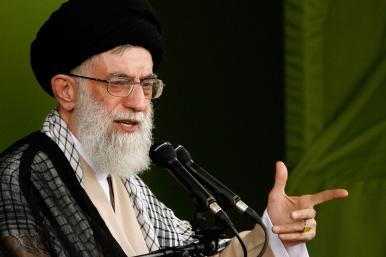
Iran's Supreme Leader Ali Khamenei delivers public remarks.
Articles & Testimony
Content of an Iran Deal Matters More Than Timing
The United States needs to be clear on the consequences of cheating, and for that it will need access to nuclear sites.
Jul 1, 2015
◆
  • Dennis Ross
Articles & Testimony
Can We Trust How Iran Would Spend Funds From a Nuclear Deal?
The deadline in the Iran nuclear negotiations has just been extended. But if an agreement is ultimately reached, Tehran is expected to receive a substantial financial windfall. Critics have argued that an influx of funds will permit Iran to expand its destabilizing regional activities. The Obama administration has argued that
Jun 30, 2015
◆
  • Michael Singh
Articles & Testimony
How to Counter Iranian Foot-Dragging (While Not Circumventing Congress)
With reports suggesting that the June 30 deadline for a deal on Iran’s nuclear will be missed, just as previous negotiating deadlines were, we’re on the brink of not an end but a new phase in this diplomatic saga. After July 9, the Iran Nuclear Agreement Review Act–which President Barack
Jun 29, 2015
◆
  • Michael Singh
Articles & Testimony
How to Salvage Some Security From the Botched Iran Deal
If the United States and its partners do not stand firm in the coming days and years, Israelis feel they may be left alone to face the ayatollahs.
Jun 29, 2015
◆
  • Michael Herzog
In-Depth Reports
Public Statement on U.S. Policy Toward the Iran Nuclear Negotiations
Endorsed by a Bipartisan Group of American Diplomats, Legislators, Policymakers, and Experts
Over the last three years, members of this bipartisan group have convened regularly under the auspices of The Washington Institute for Near East Policy to discuss the status of the Iran nuclear issue, frequently benefitting from the input of current Administration officials. Last week, at its most recent meeting, the
Jun 24, 2015
Articles & Testimony
In Iran Nuclear Talks, Sharpening Consequences of Failure Is Critical
Michael Singh and Simond de Galbert
Jun 23, 2015
◆
  • Michael Singh
Articles & Testimony
Don't Let the Deadline Drive the Deal
To get the best nuclear pact with Iran, Washington might have to let the June 30 target slide.
Jun 19, 2015
◆
  • Dennis Ross
Brief Analysis
Behind the 'Non-Flub' on Iran's Weaponization Program
The Obama administration appears to be walking back from a full accounting of Tehran's nuclear weaponization efforts, leaving ample room for further clandestine research and weakening a central pillar of the global nonproliferation regime.
Jun 19, 2015
◆
  • James Jeffrey
Brief Analysis
Judging Whether the Iran Deal Is Acceptable
In the nuclear negotiations, Tehran wants to have its cake and eat it too by obtaining sanctions relief while preserving the option to build a nuclear weapon in the future; the U.S. goal must be to deny Iran this capability.
Jun 18, 2015
◆
  • Michael Singh
Brief Analysis
How to Make Sure Iran's One-Year Nuclear Breakout Time Does Not Shrink
The final deal needs to specify the total enrichment capacity of Iran's installed centrifuges, mandate a robust verification regime, and include other restrictions to the nuclear program's size and content.
Jun 17, 2015
◆
  • Olli Heinonen
  • Simon Henderson
Articles & Testimony
An Opportunity, and Lesson, in Negotiating With Iran
A foreign policy fracas erupted last week when an Obama administration official slammed a New York Times story asserting that growth in Iran’s stockpile of enriched uranium–reported in an International Atomic Energy Agency update on Tehran’s compliance with its international obligations–presented an obstacle to negotiations over a U.S.-Iran nuclear agreement
Jun 9, 2015
◆
  • Michael Singh
Articles & Testimony
Implications of the Iran Nuclear Agreement for U.S. Policy in the Middle East
Any agreement should be judged not only by its verifiable nuclear restraints, but also by the credibility of U.S. readiness to contain the regime's asymmetrical military, ideological, religious, economic, and diplomatic moves in the region.
Jun 3, 2015
◆
  • James Jeffrey
Brief Analysis
Have International Sanctions Crippled Iran's Auto Industry?
The major industry has been better prepared than expected, but it still suffers from lack of liquidity and sluggish growth due to banking restrictions and other inefficiencies.
Jun 3, 2015
◆
  • Nahid Kalbasi
In-Depth Reports
Contextualizing Israeli Concerns about the Iran Nuclear Deal
Few issues have so polarized U.S. and Israeli leaders as the prospective accord with Iran regarding its nuclear program. Between Obama’s “historic opportunity” and Netanyahu’s “historic mistake” lie differing threat perceptions, divergent worldviews and regional assessments, and a deep deficit of trust. From an Israeli perspective, the U.S. administration has
Jun 2, 2015
◆
  • Michael Herzog
Brief Analysis
Khamenei's Nuclear Instructions: Public Versus Private
Leaked statements indicate that the Supreme Leader's private views on nuclear compromise are more flexible than his tough public posture, so the negotiators may be able to ignore his stated redlines on inspections.
May 26, 2015
◆
  • Mehdi Khalaji
Iran's Supreme Leader Ali Khamenei delivers public remarks.
Brief Analysis
No Voice of Reconciliation: Khamenei Targets the West
The Supreme Leader's latest statements, harping on "unreasonable" demands, are not preparing the Iranian public for compromise.
May 21, 2015
◆
  • Mehdi Khalaji
In-Depth Reports
Deterring an Iranian Nuclear Breakout
Whether or not the P5+1 and Tehran reach a nuclear deal, deterring an Iranian breakout, most likely at clandestine sites, will remain a core U.S. imperative for the foreseeable future. Although the U.S. intelligence community has a strong record of detecting clandestine nuclear programs, it has often failed to correctly
May 20, 2015
◆
  • Michael Eisenstadt
Articles & Testimony
Responding to Iranian Naval Aggression in the Persian Gulf
The latest provocation reinforces the need for any nuclear agreement with Iran to include strong enforcement mechanisms and swift and severe penalties for cheating.
May 15, 2015
◆
  • Michael Singh
Brief Analysis
The Camp David Conference Under the Shadow of Cuba
To ensure a successful summit with GCC leaders, the administration needs to make clear that its one-sided, 'transformational' approach to Cuba will not be repeated with the Iran nuclear deal.
May 5, 2015
◆
  • James Jeffrey
Video
In-Depth Reports
Israeli Prime Minister Netanyahu's Anniversary Message to The Washington Institute
Prime Minister of Israel Binyamin Netanyahu reiterated his country's objections to the proposed P5+1 nuclear deal with Iran in a prerecorded message to the Washington Institute for Near East Policy on the occasion of the research organization's 30th anniversary symposium, which took place April 29 - May 1, 2015.
May 1, 2015

Pagination

  • Previous page ‹ Previous
  • First page « First
  • …
  • Page 22
  • Page 23
  • Page 24
  • Page 25
  • Current page 26
  • Page 27
  • Page 28
  • Page 29
  • Page 30
  • …
  • Last page Last »
  • Next page Next ›

Sign Up for Email Updates from The Washington Institute

Never miss a breaking event on U.S. policy interests in the Middle East. Customize your subscription to our expert analysis, op-eds, live events, and special reports.


Sign up

Featured experts

Patrick Clawson
Patrick Clawson
Patrick Clawson is the Morningstar Senior Fellow and Research Counselor at The Washington Institute.
Michael Singh
Michael Singh
Michael Singh is the Managing Director and Lane-Swig Senior Fellow at The Washington Institute.
Simon Henderson
Simon Henderson
Simon Henderson is the Baker Senior Fellow and director of the Bernstein Program on Gulf and Energy Policy at The Washington Institute, specializing in energy matters and the conservative Arab states of the Persian Gulf.
Background image with TWI branding
logo
wordmark
Homepage

1111 19th Street NW - Suite 500
Washington D.C. 20036
Tel: 202-452-0650
Fax: 202-223-5364

Footer contact links

  • Contact
  • Press Room
  • Subscribe

The Washington Institute seeks to advance a balanced and realistic understanding of American interests in the Middle East and to promote the policies that secure them.

The Institute is a 501(c)3 organization; all donations are tax-deductible.

Footer quick links

  • About TWI
  • Support the Institute
  • Alumni

Social media

  • The Washington Institute on Facebook facebook
  • The Washington Institute on X x
  • The Washington Institute on YouTube youtube
  • The Washington Institute on LinkedIn linkedin

© 2026 All rights reserved.

Footer

  • Employment
  • Privacy Policy
  • Rights & Permissions