TWI logo The Washington Institute for Near East Policy
logo
wordmark
Homepage

Main navigation

  • Analysis
  • Experts
  • About
  • Support
  • Maps & Multimedia
Trending:
  • Arab-Israeli Relations
  • Military & Security
  • Israel
  • Iran
  • Syria

Regions & Countries

  • Egypt
  • Gulf States
  • Iran
  • Iraq
  • Israel
  • Jordan
  • Lebanon
  • Middle East
  • North Africa
  • Palestinians
  • Syria
  • Turkey

Issues

  • Arab & Islamic Politics
  • Arab-Israeli Relations
  • Democracy & Reform
  • Energy & Economics
  • Great Power Competition
  • Gulf & Energy Policy
  • Military & Security
  • Peace Process
  • Proliferation
  • Terrorism
  • U.S. Policy
TWI English
TWI Arabic: اللغة العربية Fikra Forum

Breadcrumb

  • Policy Analysis

Proliferation

Policy Analysis on Proliferation

Filter by:

Brief Analysis
The Need for Speed in Negotiations with Iran
Talks with Iran are gaining momentum, but its centrifuges are still enriching uranium, and its Arak facility may soon be capable of producing plutonium.
Oct 30, 2013
◆
  • Simon Henderson
  • Olli Heinonen
Articles & Testimony
How to Negotiate with Iran
A deal struck for its own sake on Tehran's nuclear program would be worse than no deal at all.
Oct 29, 2013
◆
  • Dennis Ross
  • Eric Edelman
Articles & Testimony
What a Nuclear Deal with Iran Could Look Like
By demonstrating firmness at the negotiating table, Washington can make plain the alternatives and force Tehran to confront, rather than evade, the consequences of its choices.
Oct 18, 2013
◆
  • Michael Singh
Brief Analysis
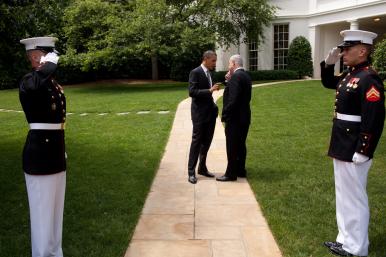
Sanctions Relief for Iran Without Congressional Approval
If he is willing to pay the political price, President Obama can give Iran as much economic relief as he wishes by simply not enforcing existing sanctions.
Oct 17, 2013
◆
  • Patrick Clawson
In-Depth Reports
Iran Nuclear Talks
A Brief History and the Road Ahead
In recent months, optimism has replaced malaise in the Iran nuclear talks. This shift is usually attributed to the election of the more pragmatic Hassan Rouhani as president and the impact of U.S. sanctions on Iran's economy. Yet a third, equally important factor is also at work: namely, the United
Oct 10, 2013
◆
  • Michael Singh
Brief Analysis
Rouhani's Negotiating Strategy: Divide and Isolate
A new document reiterates Iran's likely approach to negotiations with the West: creating fissures between the United States and Europe in order to break international consensus and coordination on nuclear sanctions.
Oct 9, 2013
◆
  • Steven Ditto
Video
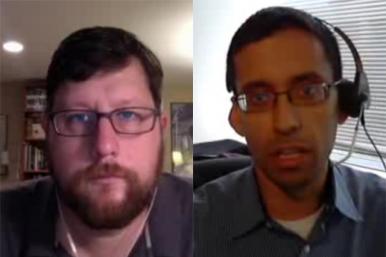
Bloggingheads: Rouhani and U.S. Iran Policy
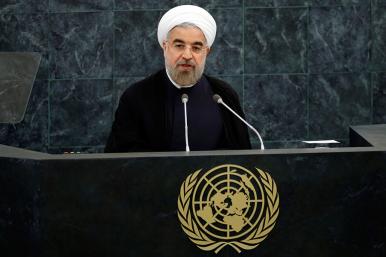
Institute managing director Michael Singh joined Matthew Duss of the Center for American Progress for a Bloggingheads.tv discussion of Iranian president Rouhani's UN address and the choices facing U.S. policymakers as they explore diplomatic solutions to the nuclear impasse.
Oct 7, 2013
◆
  • Michael Singh
Articles & Testimony
U.S. Should Hold Firm in Iranian Nuke Talks
If President Obama stands fast on key requirements, both sides can get what they need most: relief from crushing sanctions, and a strategic shift in Tehran.
Oct 7, 2013
◆
  • Michael Singh
In-Depth Reports
Reading Rouhani:
The Promise and Peril of Iran's New President
More than any previous Iranian president, Hassan Rouhani is an open book. In addition to his own copious Persian-language writings, he has engaged the domestic and international press throughout his three-decade political career, including as former chief nuclear negotiator. Analyzing these writings, speeches, and interviews can help clarify fundamental questions
Oct 7, 2013
◆
  • Steven Ditto
Articles & Testimony
Reversing Iran's Nuclear Program
The Washington Institute's Philip Solondz Distinguished Visiting Fellow addressed a Senate hearing on the prospects of diplomatic breakthrough with Iran. The following is an excerpt from his prepared remarks; download the PDF to read more, or watch video of the full hearing. The rapid pace of events since Iranian president
Oct 3, 2013
◆
  • James Jeffrey
What Would Be a Good Deal on Iran's Nuclear Programme?
On October 1, BICOM senior visiting fellow Brig. Gen. (ret.) Michael Herzog briefed journalists on a BICOM conference call, providing his assessment of Iranian president Hassan Rouhani's diplomatic offensive and the requirements for a successful deal to set Iran back from nuclear breakout capacity. The following is a summary of
Oct 1, 2013
◆
  • Michael Herzog
Articles & Testimony
Trust, but Clarify
Although President Obama should head down the diplomatic road toward a nuclear deal with Iran, he must make exceedingly clear what he will not abide.
Oct 1, 2013
◆
  • Dennis Ross
  • David Makovsky
Brief Analysis
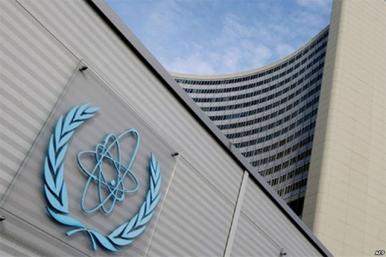
Iran's Ill-Tempered Letter to the IAEA
An official Iranian protest to the world's nuclear watchdog could be an attempt to undermine its role in verifying the regime's compliance with potential diplomatic agreements.
Sep 30, 2013
◆
  • Simon Henderson
Iran's September 12, 2013, Letter to the IAEA
On September 26, 2013, the Islamic Republic of Iran submitted an "explanatory note" to the IAEA responding to that agency's report on the implementation of nuclear safeguards in Iran. To read the full text of the Iranian letter, download the PDF.
Sep 30, 2013
Articles & Testimony
Talk Is Cheap
Sanctions might have brought Rouhani to the table, but they won't keep him there.
Sep 24, 2013
◆
  • Patrick Clawson
Brief Analysis
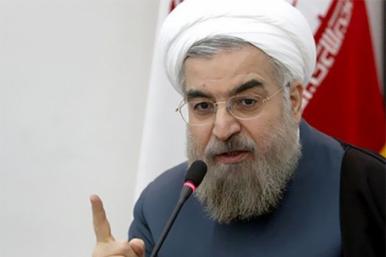
Who Is Hassan Rouhani?
President Rouhani's track record shows that he is deeply committed to preserving the regime's longstanding interests, and frequently at odds with the principles of international law.
Sep 24, 2013
◆
  • Steven Ditto
Brief Analysis
Nuclear Talks with Iran: Diplomacy and Diminishing Time
Stopping Iran's increasingly rapid progress toward becoming a de facto nuclear weapons state requires significant diplomatic progress, and quickly.
Sep 23, 2013
◆
  • Olli Heinonen
  • Simon Henderson
Articles & Testimony
After CW Deal, U.S. Must Keep Its Pledge to Aid the Syrian Opposition
Arming friendly rebel factions could help curb the slaughter of civilians, maintain pressure on Assad, eliminate the need for U.S. military action, and keep extremists in check, among other benefits.
Sep 21, 2013
◆
  • David Pollock
Articles & Testimony
Syria's Lessons for the Iran Nuclear Talks
Syria's Bashar al-Assad may have thrown a wrench into Iranian President Hasan Rouhani's plans for nuclear negotiations with the West -- if the United States learns the right lessons from the Syria experience.
Sep 20, 2013
◆
  • Michael Singh
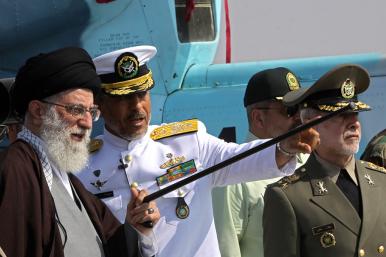
Iran's Supreme Leader Ali Khamenei delivers public remarks.
Articles & Testimony
Stalemate's End?
Forget Rouhani -- Iran's hardline Supreme Leader Ali Khamenei might actually be open to a nuclear deal with America.
Sep 19, 2013
◆
  • Patrick Clawson

Pagination

  • Previous page ‹ Previous
  • First page « First
  • …
  • Page 29
  • Page 30
  • Page 31
  • Page 32
  • Current page 33
  • Page 34
  • Page 35
  • Page 36
  • Page 37
  • …
  • Last page Last »
  • Next page Next ›

Sign Up for Email Updates from The Washington Institute

Never miss a breaking event on U.S. policy interests in the Middle East. Customize your subscription to our expert analysis, op-eds, live events, and special reports.


Sign up

Featured experts

Patrick Clawson
Patrick Clawson
Patrick Clawson is the Morningstar Senior Fellow and Research Counselor at The Washington Institute.
Michael Singh
Michael Singh
Michael Singh is the Managing Director and Lane-Swig Senior Fellow at The Washington Institute.
Simon Henderson
Simon Henderson
Simon Henderson is the Baker Senior Fellow and director of the Bernstein Program on Gulf and Energy Policy at The Washington Institute, specializing in energy matters and the conservative Arab states of the Persian Gulf.
Background image with TWI branding
logo
wordmark
Homepage

1111 19th Street NW - Suite 500
Washington D.C. 20036
Tel: 202-452-0650
Fax: 202-223-5364

Footer contact links

  • Contact
  • Press Room
  • Subscribe

The Washington Institute seeks to advance a balanced and realistic understanding of American interests in the Middle East and to promote the policies that secure them.

The Institute is a 501(c)3 organization; all donations are tax-deductible.

Footer quick links

  • About TWI
  • Support the Institute
  • Alumni

Social media

  • The Washington Institute on Facebook facebook
  • The Washington Institute on X x
  • The Washington Institute on YouTube youtube
  • The Washington Institute on LinkedIn linkedin

© 2026 All rights reserved.

Footer

  • Employment
  • Privacy Policy
  • Rights & Permissions