What One LPG Tanker Reveals About the Reliability of AIS Data in Hot Spots
by
Noam Raydan
Dec 23, 2025
Also available in
About the Authors

Brief Analysis
Part of a series: Maritime Spotlight
or see Part 1: Amid Red Sea Crisis, Saudi Company Launches North Shipping Service
The vessel's tracked activities and suspicious data transmissions should be investigated for potential illicit transactions with Iran and the former Assad regime.
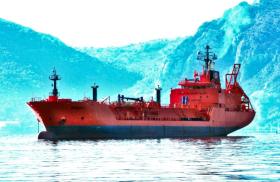
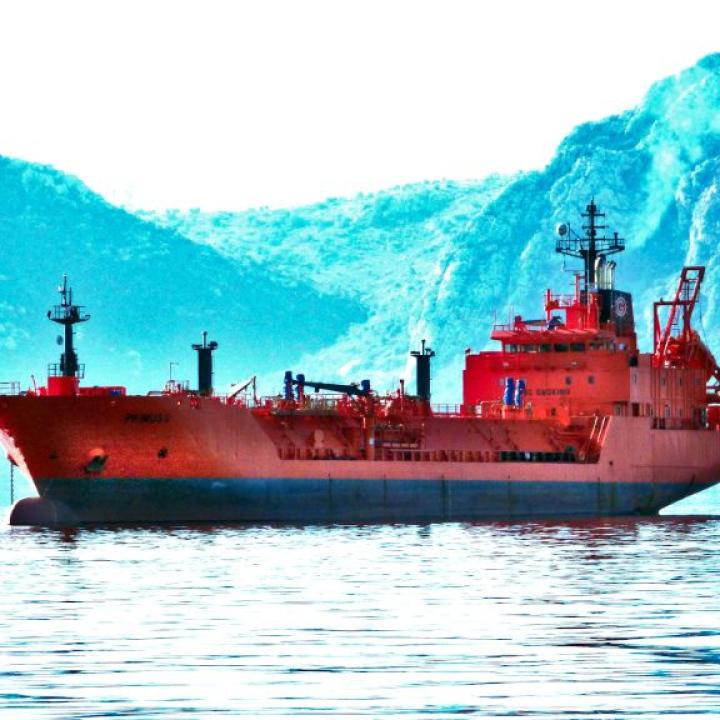
In October, a Tanzania-flagged liquefied petroleum gas (LPG) tanker crossed the Suez Canal after a period of trading, mainly in the Mediterranean and the Black Sea. The vessel has a history of navigation behavior that invites scrutiny, including dark activity and LPG deliveries to Syria under the Assad regime despite international sanctions. In addition, shipping data and open source intelligence indicate that it called at Syria’s Baniyas port this year. Tracking data also shows that the vessel changed its automatic identification system (AIS) name on November 6 in an area off Oman. Previously sailing under names such as Polar, Primus G, and Witch Queen, the tanker is now called Gas Aurora (IMO identification number 9050187).
This author first tracked the vessel in October 2022 when it was known as Witch Queen and sailing under the flag of Guinea-Bissau. At the time, it was observed moving between Turkey’s Dortyol port and Baniyas while pretending to be heading to Lebanon. That same year, the tanker was also reportedly involved in moving LPG from Kerch, Crimea, to Syria.
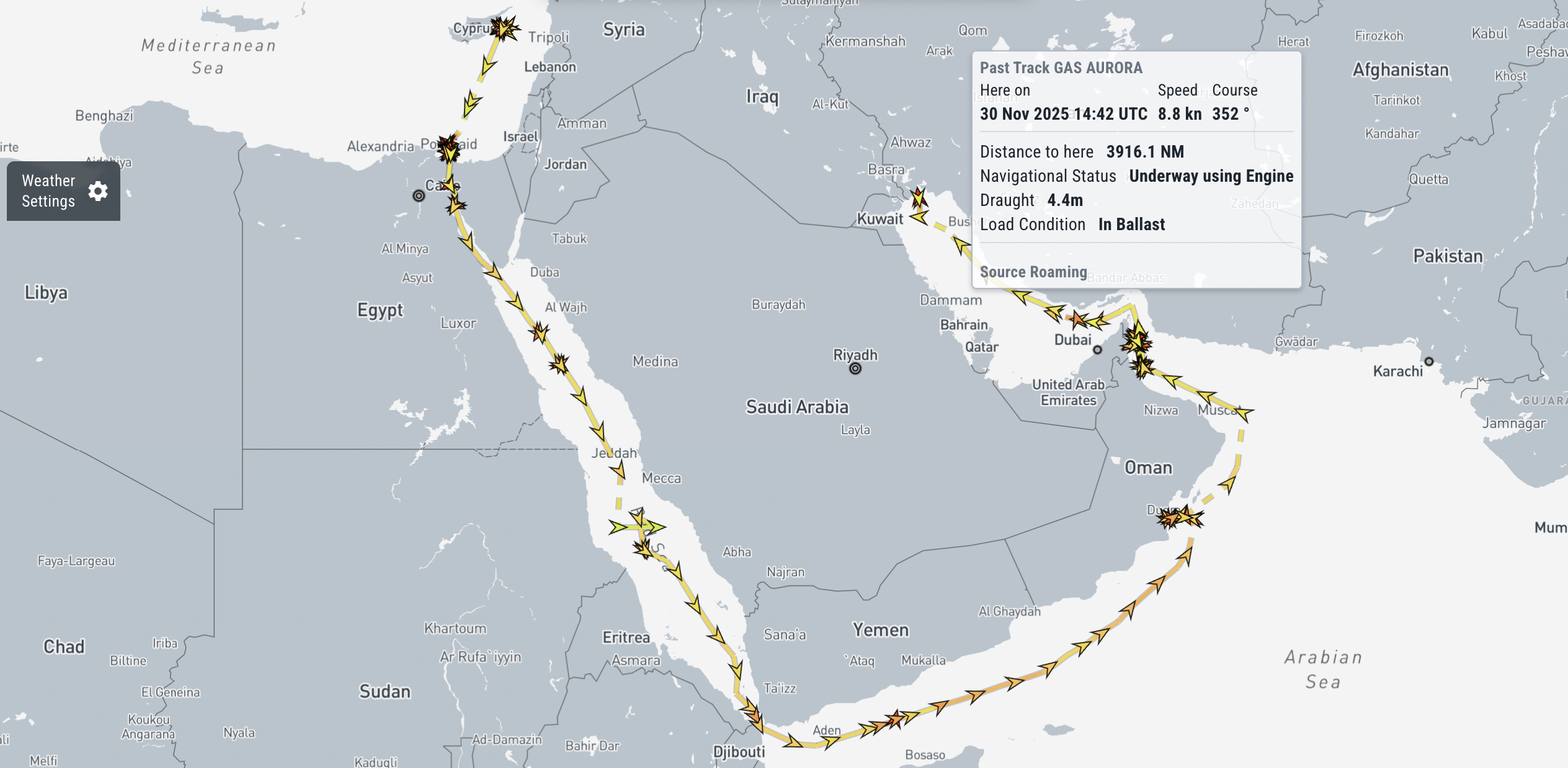
On November 30, 2025, the vessel sailed through the Strait of Hormuz, as indicated in the map below from MarineTraffic. Its navigation behavior on December 3 requires particular scrutiny, since the vessel was in a region where several ships have loaded Iranian oil and LPG cargoes clandestinely. The transmitted AIS data also shows that the Gas Aurora went to Iraq at one point during its voyage, but the reliability of this data could not be confirmed.

As the map below reveals, the vessel was sailing in the direction of a channel leading to Iran’s Bandar Imam Khomeini and Bandar Mahshahr ports. According to AIS data, the ship appears to have stopped outside this waterway. While it may appear to be at anchor, its position from at least December 3 through December 10 raises suspicion—an observation confirmed with analysts and ship trackers at Lloyd’s List Intelligence, Kpler, and TankerTrackers.com.
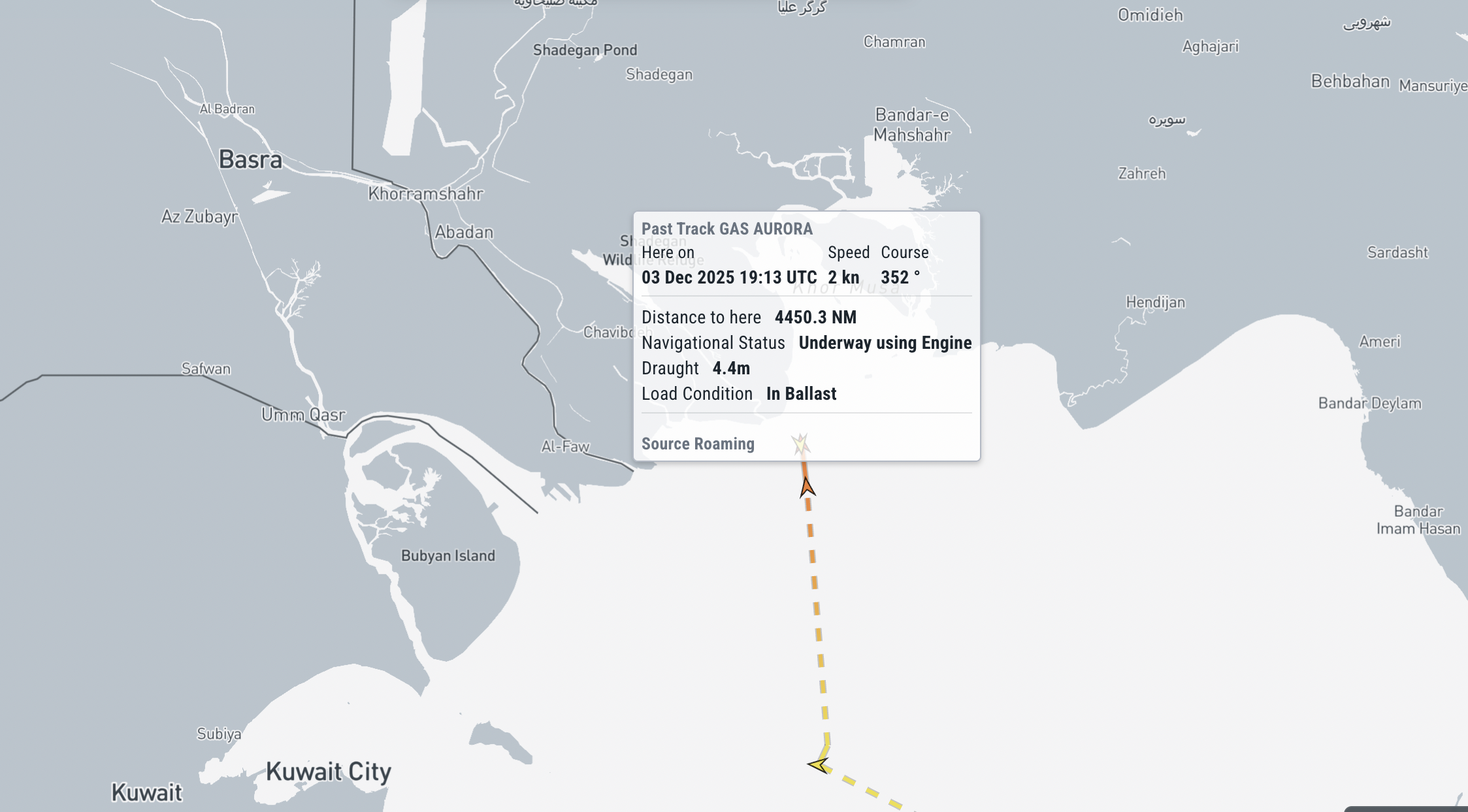

In the Persian Gulf, many tankers have been manipulating or falsifying AIS data to mask their loading of Iranian LPG. This includes AIS spoofing, which misleads monitors and vessels about a ship’s true position and identity and has implications for the maritime industry and global trade.
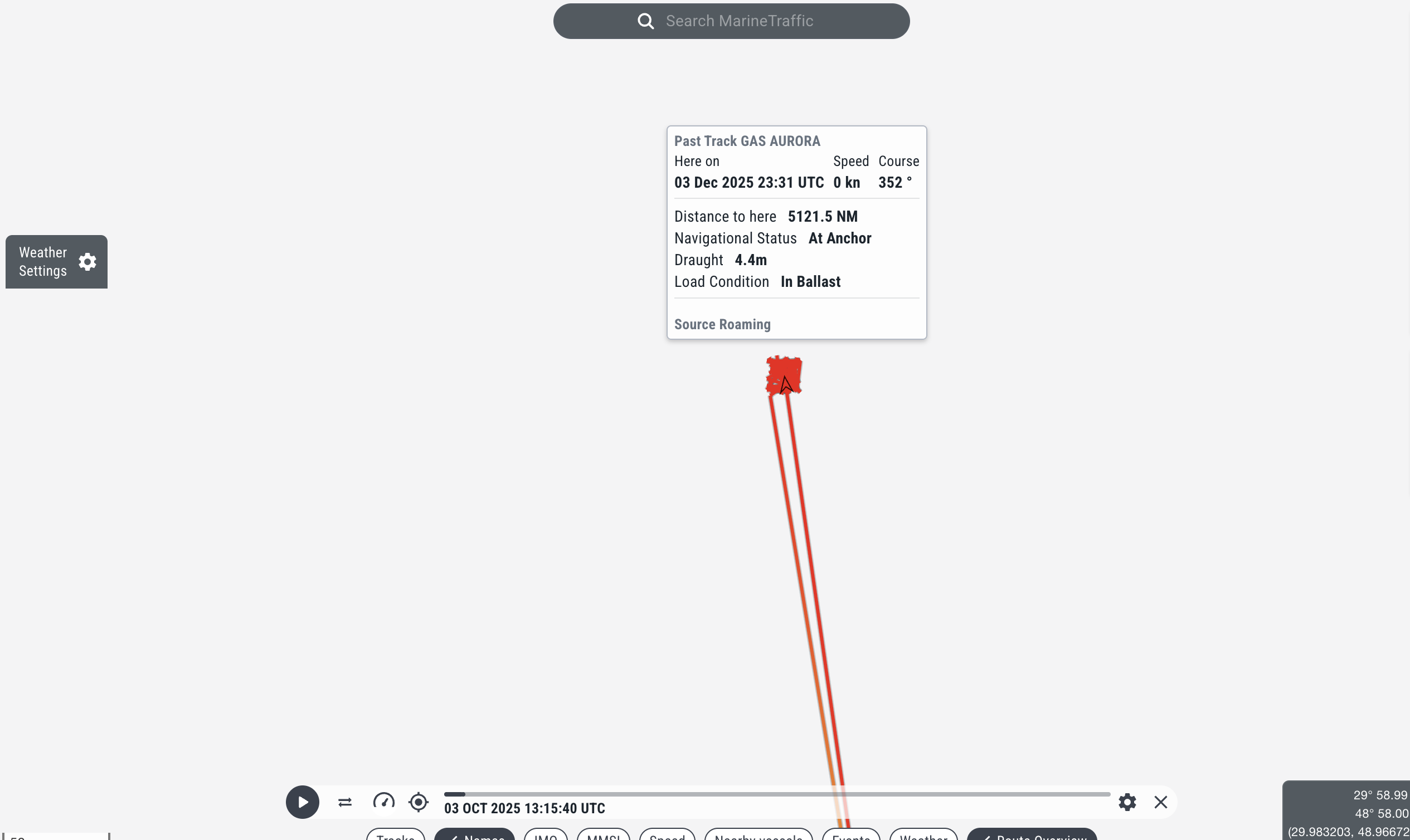
Lloyd’s List Intelligence analyst Tomer Raanan—who has closely investigated several LPG tankers that falsified AIS data to mask loadings in Iran and pretended that they loaded in Iraq—confirmed to the author that the Gas Aurora’s navigation behavior between December 3 and December 10 was suspicious. One key sign from the transmitted AIS data that calls for rigorous investigation is the so-called “box pattern” (shown below), which occurs when a ship appears to be extremely still. In “A Guide to Spoofing Spotting,” Lloyd’s List Intelligence identifies this pattern as a red flag that requires deeper investigation to determine whether a vessel’s positional data is genuine, particularly in hot spots like the Persian Gulf where spoofing is regularly reported.

In a March 2025 investigation, Raanan revealed that AIS trails can be falsified, showing that LPG tankers pretending to have loaded in Iraq between January 2024 and February 2025 may actually have been loading Iranian cargoes. Data from MarineTraffic, Lloyd’s List Intelligence, and VesselFinder shows that the Gas Aurora was at Iraq’s Umm Qasr port on December 12 before heading to Pakistan on December 13 and arriving around December 22 (see below). Nevertheless, it is unclear whether the ship actually loaded at Umm Qasr after December 11, as indicated by AIS data, before heading to Pakistan.
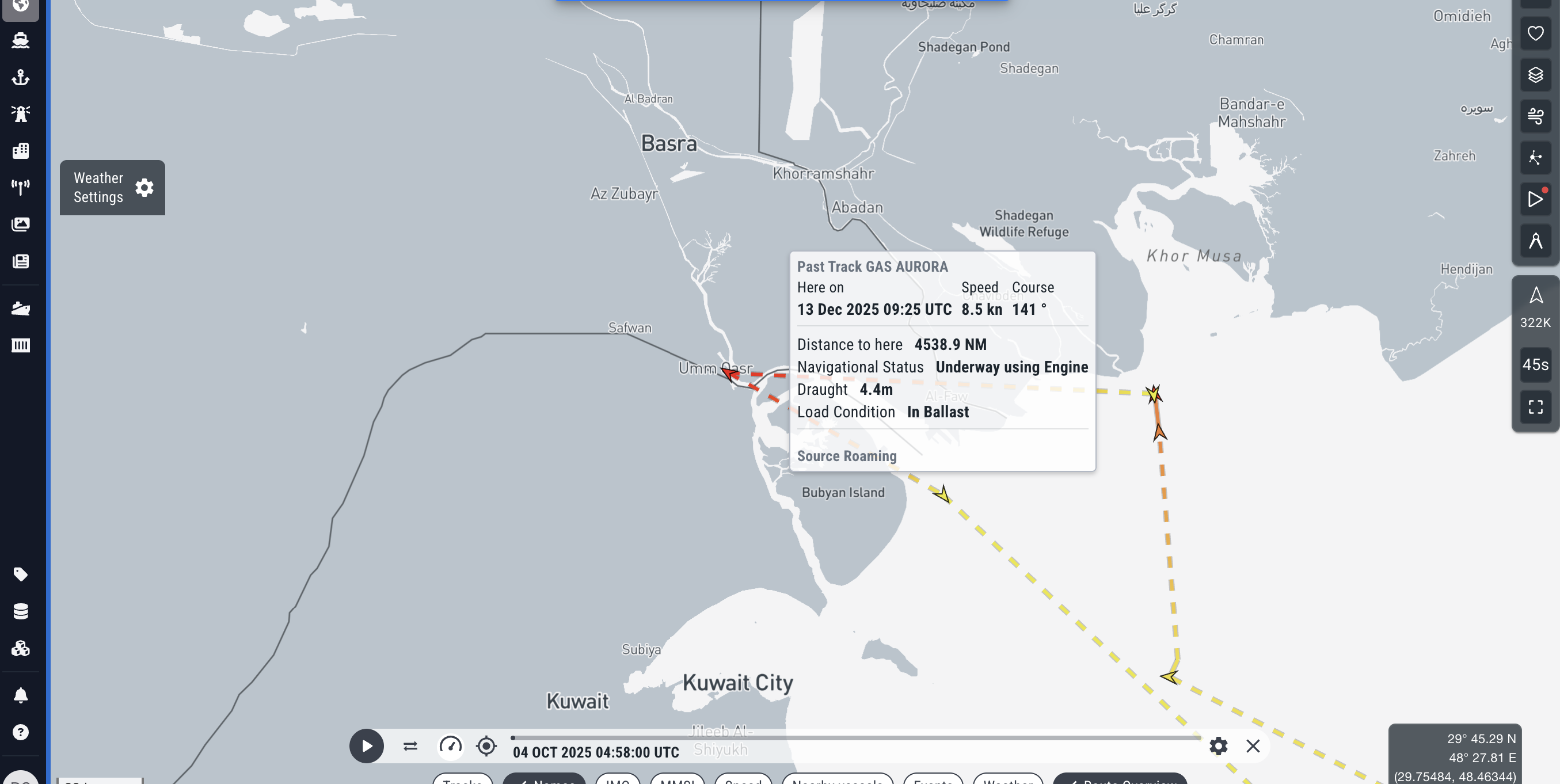

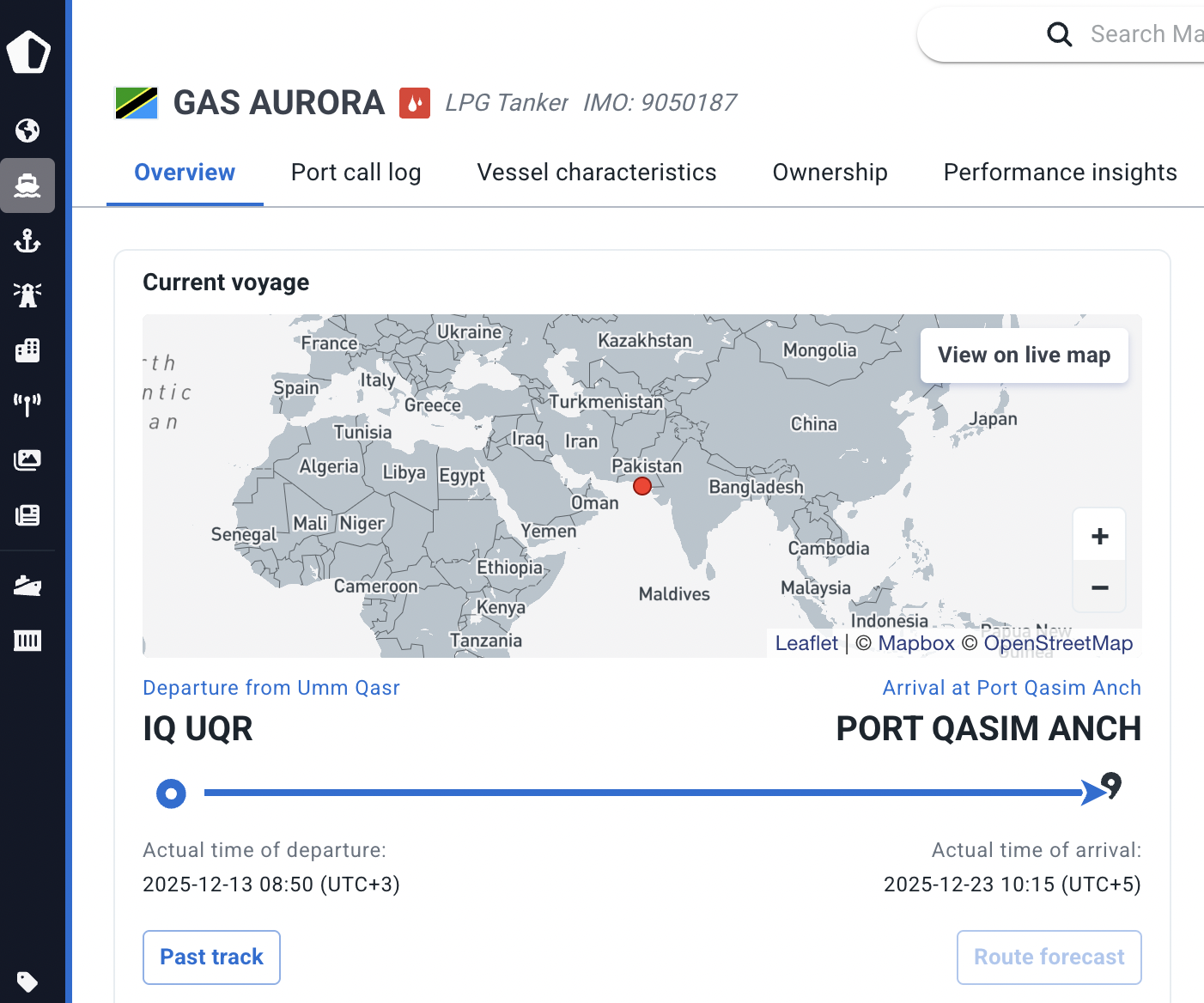

The data on Gas Aurora’s recent activities remains incomplete, and it was not possible to confirm the positions and loadings using satellite images at this time. Yet this LPG tanker raises clear red flags that call for investigation by the U.S. Treasury Department’s Office of Foreign Assets Control (OFAC). This is especially true given that it called at Syria’s Baniyas terminal during the Assad regime despite sanctions (read this related Maritime Spotlight post), and given the ample evidence of vessels in the Persian Gulf region falsifying their port calls in Iraq through AIS manipulation.
Share