- Policy Analysis
- PolicyWatch 4278
One Year After the Gaza Ceasefire (Part 5): The View from Jerusalem
Oct 9, 2026
About the Authors

Brief Analysis
Part of a series: One Year After the Gaza Ceasefire
or see Part 1: Chapeau: Assessing the Gaza Ceasefire, Year One
Although any new Israeli government will have more flexibility to work with the Trump administration on implementing the Gaza plan after this month’s election, the deep concerns Jerusalem has expressed about the “roadmap” will persist, requiring concerted, high-level diplomacy with the Board of Peace.
This PolicyWatch is part of a Washington Institute series analyzing the risks and opportunities in Gaza since the October 2025 ceasefire and offering recommendations for policymakers going forward. See the full series.
Israelis generally view the Trump administration’s plan for removing the Hamas threat and stabilizing the Gaza Strip as a long game with little chance of success. Yet they also realize it is the only game in town, and will likely remain so after Israel’s election later this month. What are Jerusalem’s most important stakes in this game, and how might its new government approach these issues as the United States and other actors push to implement the plan’s next phases more rapidly?
A Year of Pushing the Envelope
The launch of the Trump plan last year and the creation of the Board of Peace (BoP) as its execution arm gave the United States leadership of the Gaza file, relegating Israel to a secondary, though still critical, role. This shift was born out of Israel’s failure to achieve its full goals in Gaza after two years of intense fighting following the October 7 onslaught. Hamas was defeated militarily yet preserved its governing capacity and developed channels of recuperation.
The Trump plan explicitly laid out Israel’s goals in Gaza: releasing all the hostages (implemented in phase 1), disarming Hamas, removing it from power, and ensuring that Gaza could no longer be used as a platform for threatening Israel. The plan offered a mostly political path to realizing these elusive goals, without enforcement on the ground. Yet Israel does not believe this approach will work with a violent Islamist actor like Hamas. It has therefore pushed the plan’s envelope as much as possible over the past year, keeping constant physical pressure on Hamas, conditioning any reconstruction on the group’s disarmament, and slow-rolling the plan’s political aspects.
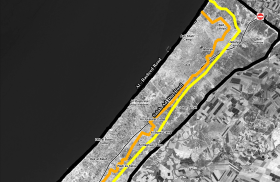
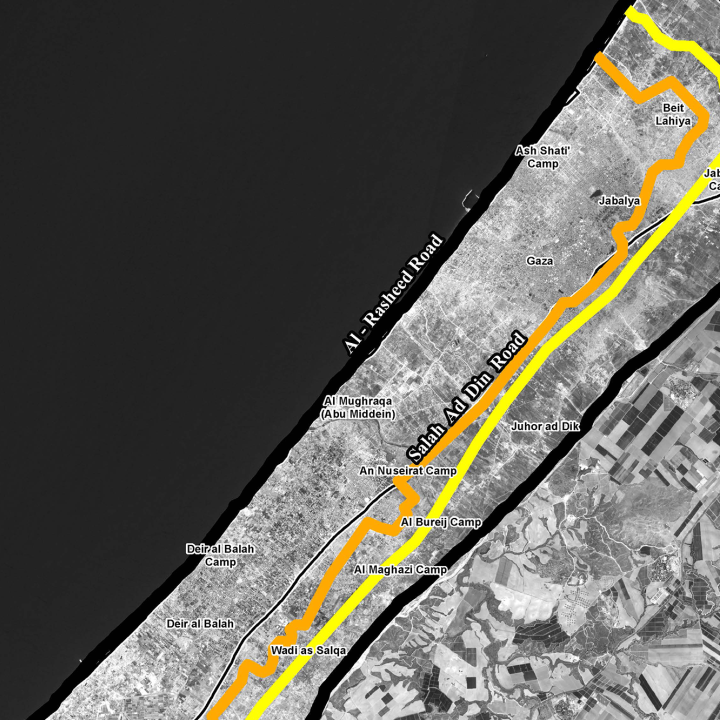
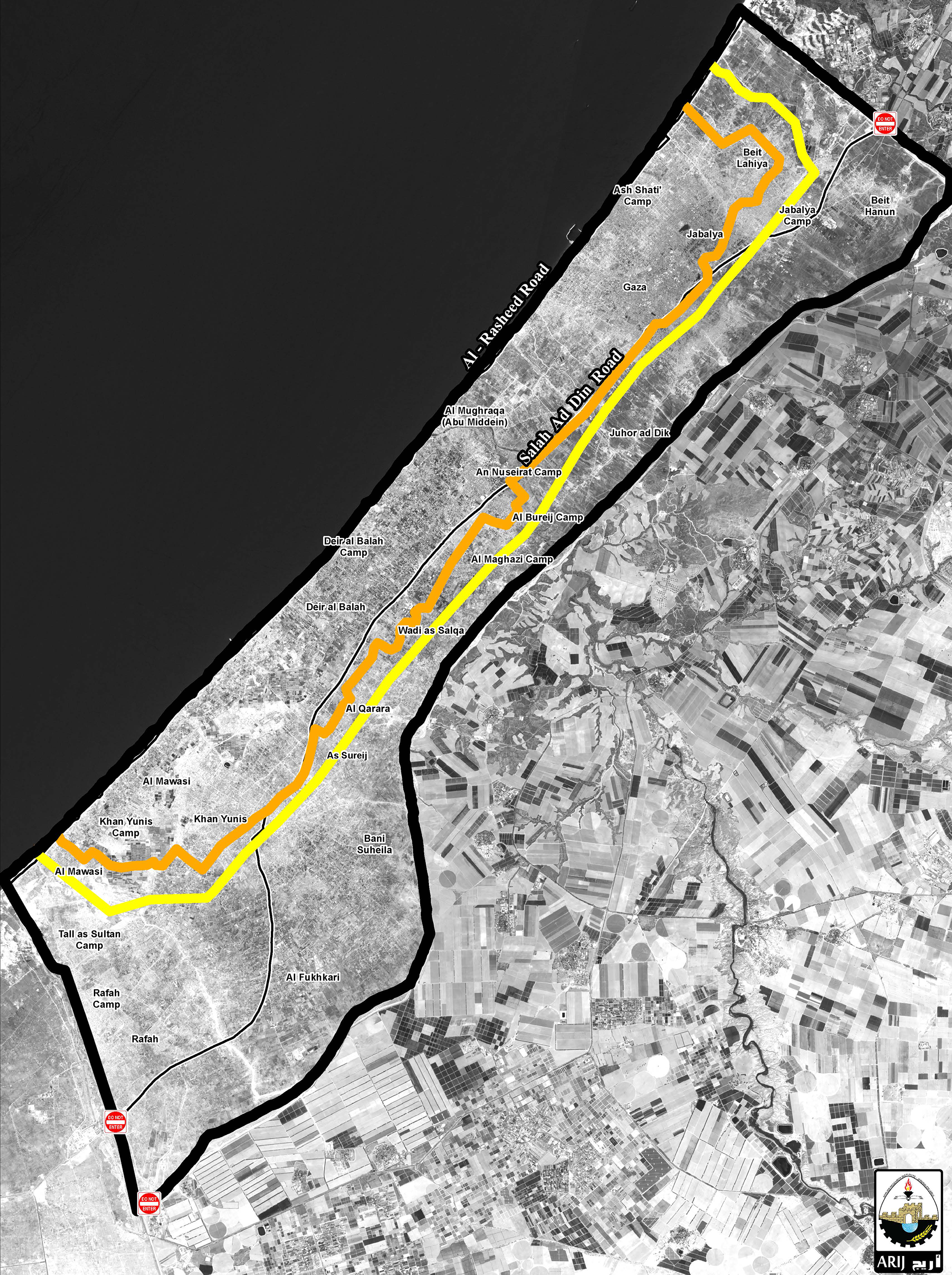
Israel has also expanded its effective control in Gaza, from approximately 53 percent of the territory (the area delineated by the ceasefire’s “Yellow Line” last year) to around 64 percent (the newer “Orange Line”). Hamas still controls the remaining area where the overwhelming majority of Gaza’s two million people live. Israel has continuously targeted senior terrorists and military infrastructure in that area, disrupting—but not thwarting—Hamas efforts to reassert governance and recover some of its military capabilities.

Meanwhile, Israeli cooperation on aid deliveries has allowed for considerable humanitarian improvements. With Gaza still in ruins, however, sanitary challenges have worsened, and the people face an acute lack of proper shelters as winter approaches. As described in the introductory essay of this series, the mobilization of implementation bodies stipulated by the Trump plan has been delayed: the National Committee for the Administration of Gaza (NCAG) has not entered the territory due to security fears; Palestinian police training has stalled because Israel would not commit to automatically allowing vetted trainees to return to Gaza; and the International Stabilization Force (ISF) is still in its infancy. On July 26, Israel’s security cabinet approved a tiny initial deployment of 200 ISF troops from “friendly countries.” Yet Israel has vetoed proposals to include forces from Turkey, deeming it unfriendly.
Jerusalem’s Roadmap Concerns
To get Hamas to accept (at least ostensibly) the implementation roadmap announced in July, the BoP employed a combination of soft political pressure by the regional mediators (Egypt, Qatar, and Turkey), direct U.S. engagement, and other inducements. This approach raised multiple concerns in Jerusalem.
For Israel, disarming Hamas and other terrorist organizations in Gaza is the most important task, but also a daunting one. Hamas has deeply entrenched its military capabilities in the territory over the years, building hundreds of miles of sophisticated tunnel networks and other massive militarization projects. Given the national trauma of October 7, Israel now insists that demilitarization be inclusive, comprehensive, verifiable, and permanent.
Most Israelis believe that real disarmament requires a credible threat of full-scale Israeli Defense Forces (IDF) action hanging over Hamas’s head, since the group has clearly held fast to its militant ideology and made visible efforts to rebuild its military wing and rearm over the past year. Yet Jerusalem realizes that the United States is unlikely to green-light wider use of the military lever in the foreseeable future. At best, Israeli intelligence assesses that other types of pressure would convince Hamas to surrender some of its heavier capabilities while retaining other weapons. In any case, the group will play for time to evade disarming as long as possible.
In its ongoing deliberations with the U.S. government and the BoP since July, Israel has raised a series of questions and objections regarding the plans for disarming Hamas and removing it from power:
- Given that the Palestinian police force and ISF are not designed to disarm Hamas forcefully, how will the BoP ensure full compliance without the necessary enforcement tools on the ground? And what consequences will be imposed for noncompliance?
- The roadmap calls for Hamas’s military capabilities and infrastructure to be “decommissioned” and its heavier weapons to be handed over to the NCAG for storage. Yet Israel demands that all of these weapons and infrastructure elements be destroyed or physically removed from Gaza to ensure that Hamas can never access them. The BoP has told Israel that these capabilities will indeed be rendered “unusable,” but it is still unclear when and how.
- The nature of the plan and the slow pace of implementation are giving Hamas too much space and time to regroup. Israeli authorities estimate the group’s current armed force at approximately 30,000 and growing.
- The roadmap calls for a phased disarmament process in combination with a phased Israeli withdrawal to a security perimeter near the prewar frontier. Yet Israel insists that until a full, verifiable disarmament process is completed, the IDF will conduct no further redeployments beyond reversing the limited one it carried out in recent months (i.e., moving from the Orange Line back to the Yellow Line). The exact sequencing of Israeli withdrawals has yet to be agreed.
- The BoP asked Israel to limit its strikes in Gaza to countering “imminent” threats. Yet given its post-October 7 doctrine of prevention, Israel has insisted on targeting “emerging” threats as well and has interpreted that label expansively. In recent weeks, with quiet American consent, it has paced up its targeting of senior Hamas military figures (e.g., taking out three of the group’s five brigade commanders) along with individuals who participated in the October 7 massacre.
- Hamas appears willing to go along with plans to establish an alternative government in Gaza, no doubt realizing the burden of governing such a thoroughly ravaged area without the means to do so. Yet Israel—having failed to produce an alternative to Hamas—is troubled by the potential emergence of a “Hezbollah model” in the Strip, whereby armed Hamas militants backed by Hamas loyalists in the civil service continue to call the shots from behind the scenes even if other actors assume formal leadership. This concern is exacerbated by the roadmap’s implication that Hamas might be permitted to retain light personal weapons. The group has repeatedly proven that light arms are all it needs to assert itself domestically. Yet the roadmap merely states that personal weapons will be “subject to the regulations of relevant Palestinian laws,” while the BoP has separately mentioned that it will introduce a buy-in program for them.
- The regional mediators have also reportedly promised Hamas that if it agrees to the principle of dismantling its “military wing” and giving up governance in Gaza, it will be able to run in this November’s Palestinian legislative elections, albeit under an assumed name as part of a coalition. Qatar and Turkey have never hidden their desire to legitimize Hamas as a political actor, but this scenario is unacceptable to Israel given the hard lessons it has learned from October 7—and from Hamas’s previous political ascension in 2006.
Israeli Electoral Implications
As Israel’s own election day approaches on October 27, none of the main campaigning parties has offered a new strategy for Gaza. Rather, election politics have prevented the current government from showing flexibility on implementing the Trump plan, spurring U.S. envoy Jared Kushner to note that Israel’s “crazy election” is making its officials “a little irrational.”
Although Gaza is not the most important or pressing front for Israel—which is more focused on Iran and Lebanon—any new government will likely share the following priorities:
- Working closely with the United States, which entails operating within the framework of Trump’s plan.
- Insisting on Israel’s continued freedom of action against threats.
- Making Hamas disarmament the hinge for all other elements.
- Contingent on the above, being more flexible on key implementation issues—in particular, speeding up the formation and deployment of the Palestinian police force and ISF; nailing down the details of phased Israeli redeployments; and advancing housing solutions, commercial activities, and other civilian programs.
- Cooperating with the BoP on implementing pilot reconstruction projects (“safe zones”) in Israeli-controlled areas of Gaza, designed to help the beleaguered population, provide hope for the future, and put pressure on Hamas by encouraging Gazans to move from its areas of control to Israeli-controlled zones.
Hence, one of the only important variables at stake in the election is whether voters choose leaders who will consider allowing the Palestinian Authority to play a growing role in Gaza.
Conclusion
Despite the current environment of skepticism, the fact is that Hamas has been significantly weakened militarily, financially, and politically. According to recent polls, Palestinian public support for the group and the “armed struggle” it represents has declined significantly.
Hence, once a new Israeli government forms, Washington and Jerusalem should be able to exploit this weakness and reenergize the Trump plan by prioritizing the Gaza file and accelerating the pace of implementation. Those goals would be best served by the following measures:
- Maximizing all levers of pressure at their disposal, which includes keeping the Israeli military option on the table, explicitly or implicitly.
- Accelerating the deployment of implementation bodies on the ground.
- Beginning reconstruction in Israeli-controlled parts of Gaza as soon as possible, while making genuine Hamas disarmament a prerequisite for any reconstruction in Hamas-controlled areas. This should also be the prerequisite for any Israeli redeployments.
- Enhancing financial pressure on Hamas, with an emphasis on preventing the group from exploiting incoming aid to fill its coffers.
- Pressing Qatar and Turkey to deny Hamas any exit from real disarmament and avoid rewarding the group politically.
- Pacing up humanitarian solutions, with an emphasis on infrastructure recovery and proper shelters.
Regarding longer-term political issues, the U.S. aspiration to carve an eventual path toward Palestinian statehood will be politically difficult for any Israeli government to support in the foreseeable future. For now, more focus should be put on truly reforming the PA in order to enable and enhance its role in Gaza. At the same time, all actors should avoid politically legitimizing Hamas, whether by helping it participate in the upcoming Palestinian elections or by planning additional direct U.S. engagement with its officials.
Finally, demilitarization and delegitimization should be complemented by deradicalization efforts, especially programs educating Gazans against Islamist radicalization and hate. Such programs have been a critical missing link in Gaza for too long—pursuing them would signal that Jerusalem and Washington have the strategic wisdom, patience, and perseverance to prevail in what will be a long game.
Brig. Gen. Michael Herzog (IDF, Ret.) is The Washington Institute’s Tisch Distinguished Fellow, former Israeli ambassador to the United States, and former chief of staff to Israel’s minister of defense.
Share