- Policy Analysis
- Policy Alert
Iran-Linked Tanker Delivers Russian Crude to Syria: Assessing the Risks
by
Noam Raydan
Jan 9, 2026
Also available in
About the Authors

Brief Analysis
The incident points to the myriad ways that U.S. adversaries might exploit Moscow’s efforts to claim a permanent stake in Syria’s needy postwar energy sector.
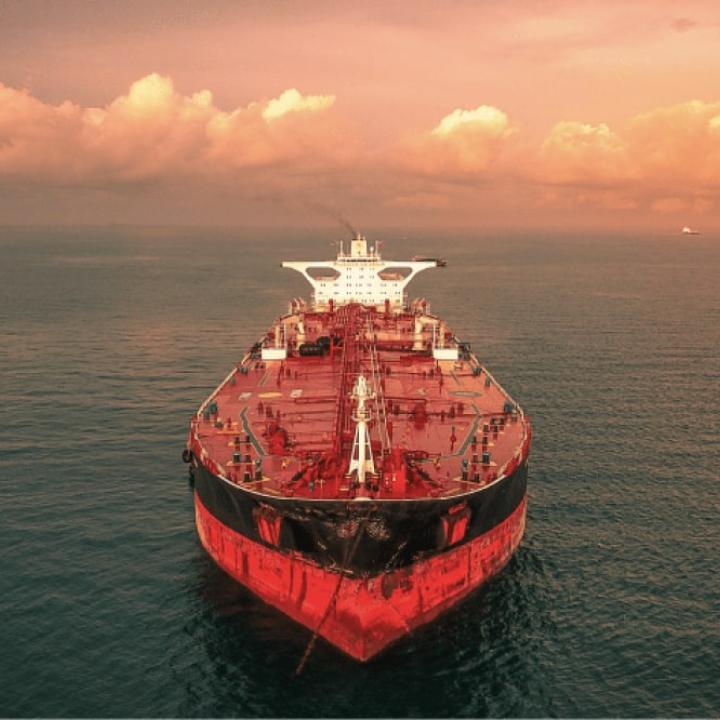
This month, shipping data showed a U.S.-sanctioned oil tanker arriving in Syria with a load of Russian crude oil—hardly a surprise given that sanctioned vessels involved in trading oil for Moscow called on Syria numerous times last year. Notably, however, when the U.S. Treasury Department sanctioned the latest tanker—the Aether (IMO identification number 9328170)—last summer, it cited the vessel’s connection to a “high-profile” Iranian shipping network. The details of the case highlight the risks of long-term Russian involvement in Syria’s beleaguered oil sector, which Iran, Lebanese Hezbollah, and other bad actors could readily exploit without closer U.S. government monitoring.
Tracking a “Shadow”
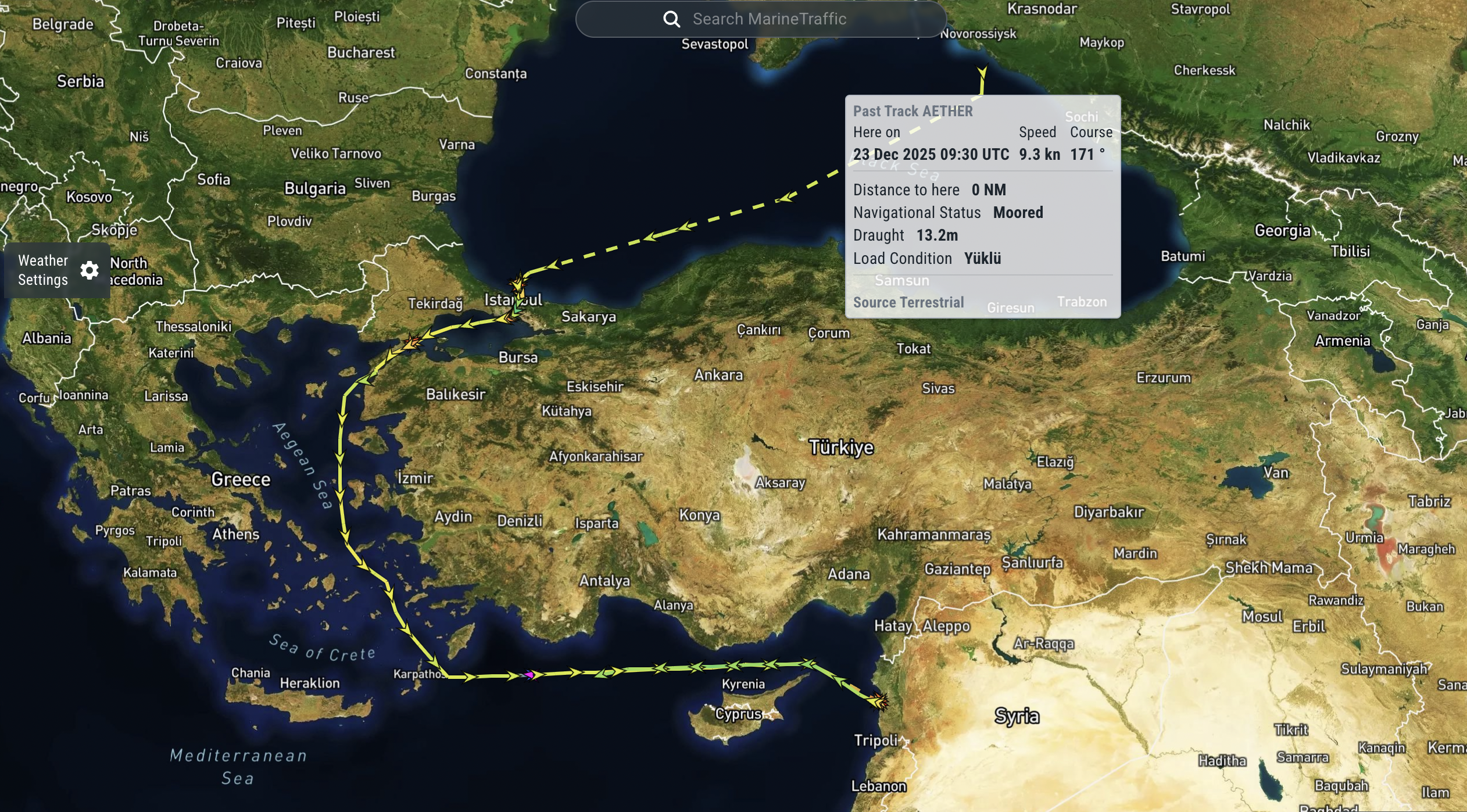
The website TankerTrackers.com brought attention to the Aether on December 29 after it left Russia’s Black Sea terminal of Sheskharis six days earlier. Data from its automatic identification system (AIS) indicated that it was bound for Syria’s Baniyas oil terminal; various tracking platforms then showed the tanker discharging in Syria and leaving on January 6. The Syrian Company for Oil Transport published a statement on January 4 about the ship’s arrival, providing brief details on its cargo.

The Treasury Department’s Office of Foreign Assets Control (OFAC) sanctioned the Aether last July for its links to “Zulu Ships Management and Operation-Sole Proprietorship L.L.C.,” a firm connected to a “shipping empire” controlled by Mohammad Hossein Shamkhani—the son of Ali Shamkhani, a top advisor to Iran’s Supreme Leader. The Aether was among many other vessels targeted in what Treasury called the “biggest Iran-related sanctions package since 2018.” This shipping network is accused of transporting oil and other cargoes from Iran and Russia to international buyers, making “tens of billions of dollars” in profit.
Indeed, data from Kpler shows that the Aether has been involved in the Russian oil trade for at least two years. The vessel was flagged to Panama when Treasury sanctioned it last summer, but an online shipping database now shows it flagged to Guinea, a known false ship registry. This is one of several circumvention methods used by the “shadow fleet” that carries out oil transactions between Iran, Russia, and Venezuela.
While it remains unclear if the Aether is still linked to Shamkhani today, vessels affiliated with sanctioned regimes and groups like Hezbollah commonly use front companies to mask their true ownership. Accordingly, the Aether merits scrutiny to determine if it remains connected to sanctioned Iranian entities. Even if direct links no longer exist, U.S. officials should still pin down who owns the vessel, since this shipping network regularly employs methods to mask its ties with the Shamkhani family.
Russian Crude to Syria
The first crude oil cargo to arrive in Syria following the collapse of the Assad regime was from Russia, and Moscow has remained the new government’s main crude oil supplier since March, when many U.S. sanctions had not yet been suspended and other sellers were still wary of violating them. Saudi Arabia sent two crude cargoes in October and November as part of a grant, but no other shipments have been recorded from the kingdom since then. In total, data from TankerTrackers.com indicates that Russia supplied Syria with around 49,000 barrels per day of crude last year, compared to 5,000 b/d from Saudi Arabia (a drop in the ocean compared to Moscow’s worldwide crude exports, which Kpler estimated at 3.68 million b/d in December).
Russia also supplied oil products such as diesel and fuel oil, though Syria’s suppliers of liquefied petroleum gas—which is essential for cooking and heating—were more diverse. According to ship tracking data from MarineTraffic and Kpler, LPG cargoes have originated from Turkey, Greece, and Spain, among other places.
Two months ago, Syria’s Ministry of Energy issued a tender to buy 7 million barrels of light crude between December 5, 2025, and March 15, 2026. The Aether was carrying around 600,000 barrels, according to data from TankerTrackers.com and Kpler. Given Syria’s ongoing need for crude imports, Russia can be expected to remain a key supplier.
Policy Recommendations
The activities of the Aether and various linked entities highlight three main issues that call for greater U.S. attention:
- Because Syria will presumably continue importing Russian crude in quantities that it cannot produce domestically, tankers transporting these supplies should be closely scrutinized to ensure they do not have present or past links to sanctioned regime elites in Iran or terrorist groups such as Hezbollah.
- Given that Moscow intimately knows the weaknesses of Syria’s energy sector after years of war and international isolation, it will no doubt continue to focus on areas where it can fill the gap with discounted crude, oil products, and the diluents necessary for mixing and processing heavy crude. This understanding—coupled with Russia’s goal of maintaining its military bases in Syria—is what has kept Moscow a consistent supplier of discounted barrels to Damascus.
- Given that illicit networks like Shamkhani’s have been benefiting from the Russian oil trade in general, and that U.S.-sanctioned tankers have continued to call on Syria, the Trump administration should raise this issue with Damascus. Ignoring it would only embolden illicit trading networks eyeing Syria, as well as problematic domestic players.
Noam Raydan is a senior fellow at The Washington Institute and co-creator of its Maritime Spotlight platform.
Share