Skip to main content
The Washington Institute for Near East Policy
Menu
Toggle Main Menu
Homepage
Main navigation
Analysis
Experts
About
Support
Maps & Multimedia
Trending:
Terrorism
Great Power Competition
Iran
Lebanon
Gulf States
Toggle List of
All Regions & Issues
Regions & Countries
Egypt
Gulf States
Iran
Iraq
Israel
Jordan
Lebanon
North Africa
Palestinians
Syria
Turkey
Issues
Arab & Islamic Politics
Arab-Israeli Relations
Democracy & Reform
Energy & Economics
Great Power Competition
Gulf & Energy Policy
Military & Security
Peace Process
Proliferation
Terrorism
U.S. Policy
Close List of All Regions and Issues
Close
Search Policy Analysis
TWI English
TWI Arabic:
اللغة العربية
Fikra Forum
Close Menu
Close
Search Policy Analysis
Search
Breadcrumb
Policy Analysis
All Policy Analysis by James Jeffrey
Filter by:
Keyword
Region
- Any -
Egypt
Gulf States
Iran
Iraq
Israel
Jordan
Lebanon
North Africa
Palestinians
Syria
Turkey
Issue
- Any -
Arab & Islamic Politics
Arab-Israeli Relations
Democracy & Reform
Energy & Economics
Great Power Competition
Gulf & Energy Policy
Military & Security
Peace Process
Proliferation
Terrorism
U.S. Policy
Date Published
- Any -
Past 7 Days
Past 30 Days
Past Year
Custom range...
Start date
End date
Type
- Any -
Articles & Testimony
Brief Analysis
In-Depth Reports
Sort by
Oldest first
Newest first
Found
333
results
Brief Analysis
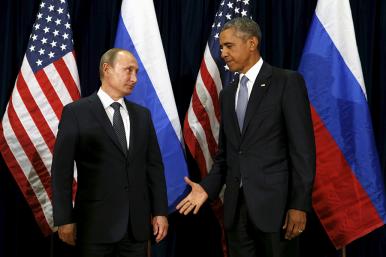
Russian Overflight of Turkey: More Than Meets the Eye?
The province that Putin's jets buzzed this weekend holds special demographic and historical significance, raising questions about the incident's potential significance as a warning to Ankara.
Oct 6, 2015
◆
James Jeffrey
Articles & Testimony
Misanalysis Makes a Mess
U.S. policy in Syria is failing because the Obama administration is prioritizing the urgent (rolling back ISIS) over the truly important (preventing Iran and Russia from rearranging Middle East security to their benefit).
Oct 2, 2015
◆
Robert Satloff
James Jeffrey
Brief Analysis
Obama at the UN: Reality Dawning, But Diplomacy Without Teeth Remains His Response
Although the president's speech correctly diagnosed the latest grave challenges to the international order, he has yet to acknowledge that belligerent actors will not respond to U.S. diplomatic signals unless they are backed by U.S. military power.
Sep 29, 2015
◆
James Jeffrey
Brief Analysis
Sep 28, 2015
◆
James Jeffrey
Brief Analysis
Beyond the Vote (Part 3): Implications for Regional Security
A former U.S. Army commander and a distinguished diplomat discuss how the nuclear deal could compromise longstanding U.S. interests in the Middle East if Washington does not do a better job of countering Iran's destabilizing ambitions.
Sep 21, 2015
◆
David Petraeus
James Jeffrey
Brief Analysis
Sep 14, 2015
◆
James Jeffrey
Articles & Testimony
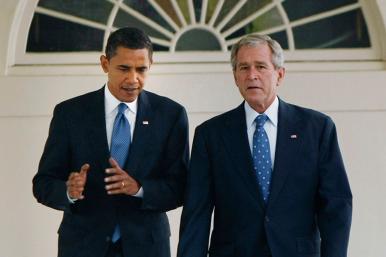
The Iran Nuclear Deal Is President Obama's Iraq Troop Surge
If the president's bet on Iran's transformation does not prove to be immediately and demonstrably right, his larger project could suffer the same fate as Bush's in the hands of his successor.
Aug 28, 2015
◆
James Jeffrey
Brief Analysis
Iraq's Political Crises Could Stall the Anti-ISIS Campaign
As bold reform efforts and political deadlines roil Baghdad and Erbil, Washington should help resolve the crises as soon as possible so that Iraq can turn back to the urgent fight against ISIS.
Aug 12, 2015
◆
James Jeffrey
Articles & Testimony
When Multilateralism Met Realism -- and Tried to Make an Iran Deal
If realist opponents of the Iran agreement insist that the JCPOA must go, they will need to explain in detail how the limited alternatives at Washington's disposal are worth the profound risks of killing the current deal.
Aug 11, 2015
◆
James Jeffrey
Brief Analysis
Aug 10, 2015
◆
James Jeffrey
In-Depth Reports
Assessing the Iran Nuclear Agreement and The Washington Institute’s Iran Study Group June 24 Policy Statement
Since the announcement of the Joint Comprehensive Plan of Action (JCPOA), members of The Washington Institute’s Iran Study Group have met to assess the agreement’s relationship to the parameters outlined in the study group’s June 24 policy statement. Members of the study group have also benefited from several hours of
Aug 4, 2015
◆
Robert Satloff
Dennis Ross
James Jeffrey
David Makovsky
Patrick Clawson
Michael Eisenstadt
Simon Henderson
Brief Analysis
Jul 28, 2015
◆
James Jeffrey
Articles & Testimony
These Are Not Serious Arguments for Abandoning the Iran Deal
The following item appeared in the "Letters to the Editor" section of the Washington Post on July 21 . As a critic of many administration decisions on Iran, I have sympathy for Eric Edelman's and Ray Takeyh's problems with the Iran deal but disagree with their suggested response: Congress kills
Jul 21, 2015
◆
James Jeffrey
Articles & Testimony
Iran Nuclear Deal Offers Shaky Compromise
The final agreement lies somewhere in between the April 2 interim parameters and Khamenei's maximalist demands, but whether Iran will adhere to the seemingly favorable terms is another question.
Jul 16, 2015
◆
James Jeffrey
Brief Analysis
Jul 14, 2015
◆
James Jeffrey
Articles & Testimony
How to Assess the Iran Deal and What to Do About It
Nothing, including reluctantly accepting a bad agreement, is as dangerous as leaving open the question of how the United States would react if Iran approaches a nuclear weapons capability.
Jul 14, 2015
◆
James Jeffrey
Brief Analysis
Jul 1, 2015
◆
James Jeffrey
Brief Analysis
Jun 27, 2015
◆
James Jeffrey
Brief Analysis
Behind the 'Non-Flub' on Iran's Weaponization Program
The Obama administration appears to be walking back from a full accounting of Tehran's nuclear weaponization efforts, leaving ample room for further clandestine research and weakening a central pillar of the global nonproliferation regime.
Jun 19, 2015
◆
James Jeffrey
Articles & Testimony
Implications of the Iran Nuclear Agreement for U.S. Policy in the Middle East
Any agreement should be judged not only by its verifiable nuclear restraints, but also by the credibility of U.S. readiness to contain the regime's asymmetrical military, ideological, religious, economic, and diplomatic moves in the region.
Jun 3, 2015
◆
James Jeffrey
Pagination
Previous page
‹‹
First page
« First
…
Page
6
Page
7
Page
8
Page
9
Current page
10
Page
11
Page
12
Page
13
Page
14
…
Last page
Last »
Next page
››