- Policy Analysis
- PolicyWatch 4258
25 Years After 9/11: NCTC Directors Assess Progress and Remaining Challenges
Part of a series: Counterterrorism Lecture Series
or see Part 1: U.S. Efforts against Terrorism Financing: A View from the Private Sector
Three top former counterterrorism officials look back on a quarter-century of combating the global terrorist threat, discussing how their setbacks and successes can help Washington fill gaps in its current CT approach.
On September 8, The Washington Institute held a virtual Policy Forum with three former directors of the U.S. National Counterterrorism Center (NCTC): Christine Abizaid, Matt Olsen, and Nicholas Rasmussen. The following is a rapporteur’s summary of their remarks.
Christine Abizaid (NCTC Director, 2021-24)
In late 2021, the terrorism landscape was ideologically and geographically diverse and highly individualized, with actors mobilized through their own networks and means. Al-Qaeda was present from Southeast Asia to West Africa, the Islamic State (IS) and its branches were observed globally, and the terrorist threat from Iran was to become increasingly acute over time. Meanwhile, that year’s withdrawal of U.S. forces from Afghanistan and the increased focus on adversarial competition were raising questions about how the United States should characterize global terrorist threats—and how well its counterterrorism architecture could meet those threats.
Two years later, Hamas’s October 7 attacks shifted the CT landscape, with ideologically diverse groups applauding the organization while IS and al-Qaeda sought to capitalize on the momentum of the assault by increasing their recruiting efforts. In their eyes, the incident seemed to reaffirm the effectiveness of terrorism as a tool to bring about strategic goals.
Stretching further back to 9/11, the United States has successfully dismantled major terrorist networks—including the transnational threat posed by groups like al-Qaeda—and demonstrated exceptional interagency coordination in defense of the homeland. Yet questions persist over how to remedy the underlying causes of terrorism in order to prevent groups from exploiting individuals with grievances. Over the years, government entities like the U.S. Agency for International Development engaged in various intervention efforts toward meeting this strategic objective, but longer-term commitments and investments are required.
Today, much of the threat has shifted to lone actors inside the United States. While American law enforcement is experienced at targeting organized groups with a center of gravity, lone actors pose a different challenge due to their diffused nature, extensive use of online networks, and other factors. To understand which prevention strategies will be most effective in countering this threat, authorities may need to take a bottom-up approach that leans on state and local law enforcement.
Another threat that has dominated the Trump administration's counterterrorism agenda is narcotics. To be sure, this problem is significant and can benefit from lessons learned in the CT realm, such as using highly networked, intelligence-led operations to identify and attack vulnerabilities. Yet this is not a terrorism problem.
Matt Olsen (NCTC Director, 2011-14)
Various incidents from previous decades show the progress and gaps in the U.S. counterterrorism approach. While 2011 saw the military operation that killed Osama bin Laden, authorities were unable to prevent a bomber from boarding Northwest Airlines Flight 253 on Christmas Day 2009, underscoring the NCTC’s struggles with thwarting plots using pieced-together intelligence. Yet the NCTC also notched many successes during this period, including the capture of the Libyan militia leader responsible for the deaths of four Americans in Benghazi—a major intelligence coup that proved interagency coordination could bring such perpetrators to justice in the United States.
Elsewhere, Iranian-sponsored terrorist and proxy networks have long been a dominant threat on the CT landscape, and that threat has only increased since the onset of this year’s war. The regime has a history of planning lethal attacks against U.S. officials, and such plots may intensify in the coming months and years due to the war and the killing of Supreme Leader Ali Khamenei. Authorities must therefore maintain focus on Iran-sponsored terrorism to minimize these threats.
Another crucial aspect of today’s threat landscape is a common understanding of the challenge that lone actors pose to law enforcement. Individual actors are becoming radicalized more quickly and in more insular ways; they also have increasing access to military-grade weapons inside the United States. Such actors can cause significant harm without triggering a preventive response from the current U.S. counterterrorism apparatus. While the Trump administration believes antifa and left-wing domestic extremism pose a particular threat to the homeland, individuals from both the far right and far left continue to be radicalized.
A longer-term CT challenge is early intervention, which entails addressing underlying grievances on a global scale. These efforts require a strong commitment to partnerships with—and investments in—developing countries, which would help authorities get to the roots of radicalization. As the threat landscape evolves, such partnerships will be key to avoiding missed inflection points like the rise of IS in 2014, which the United States failed to forecast.
Nicholas Rasmussen (NCTC Director, 2014-17)
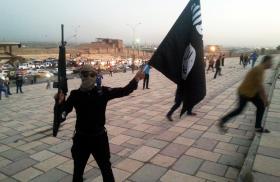
A decade ago, the terrorist landscape saw a major shift with the rise of IS and its wide use of foreign fighters. Once the creation of the “caliphate” was declared, Americans and other nationals began traveling to conflict zones in the Middle East to join the group or carry out activities on its behalf, including inside the United States. In response, the policy and operational sides of the U.S. counterterrorism apparatus had to work in tandem to disrupt this unique threat. Looking back, however, the NCTC framed its objectives too broadly at the time, creating the expectation that the fight against terrorism would have an endpoint instead of defining it as an enduring condition that needs to be mitigated perpetually.
The current trendline—characterized by an increasingly decentralized threat landscape that includes lone actors—can be attributed in large part to the online environment, which has allowed for a commingling of different extremist ideologies and an expansion in the “surface area” of terrorist threats. While CT officials were able to physically map out networks in the past, the online space has become far more complex, and the CT community has failed to keep up. More recent events—including the October 7 attacks, the Gaza war, and the Iran war—have contributed further unknowns to the threat landscape and may act as catalysts for additional extremist activity.
Finally, while transnational narcotics organizations pose a significant threat to U.S. national security, the Trump administration’s categorization of certain groups as “narco-terrorists” and its use of kinetic action as the tool of first choice may be counterproductive. Such an approach could hurt partner cooperation in the Western Hemisphere, resulting in less effective U.S.-led counternarcotics efforts.
This summary was prepared by Maya Chaovat. The Policy Forum series is made possible through the generosity of the Winkler Lowy Foundation.