TWI logo The Washington Institute for Near East Policy
logo
wordmark
Homepage

Main navigation

  • تحلیل‌ها
  • کارشناسان
  • درباره‌ما
  • پشتیبانی
  • نقشه و چند رسانه‌ای
مباحث روز :
  • نظامی و امنیتی
  • انرژی و اقتصاد
  • ایران
  • لبنان
  • کشورهای حاشیه‌خلیج فارس

منطقه‌ها و کشورها

  • اردن
  • اسرائیل
  • ایران
  • ترکیه
  • سوریه
  • شمال آفریقا
  • عراق
  • فلسطینی‌ها
  • لبنان
  • مصر
  • کشورهای حاشیه‌خلیج فارس

موضوع

  • انرژی و اقتصاد
  • تروریسم
  • خلیج و سیاست حوزه انرژی
  • دمکراسی و اصلاح
  • رقابت قدرت‌های بزرگ
  • روابط عرب و اسرائیل
  • سیاست آمریکا
  • عرب و اسلام سیاسی
  • فرایند صلح
  • منع اشاعه
  • نظامی و امنیتی
TWI English
TWI Arabic: اللغة العربية Fikra Forum

کشورهای حاشیه‌خلیج فارس

Policy Analysis on کشورهای حاشیه‌خلیج فارس

Filter by:

A British sailor salutes the Royal Navy flag - source: Department of Defense
Brief Analysis
Encouraging European Military Efforts to Reopen the Strait of Hormuz
Although the new European-led military initiative signals a divergence from the current U.S. approach, Washington could still harness Paris and London’s ability to mobilize international action on the shared goal of preventing Tehran from flexing its leverage over global energy markets.
۲۴ آوریل ۲۰۲۶
◆
  • Souhire Medini
Articles & Testimony
Iran’s Support for Russia and Lessons Learned from Ukraine
By taking urgent steps to institutionalize the wartime partnerships formed with (and between) Ukraine, the Gulf states, and Syria, Congress can strike heavy long-term blows against hostile Russian influence in the Middle East.
۲۱ آوریل ۲۰۲۶
◆
  • Aaron Y. Zelin
Brief Analysis
Egypt’s Gulf-Iran Dilemma
Cairo has put a premium on de-escalation in order to end the war as soon as possible and lessen the economic and energy shocks afterward, but this approach could backfire with its longtime benefactors in the Gulf states.
۱۵ آوریل ۲۰۲۶
◆
  • Ben Fishman
Articles & Testimony
War with Iran Tests Gulf-US Economic Model
The longstanding balance of Gulf security—in which states quietly maintained ties with Tehran while relying on Washington as the ultimate guarantor—is now under strain, making the future of their investment flows into the United States difficult to judge.
۶ آوریل ۲۰۲۶
◆
  • Simon Henderson
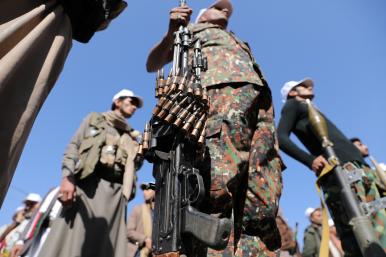
Houthi fighters rally in Sanaa, Yemen
Brief Analysis
The Houthis Join the War
Why did the group strike now, what might they do next, and how could it affect the U.S.-Israeli war with Iran?
۱ آوریل ۲۰۲۶
◆
  • April Longley Alley
A man speaks on his phone in Beirut, Lebanon, in front of posters depicting the U.S. flag - source: Reuters
Video
Brief Analysis
How Middle East Societies Grapple with War
A trio of leading regional journalists discuss how Emiratis, Israelis, and Jordanians are weathering the Iran crisis, what outcomes they are rooting for, and how their relations with Washington and each other might evolve as a result.
۲۴ مارس ۲۰۲۶
◆
  • Yonit Levi
  • Nadim Koteich
  • Amer Al Sabaileh
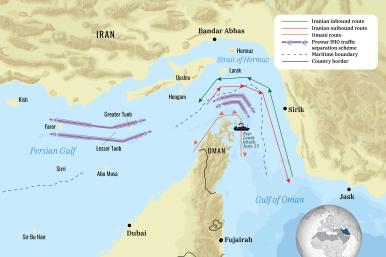
Tracking map for the oil tanker Nora.
Maps & Graphics
Brief Analysis
Iran’s Force Multiplier: Tracking the War’s Maritime and Energy Effects
If Washington wants to calm the markets and reach its other energy objectives more quickly, it will have to find a way of de-escalating a shipping crisis that Tehran is clearly taking advantage of in the Strait of Hormuz and beyond.
۲۳ مارس ۲۰۲۶
◆
  • Noam Raydan
USS Boxer leads U.S. Navy ships transiting the Strait of Hormuz - source: Department of Defense
Brief Analysis
Military Options for Reopening the Strait of Hormuz: Limitations and Imperatives
Loosening Tehran’s grip on the strait and its disruption of the global economy would entail not only reducing threats to navigation, but also increasing pressure on the Iranian economy in order to deter further attacks and create leverage for diplomacy.
۲۳ مارس ۲۰۲۶
◆
  • Michael Eisenstadt
  • Assaf Orion
Israeli Iron Dome missiles intercept rockets fired into Israel from Gaza by Hamas in October 2023 - source: Reuters
Video
Brief Analysis
Countering Threats from Iran’s Proxies and Partners During Wartime
Three experts discuss how Hezbollah, the Yemeni Houthis, and pro-Iran militias in Iraq have reacted to the war so far, outlining steps Washington and its regional partners can take to keep them from escalating further.
۱۳ مارس ۲۰۲۶
◆
  • Hanin Ghaddar
  • April Longley Alley
  • Michael Knights
Brief Analysis
How Russia Benefits from Oil Disruption in the Gulf
The de facto halt to Gulf oil shipments has already helped Moscow win back India as a major oil customer, while the rise in global prices could greatly refresh its depleted Ukraine war budget.
۱۱ مارس ۲۰۲۶
◆
  • Noam Raydan
  • Anna Borshchevskaya
Wang Yi, director of China's Office of the Central Foreign Affairs Commission, Ali Shamkhani, secretary of Iran’s Supreme National Security Council, and Minister of State and national security adviser of Saudi Arabia Musaad bin Mohammed Al Aiban shake hands in Beijing in March 2023 - source: Reuters
Articles & Testimony
China’s Middle East Ties Go Far Beyond Iran
Beijing is just as concerned about its Gulf partners as it is about China’s “old friends” in Tehran.
۱۰ مارس ۲۰۲۶
◆
  • Henry Tugendhat
A USAF F-35 launches a missile in flight - source: Department of Defense
Brief Analysis
Assessing U.S. Progress in the Iran War
While the United States and Israel are winning based on measures like the degradation of Iran’s naval force and missiles, a broader victory will require securing domestic support and avoiding the maximalism that has hindered past American military efforts.
۶ مارس ۲۰۲۶
◆
  • Michael Singh
Protesters display Iranian, Syrian, Palestinian, and Hezbollah flags - source: Reuters
Brief Analysis
The Wartime Role of Iran’s “Axis”: Countering Proxy and Terrorist Threats
Washington Institute fellows assess how Hezbollah, the Houthis, Iraq’s Hashd, and other Iranian proxies and allies are responding to the war, as well as how the Trump administration and partner governments might counter the risk of terrorist attacks given Tehran’s long track record of foreign plots.
۵ مارس ۲۰۲۶
◆
  • Assaf Orion
  • Hanin Ghaddar
  • Michael Knights
  • April Longley Alley
  • Michael Jacobson
  • Matthew Levitt
Smoke rises after an Iranian strike in Bahrain on March 2, 2026 - source: Reuters
Brief Analysis
War Comes to the Gulf
With Iran seemingly intent on continuing its strikes against Gulf targets and regional leaders mulling whether and how to respond, what can policymakers and military planners expect to see next in terms of likely target sets, risks to civilian areas, concerns over air defense munition supplies, and potential repercussions for energy and commercial shipping interests?
۳ مارس ۲۰۲۶
◆
  • Elizabeth Dent
  • Michael Eisenstadt
  • Noam Raydan
  • April Longley Alley
Brief Analysis
Epic Fury and Roaring Lion: From War Scenarios to Pressing Postwar Questions in Iran
Washington Institute experts assess the immediate implications of U.S.-Israeli military strikes on Iran, including the regime’s future after major leadership losses, reactions inside Iran and Lebanon, the fallout for the Gulf states, the contours of potential diplomacy once the fighting stops, and more.
۱ مارس ۲۰۲۶
◆
  • Assaf Orion
  • Michael Eisenstadt
  • Holly Dagres
  • Patrick Clawson
  • Hanin Ghaddar
  • April Longley Alley
  • Richard Nephew
Flag of Sudan - source: Reuters
Brief Analysis
Breaking the Deadlock in Sudan
Decisive U.S. leadership is essential to resolve worsening differences between fellow Quad members, neutralize spoilers, and ensure that Sudanese civilians—not just armed factions—shape their country’s future.
۲۸ ژانویه ۲۰۲۶
◆
  • Donald Booth
  • Areig Elhag
Photo of Arab officials meeting to discuss the Gaza crisis, February 2024.
Brief Analysis
Egypt’s Tightrope Walk Between Saudi Arabia and the UAE
Cairo will not be able to stand completely above Gulf rivalries, but tactful U.S. diplomacy on economics and regional security issues can help give Egyptian leaders enough space to continue their balancing strategy.
۲۳ ژانویه ۲۰۲۶
◆
  • Haisam Hassanein
Flag of Sudan
Articles & Testimony
Sudan Stands Between War and an Imposed Peace
Three possible scenarios have emerged for the war-torn country in 2026, but current realities suggest that a ceasefire and formal transition to civilian governance is the least likely.
۲۰ ژانویه ۲۰۲۶
◆
  • Areig Elhag
  • Ben Fishman
The LPG Tanker GAS AURORA, IMO 9050187
Maps & Graphics
Brief Analysis
What One LPG Tanker Reveals About the Reliability of AIS Data in Hot Spots
The vessel's tracked activities and suspicious data transmissions should be investigated for potential illicit transactions with Iran and the former Assad regime.
۲۳ دسامبر ۲۰۲۵
◆
  • Noam Raydan
◆ Maritime Spotlight
Map showing areas of control in Yemen after the December 2025 offensive by STC-aligned forces.
Maps & Graphics
Brief Analysis
Yemen’s Seismic Shift Has Consequences Beyond Its Borders
U.S. allies Saudi Arabia and the UAE are on a collision course in Yemen, as local forces threaten to reopen a war that could boost the Houthis, deepen Red Sea instability, and otherwise undermine the Trump administration’s Middle East goals.
۲۲ دسامبر ۲۰۲۵
◆
  • April Longley Alley

Pagination

  • Current page 1
  • Page 2
  • Page 3
  • Page 4
  • Page 5
  • Page 6
  • Page 7
  • Page 8
  • Page 9
  • …
  • Last page Last »
  • Next page Next ›

Sign Up for Email Updates from The Washington Institute

Never miss a breaking event on U.S. policy interests in the Middle East. Customize your subscription to our expert analysis, op-eds, live events, and special reports.

Sign up

Background image with TWI branding
logo
wordmark
Homepage

1111 19th Street NW - Suite 500
Washington D.C. 20036
Tel: 202-452-0650
Fax: 202-223-5364

Footer contact links

  • تماس
  • اتاق خبر
  • Subscribe

هدف انستیتو واشنگتن، تعمیق درکی متعادل و واقع‌بینانه از منافع آمریکا در خاورمیانه و نیز پیشبردِ سیاست‌هایی برای حفظ آن منافع است.

انستیتو واشنگتن یک سازمان غیرانتفاعی دارای مجوز 501(c)3 است که تمامی کمک‌های مالی به آن شامل معافیت مالیاتی خواهد شد.

Footer quick links

  • درباره انستیتو واشنگتن
  • پشتیبانی از انستیتو
  • Alumni

Social media

  • The Washington Institute on Facebook facebook
  • The Washington Institute on X x
  • The Washington Institute on YouTube youtube
  • The Washington Institute on LinkedIn linkedin

© 2026 کلیه حقوق محفوظ است

Footer

  • استخدام
  • حریم خصوصی
  • حقوق و مجوزها