Elizabeth Dent is the Nathan and Esther K. Wagner Senior Fellow at the Washington Institute for Near East Policy, where she focuses on U.S. foreign and defense policy toward the Gulf states, Iraq, and Syria.
Brief Analysis
Given the kingdom’s simultaneous push for more technological autonomy and more American business deals, Washington should seek deeper—but conditional—cooperation that is closely tied to the broader strategic partnership.
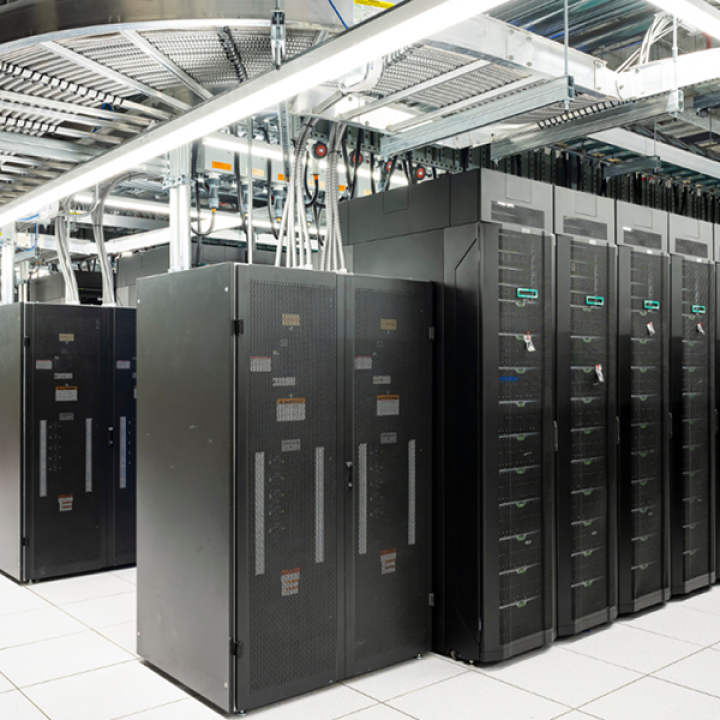
At this week’s LEAP technology conference in Saudi Arabia, HUMAIN—an artificial intelligence firm backed by the kingdom’s Public Investment Fund—announced that its AI infrastructure is operational, unveiling multiple ventures to grow its operations quickly. Because most of these ventures are with American companies, the event is a net positive for bilateral relations and U.S. interests. Despite the kingdom’s continued pursuit of strategic autonomy to hedge against uncertainties about America’s position in the region, Riyadh has clearly demonstrated its preference for U.S. partnerships. Washington should respond to this strategic opening with a clear, phased pathway for the kingdom to expand its access to advanced technology, emphasizing measures that both protect U.S. technology and align with other aspects of the bilateral relationship.
Building AI Autonomy Through Partnerships
Recently, Riyadh has been shifting from simply purchasing technological access to owning and operating the hardware and software on which regional AI may depend. This includes building more data centers on Saudi soil, ensuring local control of sensitive data, owning major Arabic language models, and avoiding dependence on any one foreign company.
For instance, HUMAIN announced the following deals with American firms during the past week alone: an AMD-Cisco computing initiative for one gigawatt of AI infrastructure by 2030; an expanded partnership with Microsoft to fold HUMAIN’s ALLAM language learning model and workflow platform into Microsoft products; a deal with the U.S. company Together AI for a 250-megawatt data center linking Saudi compute power to global demand; a deal with Amazon to establish a 50-megawatt AI zone; and a collaboration with the U.S. firm Applied Intuition to deploy self-driving transport trucks on Saudi roads. At the same time, other Saudi companies announced deals with Chinese firms, including a partnership between Mobily and BytePlus to build physical cloud infrastructure, a finance contract with Tencent Cloud, an Arabic-language AI model based on a Chinese platform, and a laptop production deal with Lenovo.
These moves signal that Riyadh wants to become plugged into the global AI industry while holding onto elements that can provide it with the most leverage: namely, infrastructure, applications, data, and a wide swath of regional customers. And although it continues to rely heavily on foreign hardware, software, and expertise, it is simultaneously diversifying these external partnerships and trying to build systems it can eventually own.
Yet the majority of HUMAIN’s partners are American companies, including major players like SpaceXAI, Google, and Adobe. Thus, the leverage the kingdom is hoping to build still runs through the United States—leaving Washington with the task of balancing these initiatives with clear safeguards while giving the Saudis phased access to more advanced technologies.
The Iran Backdrop
The shift in Saudi strategy is unfolding in the shadow of the Iran war, during which Tehran has both threatened and struck Gulf energy and digital infrastructure, including data centers. But Riyadh is leaning in anyway.
Although allied military strikes and defense operations have degraded Iran’s missile and drone threat, they have not eliminated it. Officials in Riyadh, Washington, and relevant private corporations recognize that the near-term threat is likely to persist and may get worse before it gets better. Rather than seeing this risk as a reason to delay opportunities, however, authorities should be weighing physical and digital resilience measures as part of the investment calculus.
Regional instability has not driven corporations away, but it has raised the cost of operating there. Firms are absorbing higher insurance premiums, greater cybersecurity demands, and more hardened protection measures—and, ultimately, passing these costs on to consumers. This is not solely a product of the current war or evidence that U.S. security guarantees have entirely collapsed, but a commercial response to a threat that air and missile defenses can only reduce, not remove. Yet making compute, data, and cloud infrastructure more resilient against disruption is a sensible long-term strategy anywhere in the world, particularly as global reliance on these capabilities grows and threats evolve.
Shaping Gulf AI Competition
Saudi Arabia is also competing with the United Arab Emirates to become the region’s main AI hub. Abu Dhabi is still the leader in terms of investment, infrastructure, implementation, and partnerships, while Riyadh offers a much larger market and has the vast tracts of land required for data centers and energy facilities. Saudi Arabia’s longstanding “Vision 2030” plan aims to raise productivity in energy, logistics, finance, defense, and other government services as it prepares for a diversified post-oil economy. AI and emerging technologies are a crucial part of that strategy, and essential to catching up with its neighbor. Moreover, Arabic language models like ALLAM may enable the Saudis to appeal to a broader regional base than the UAE.
Even as they vie for the largest share of investment and influence, Riyadh and Abu Dhabi’s competition could help build a stronger Gulf-wide tech sector. Yet duplication in power generation, connectivity, and security architecture is expensive and could just as easily yield disconnected networks, differing standards, and diminishing U.S. influence. Washington should therefore steer both countries toward complementary development of AI infrastructure. Their rivalry can and will persist when it comes to making investment bids and attracting talent, but officials should ensure commonality on cybersecurity, export rules, data protection standards, and trusted cloud infrastructure. This would make it easier for U.S. firms to operate across the Gulf and establish trusted safeguards to ensure that sensitive technology does not leak.
Washington has already eased export controls for the UAE, removing restrictions on its drone program and allowing approved entities to receive certain military, space, and dual-use technologies without a separate license. Some Emirati entities have also been cleared to receive advanced microchips and servers. In exchange, the UAE has publicly committed to Washington as its primary technology partner, provided reassurances that it will protect U.S. tech, and announced investments on American soil. In other words, this is not a blanket opening of U.S. tech markets to a Gulf partner, but a controlled upgrade based on security requirements, approved users, and reciprocal investments.
Implications for U.S. Policy
Partners who commit to specific standards and safeguards can and should have access to some of America’s most advanced technologies. As such, Washington should create a phased pathway for Saudi Arabia similar to what it has done for the UAE—so long as this expanded access is conditioned on end-use monitoring, cybersecurity requirements, and enforceable limitations on Chinese access.
AI cooperation must also be treated as a component of the broader U.S.-Saudi relationship and integrated with bilateral discussions on security cooperation, civil nuclear cooperation, arms sales, missile defense, maritime security, counterterrorism, and other components. Numerous U.S. national security interests remain at stake in the Saudi relationship, such as preventing nuclear proliferation; deterring Iranian attacks on American forces based in-country, international shipping, regional energy facilities, and digital infrastructure; keeping advanced U.S. technologies out of China’s hands; preserving American commercial and political influence in the region as states diversify their partnerships; and creating a more integrated and interoperable Gulf security and technology infrastructure.
Hence, the Trump administration’s first step should be to state a coherent Saudi policy that links AI and other emerging technologies with the overarching relationship. U.S. officials can then offer a phased, UAE-like pathway for Saudi access to advanced AI and computing cooperation. As part of this policy, Washington should work with Riyadh and Abu Dhabi to establish shared standards on cybersecurity, export controls, and responsible AI so that Gulf competition does not result in fragmentation. Officials should not only be concerned about U.S. technologies leaking to China, but also about their potential use to fuel countries’ adoption of Chinese AI models, norms, and practices. The layers of security to prevent this should include commitments to protect both U.S. tech (e.g., high-end chips) and U.S. practices.
In exchange, closer tech ties could reinforce U.S. influence even as regional leaders seek to diversify their security, political, and technology partnerships. The goal should not be to prevent Saudi Arabia from building AI capacity, but to ensure that its emerging platforms are secure, resilient, and aligned with U.S. interests.
Elizabeth Dent is the Wagner Senior Fellow at The Washington Institute and former director for the Gulf and Arabian Peninsula at the Pentagon.