- Policy Analysis
- PolicyWatch 4254
Helping the Gulf and Ukraine Build Their Counter-Drone Partnership
Aug 28, 2026
Also available in
About the Authors


Brief Analysis
Ukrainian cooperation with Gulf states on drone and counter-drone technologies is expanding as they contend with similar threats and concerns, so Washington should do whatever it can to enable and coordinate this growth.
Drone warfare has transformed battlefields and defense planning across the world. Cheap unmanned systems can damage military sites, energy infrastructure, and civilian targets while overwhelming expensive air defense systems, making counter-drone technologies a central feature of modern air defense. Ukraine has become a testing ground for drone and counter-drone innovation since the 2022 Russian invasion, while the Iran war has forced Persian Gulf states to face their own urgent drone and missile threat from both Tehran and its regional proxies. This shared threat is producing defense cooperation between Kyiv and Gulf partners such as Saudi Arabia, Qatar, and the United Arab Emirates.
Washington should deepen this cooperation through joint training, information sharing, integration of air defense command and control (C2), and responsible technology-transfer rules. This would strengthen Gulf regional defense, support Ukraine’s growing innovation network, and reinforce critical U.S. security partnerships in both regions.
Converging Threats, Expanding Defense Cooperation
In Ukraine, Russia has repeatedly used Iranian-designed Shahed drones and other one-way attack systems to target cities, ports, and critical infrastructure. These attacks have forced rapid innovation in unmanned systems, electronic warfare, and interception. Ukraine’s solutions are not only battle-tested, but also scalable and relatively inexpensive.
Gulf states possess expensive defense systems integrated with the U.S.-led regional security architecture. Yet the Iran war has tested this architecture’s heavy reliance on expensive defense systems and munitions with long production and backfill times. Gulf states are diversifying their security partnerships due to the strain on the American industrial base, the rising costs of U.S. defense systems, perennially shifting U.S. foreign policy, and Washington’s constraints on end-use monitoring. Gulf defense spending is also projected to increase by at least 20 percent in the next three years.
As a result, these states have become interested in the type of battlefield-tested, scalable, affordable solutions Ukraine can offer and are looking to grow indigenous production as well. Ukraine’s defense industry is increasingly capable and powerful, particularly as it has adapted its regulatory framework to incentivize foreign military sales and allow for more private-sector entrants.
Thus far, Ukraine has signed ten-year drone deals with Saudi Arabia, the UAE, and Qatar. These deals followed Kyiv’s dispatch of defense and intelligence personnel to the UAE, Qatar, and Jordan to advise on counter-drone tactics. Although details have not been disclosed, the agreements include Ukrainian advisors, training, equipment, and co-production—including sensitive technology transfer. On a visit to the region earlier this year, President Volodymyr Zelensky also revealed that Ukraine was working on similar cooperation with Kuwait, Jordan, Bahrain, and Oman. Deployments of Ukraine’s Merops system and orders for thousands of TAF Industries interceptor drones could significantly expand the country’s defense industry.
Ukraine’s Counter-Drone Technologies
Ukraine’s military technology industry is vastly more productive, lean, and capable than it was before the war, and the counter-drone sector is no different. Over the last four years, it has developed multiple families of products designed to defeat low-cost drones, whether on the battlefield or above major cities. It has also produced a detection network that is connected to Delta, Ukraine’s national C2 network. This comprehensive solution connects a variety of sensors together to provide near real-time tracking and interception of inbound air threats via Krechet, the country’s primary air defense integrating software. Unlike many U.S., NATO, and Gulf systems, Delta and Krechet operate on relatively open, unclassified networks, enabling rapid integration and lowering barriers for innovation.
Ukraine has enabled a variety of domestic and international organizations to address air defense shortfalls it experienced early in the war. It now has dozens of counter-drone companies, including nearly twenty that produce interceptors and more than fifty focused on electronic warfare or directed energy technology. Ukrainian firms produced nearly 100,000 interceptors in 2025, with a claimed mission success rate exceeding 60 percent. This May, Ukraine reported a nearly 92 percent interception rate against 8,150 Shahed-variant drones.
The success and scale of these efforts are attractive to Gulf states, many of whom currently live under the threat of near-constant drone and ballistic missile barrages with no clear end in sight. They are currently using a mix of expensive and increasingly scarce interceptors to counter this threat, along with relatively low-tech methods like helicopter interdiction.
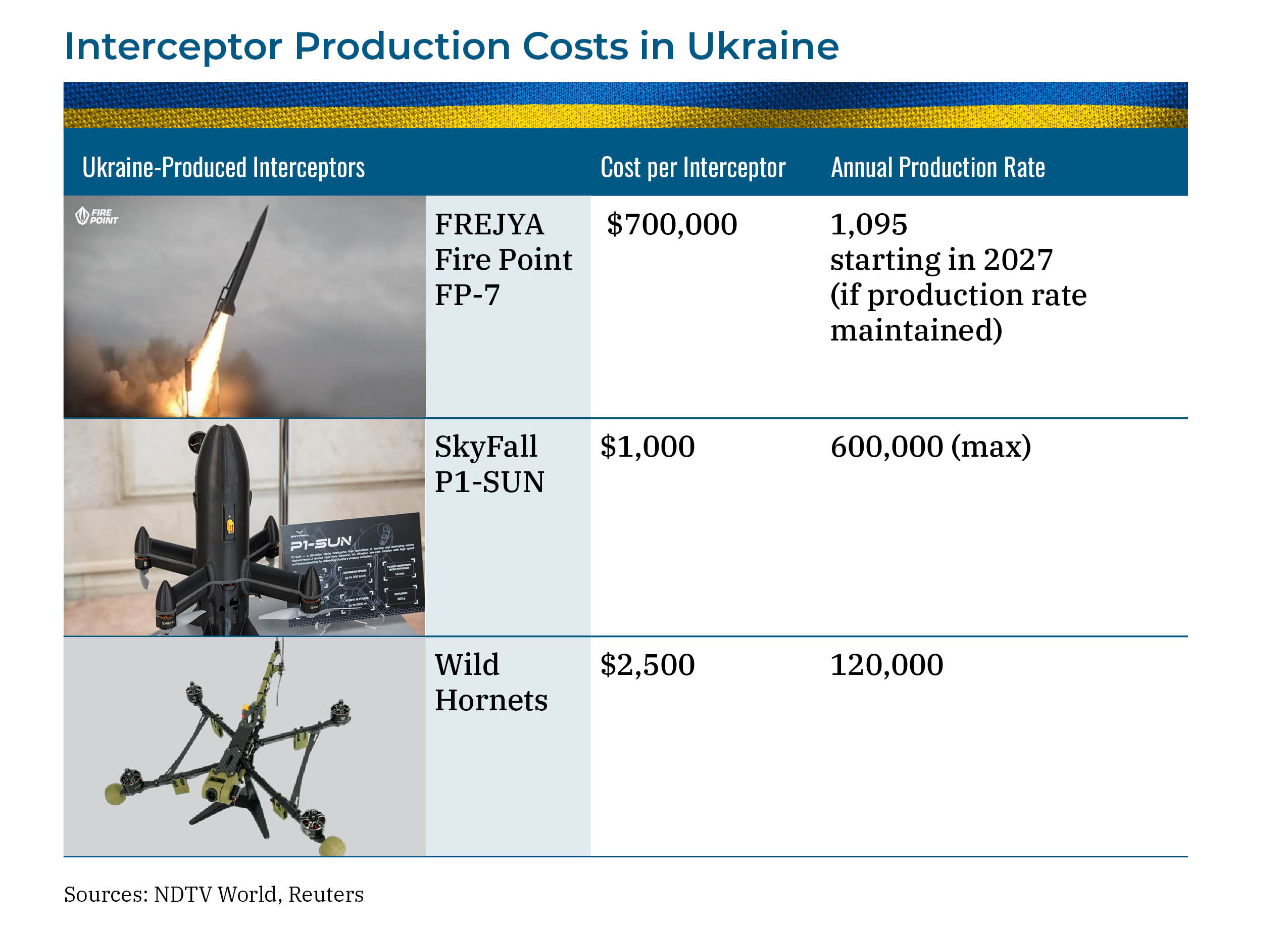

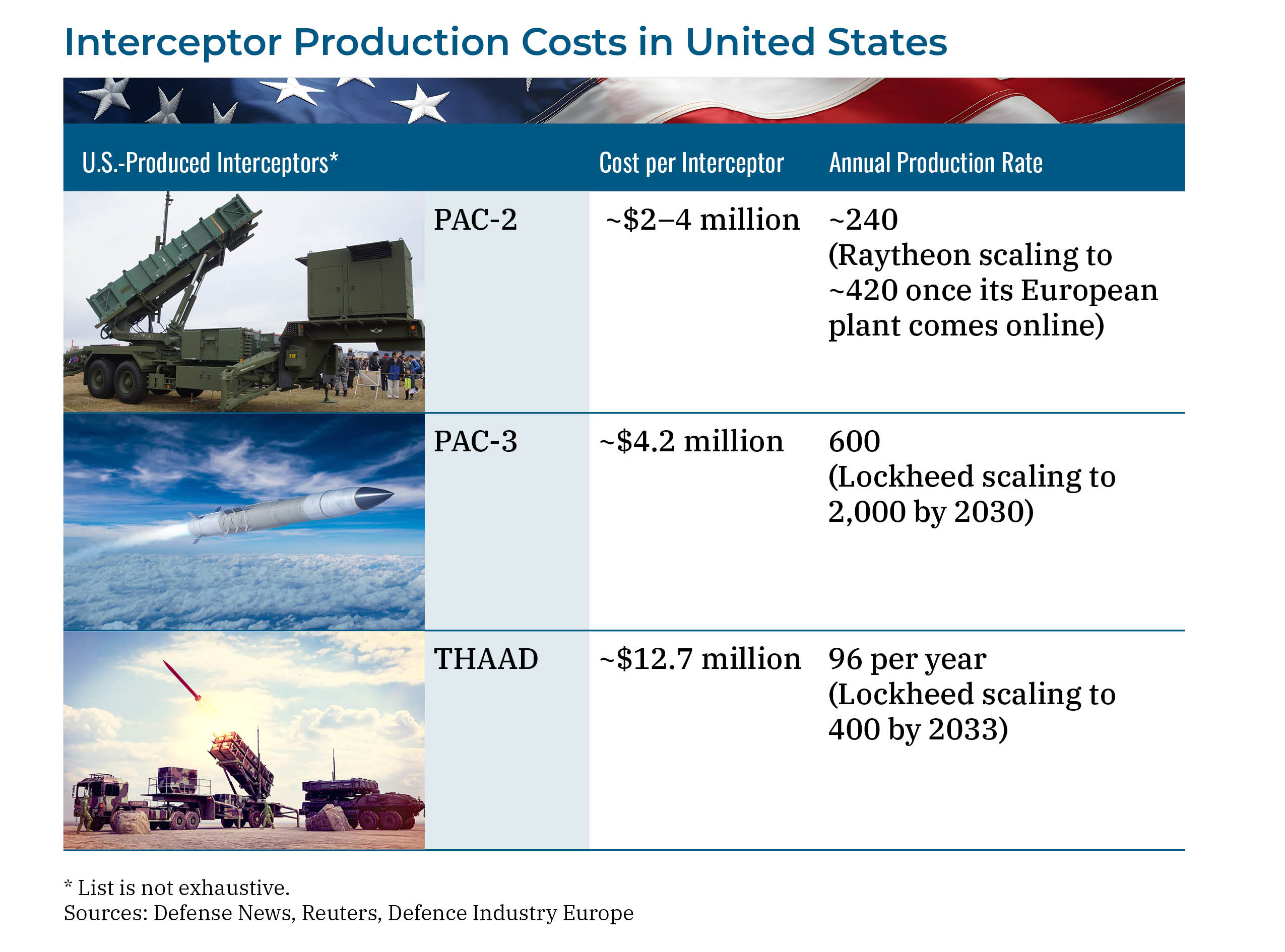

Not only does Ukraine have a technical understanding of air defense requirements and an industrial base already primed to produce interceptors at scale, it can also teach the Gulf states how to employ these tools for maximal effectiveness.
Constraints on Scaling the Ukrainian Model
One complicating factor is that the Ukrainians conduct counter-drone operations in ways that the Gulf states may not be willing or able to replicate quickly. Ukraine has improved its counter-drone methods, reflecting the success of its post-2022 regulatory reforms and the reversal of its defense export ban in 2025. But its methods are more manpower-intensive than the traditional “acquire, fire, and forget” missile systems that Gulf states and many Western states employ. While Ukraine employs missile-based interceptors that are highly effective, its counter-drone operations largely involve “hunting” an air threat by positioning an interceptor in its likely path, then manually piloting the drone to achieve intercept. This requires more trained operators and drone pilots than the current model, and it takes time to produce teams capable of conducting these operations at scale. Increasingly effective autonomous solutions may reduce the manpower requirement, but such systems are unlikely to be available soon enough to meet the Gulf states’ needs.
At the same time, Kyiv can offer a key advantage for Gulf buyers: it has excess production available for customers in urgent need of combat-proven defense technology. Before the war, Ukraine’s defense sector was dominated by a handful of market incumbents, or private firms largely indistinguishable from public companies. Under Zelensky’s leadership, parliament pushed through a series of reforms that unleashed a generation of defense startups, with helpful input from Brave1, the government defense technology initiative. This transformed the state from a producer of defense materiel to a buyer and integrator, leading directly to today’s situation in which it produces more defense systems in certain categories than the Ukrainian military can reasonably buy.
U.S. Policy Recommendations
Washington should approach Gulf-Ukraine defense cooperation as an opportunity to shape a more resilient and integrated regional security architecture. This means acting as both an enabler and a coordinator, helping each party translate battlefield lessons into durable capability while ensuring interoperability, control, and strategic alignment. In doing so, Washington can help strengthen Gulf air defenses, support Ukraine’s innovative defense sector, reduce the space for Russian legacy systems in Gulf markets, and reinforce the American-led order in the region. To achieve this, U.S. officials should:
Facilitate a counter-drone working group. Similar to the recently established Task Force Falcon Strike (focused on attack drones) and Scorpion Strike (focused on one-way attack drones), a new counter-drone forum could bring together policy practitioners, military operators, and relevant industry actors. Members could formulate a common threat picture, facilitate joint and combined training, assess emerging technologies, identify best practices and opportunities for collaboration, and pinpoint gaps in detection, interception, integration, and C2. Eventual expansion to critical European partners and additional regional states could reinforce burden-sharing and link European expertise with Ukrainian innovation and Gulf operational requirements.
Support a center of excellence for counter-drone and air defense innovation in the Gulf. A regional hub could serve as a clearinghouse for testing, training, maintenance, and technological evaluation. Alongside co-production as outlined in the drone deals with Qatar, Saudi Arabia, and the UAE, such a facility could help ensure that systems are adapted to specific Gulf or country conditions rather than imported or developed wholesale. This model echoes efforts by public/private actors like Deep Element, which hosts a training and exercise facility for air defense in Jordan and is involved in regional testing and development efforts.
Review U.S. export-control and Foreign Military Sales rules to support responsible technology transfer. If Washington continues to press partners to adopt more affordable and effective counter-drone solutions, then it must amend its own procurement and licensing pathways. This does not require weakening safeguards, but instead updating them so that battle-proven tech can move through the system faster and with clearer compliance expectations.
Support an overarching agreement between the Gulf Cooperation Council and Ukraine to help strengthen information sharing and C2 integration. Such an agreement could help ensure that individual national deals with Kyiv become part of an integrated and coherent regional defense network. The United States could also offer Ukraine a seat at the Combined Air Operations Center at al-Udeid Air Base in Qatar, as well as a place at Shaw Air Force Base in South Carolina (since some operations at al-Udeid are currently limited by the Iran crisis, and many regional states maintain representation at Shaw). Deeper integration will help align threat awareness, improve early warning networks, and build the coordination necessary for layered defense.
The growing Gulf-Ukraine defense cooperation reflects a broader shift in global security in which battlefield innovation is advancing faster than traditional procurement cycles, and states facing drone threats are increasingly turning to partners with proven operational experience. Kyiv has become a key source of that experience, while the Gulf states are key buyers—and hopefully key industry partners in the near future.
Elizabeth Dent is the Wagner Senior Fellow at The Washington Institute and former director for the Gulf and Arabian Peninsula at the Pentagon. Matthew Tavares is a former Pentagon official with two decades of experience in U.S. national security affairs.
Share