


Tehran has upended traditional maritime arrangements in the Strait of Hormuz and remains in the driver’s seat despite U.S. pressure, so authorities cannot expect to reverse this shift quickly even if the war ends soon.
From releasing its long-delayed CT strategy document to filling crucial professional vacancies, the administration needs to publicly clarify that countering terrorism—Iranian and otherwise—remains a top national security priority.
Although the new European-led military initiative signals a divergence from the current U.S. approach, Washington could still harness Paris and London’s ability to mobilize international action on the shared goal of preventing Tehran from flexing its leverage over global energy markets.
Bailing out the regime’s new batch of hardline leaders would only help them remain a regional menace, so Washington should be very selective about whatever peace deal it signs, leaving room for the Iranian people to seek change themselves.
Tehran’s ongoing failures in critical areas such as fiscal responsibility, energy, and infrastructure repair are doing even more damage to the country’s economic position than the war itself.
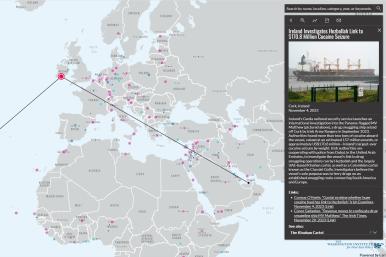
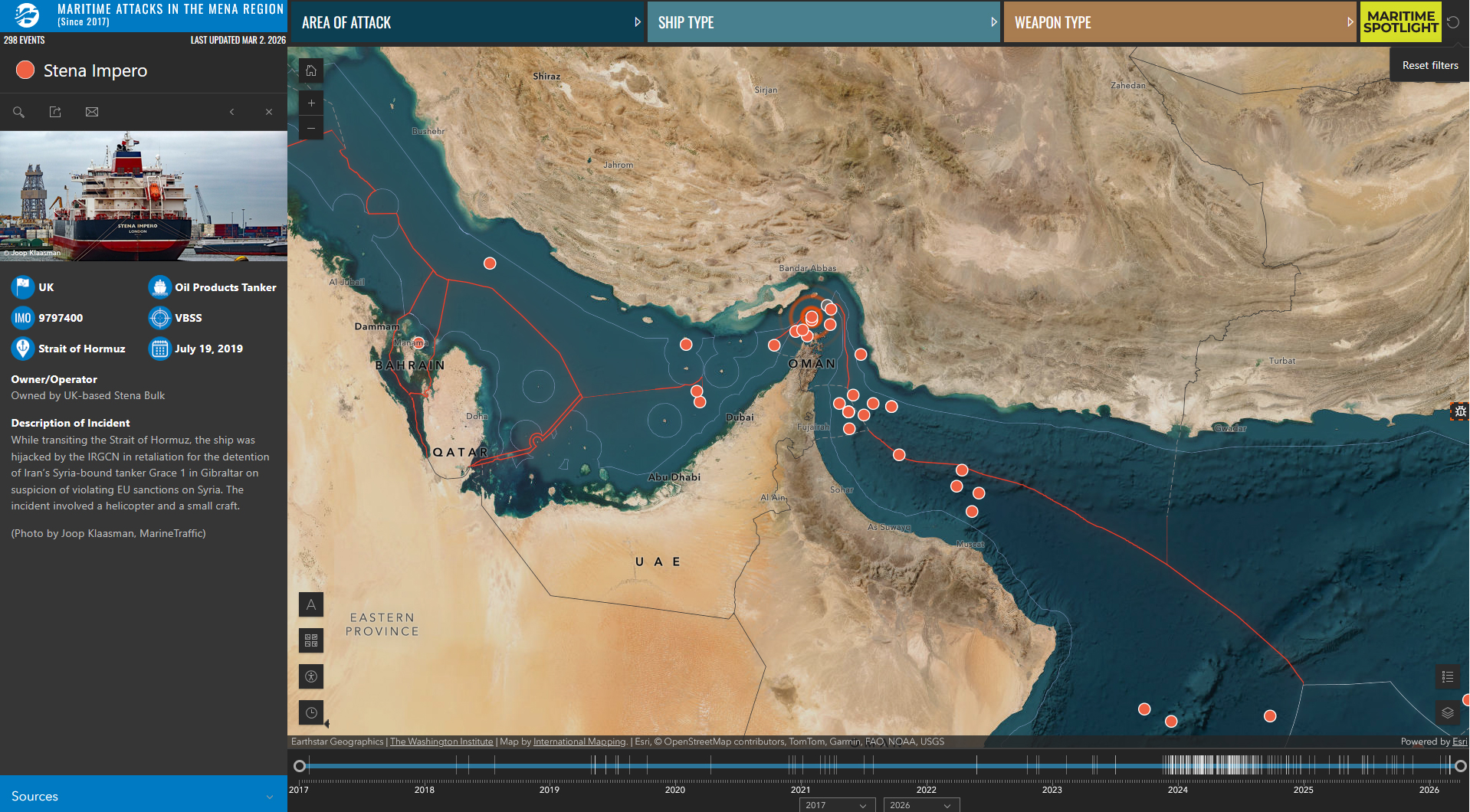
Interactive Map: Maritime Attacks in the MENA Region
Explore this new interactive tool to shed light on the actions of actors such as Iran and Yemen's Houthis that have threatened and attacked commercial shipping in the waters off the Middle East and North Africa.
Prospects for a Russian Resurgence in the Middle East
Moscow has cultivated ties with U.S. adversaries and allies alike, and Washington must respond by advancing a holistic policy that empowers Ukrainian commercial interests and addresses deficits in sanctions policy.