Farzin Nadimi, a Senior Fellow with The Washington Institute, is a Washington-based analyst specializing in the security and defense affairs of Iran and the Persian Gulf region.
Brief Analysis
His appointment as SNSC secretary shows that the regime is relying on a veteran hardliner to manage the crisis and preserve control.
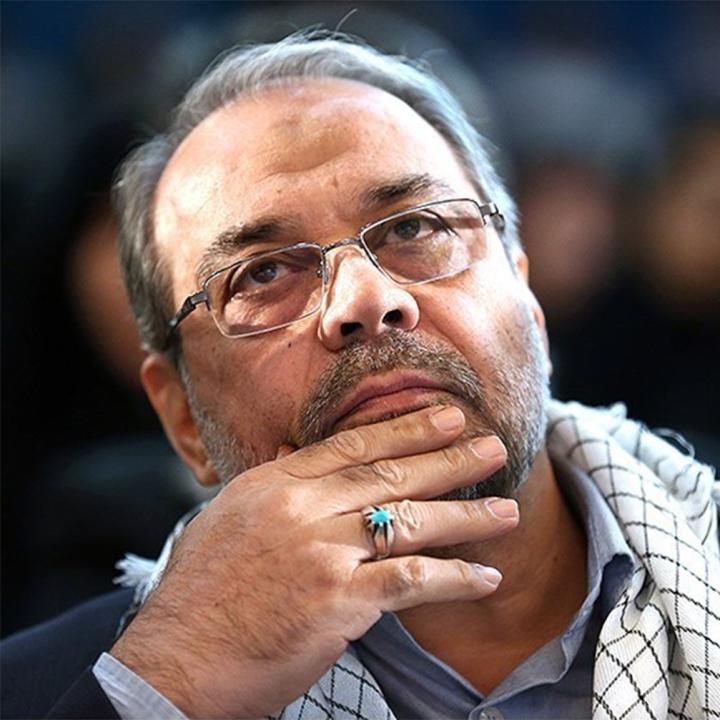
On March 24, Iranian President Masoud Pezeshkian announced the appointment of Gen. Mohammad Bagher Zolghadr as secretary of the Supreme National Security Council (SNSC), succeeding the influential Ali Larijani, who was killed in an Israeli airstrike on March 17. Then, on March 25, the media outlet al-Hadathreported an apparent Israel Defense Forces announcement indicating that it had targeted Zolghadr in an airstrike, but his status remains unconfirmed as of this writing.
Whether or not he is still alive, Zolghadr’s mere appointment at this moment of crisis shows how the Islamic Republic adapts under stress. Instead of choosing a diplomat, a so-called technocrat, or a public-facing political operator, the regime opted for an old Islamic Revolutionary Guard Corps (IRGC) hand whose career has straddled asymmetric warfare, internal security, institutional coordination, and coercive state management. In practical terms, the move suggests the Islamic regime is tightening its core decisionmaking structure around a figure associated less with flexibility than with system preservation through discipline, control, and hard-power coordination.
Formative Years as a Revolutionary
Before the 1979 revolution, Zolghadr joined a clandestine Islamist terrorist organization called Mansouroun, which in 1978 was involved in killing the American oil executive Paul E. Grimm and his Iranian colleague Malek-Mohammad Boroujerdi in southern Iran. Later, Zolghadr openly admitted to his role in Mansouroun’s assassination efforts—and, as he put it, sending the victims “to hell.”
He is better known, however, for the way in which his experience as an IRGC commander was shaped by the Iran-Iraq War. The importance of this role lies less in frontline battlefield heroics than in what might be called the regime’s cross-border security architecture. In 1984, he founded the predecessor to today’s Qods Force, known as the Ramadan Headquarters. The wartime external operations command was unconventional for its multi-domain character, and it worked with Iraqi Kurdish and other anti-Baath elements in northern Iraq, blending military action with infiltration, network building, and cross-border political warfare. In his own retrospective remarks, Zolghadr described Ramadan Headquarters as operating “on the scale of a government,” aimed not merely at fighting Iraqi forces but at expanding the Islamic Revolution’s reach into Iraq. This role placed him among the cadre who learned early to view war not simply as a means of territorial defense but of reshaping the political environment beyond Iran’s borders in order to “export the revolution” and expand the regime’s influence.
Career After the War with Iraq
Zolghadr’s postwar career matters even more for judging his influence. He served eight years (1989–1997) as chief of the IRGC Joint Staff under Mohsen Rezaei, and eight more years as deputy commander-in-chief of the Guard (1997–2005), this time under Yahya Rahim Safavi, gaining unparalleled insight into the inner workings of the security establishment. It was during this period that the IRGC evolved from a revolutionary fighting force into a much broader state-security institution with expanding political, intelligence, economic, and regional roles. This was the era in which the Guard consolidated its strategic bureaucracy, grew its physical assets, deepened its external networks, and extended its influence across the state. Zolghadr was therefore part of the senior command layer that oversaw the institutional transformation of the IRGC and its maturation into the regime’s central instrument of power.
Zolghadr’s move to the Ministry of Interior under President Mahmoud Ahmadinejad is also revealing. During Ahmadinejad’s first term, from 2005 to 2009, he served as deputy interior minister for security affairs. The period was marked by serious internal security challenges, including ethnic Arab unrest and bombings in Khuzestan (2005–2006), an intensifying Sunni insurgency in Sistan and Baluchestan (especially during 2007–2009), and, during roughly the same years, ethnic Kurdish unrest and insurgent activity in the northwest. These developments show that Zolghadr was enlisted not for routine administration but to quell dissent at a time when the regime treated peripheral unrest as a national security threat. His later transition to the Iranian judiciary fits the same pattern. Appointed first to a crime prevention and social security role and then as deputy for strategic affairs, his term encompassed the 2009 Green Movement crisis, when the regime worked ever harder to blur the line betweenjudicial procedure and security enforcement. In effect, he was tasked with integrating repression more systematically into the state.
His tenure from 2021 onward as secretary of the Expediency Council, an entity ostensibly designed to resolve disputes, may look more bureaucratic, but it was in actuality ideological—and placed him at the nexus of Iran’s senior political and clerical echelons. In the Islamic regime, this is just the sort of elite position given to trusted insiders who are expected to help align hardcore institutions.
A similar calculus attends to his latest appointment. The SNSC is one of the regime’s main coordinating bodies for defense, intelligence, and foreign policy. Formally chaired by the president, it sits at the intersection of the armed forces, intelligence services, civilian executive, and the Supreme Leader’s office, or whatever remains of it. Replacing Larijani with Zolghadr suggests that Tehran wants a secretary whose comparative advantage is not negotiating skill, but integration of coercive power under crisis conditions. This is especially significant given the current war environment, leadership losses, and pressure on the regime’s command-and-control system. A figure with Zolghadr’s background is well suited to keeping the military, intelligence, judiciary, and political-security apparatus aligned when the leadership is unsure and under strain.
The broader meaning is not, however, that the regime chose a hardliner. The regime was already hardline. The more important point is that it chose a man whose career tracks with the building of the Islamic Republic’s security state, to include external operations during the war with Iraq, senior command during the Guard’s institutional expansion, internal security management in the Ahmadinejad years, judicial-security integration after 2009, and elite coordination through the Expediency Council. All this points to a manager suited for coercive systemic rule.
Conclusion and Policy Recommendations
Alongside the broad portrait offered here, Zolghadr’s elevation might be read more narrowly in the context of a regime prepared to explore limited concessions under heavy wartime pressure, including through channels reportedly involving Pakistan. If Tehran is indeed testing some form of ceasefire or interim bargain, his appointment could suggest that any meaningful concession would be filtered through the regime’s security core, not the conventional diplomatic apparatus under Foreign Minister Abbas Araghchi. In practical terms, this means the Trump administration may effectively be negotiating with an IRGC inner circle that has been involved in oppressing and killing the Iranian people at an industrial scale.
Such a reality will become more salient if the war does not prompt regime collapse, likely situating Zolghadr as a key manager of Iran’s postwar posture. This role would involve shaping how much coercion is directed inward, how much external escalation remains available, and how tightly the military, intelligence, judiciary, and executive arms are coordinated under stress. He could then have significant influence over how decisions are organized and executed. For the Iranian public, the signal is crystal clear: at a moment of vulnerability, the regime chose a longtime manager of coercive power rather than a conciliatory figure, a technocrat, or a national political mediator—an official who will advocate system preservation through continuing oppression and control.
For U.S. officials, the main implication is that in any negotiation—whether over a ceasefire, maritime de-escalation, or a broader nuclear and missile framework—Zolghadr would likely be a key decisionmaker, and in some operational respects he probably will matter even more than Supreme Leader Mojtaba Khamenei. Araghchi might stay relevant in providing a diplomatic channel, but Zolghadr and his successor, whether parliament speaker Muhammad Baqer Qalibaf or anybody else, will be better positioned to hold the line for the regime’s hard institutions.
From a Western perspective, the appointment of Zolghadr should not be reassuring. Unlike earlier SNSC secretaries such as Larijani, his record suggests deep involvement with the regime’s internal machinery and far less visible experience dealing with foreign counterparts, portending a future characterized by internal regime coherence at the expense of flexibility with outside actors. Of course, he is not the sole power center in the current degraded Iranian leadership. Qalibaf holds sway as does current IRGC Commander-in-Chief Ahmad Vahidi and, to a much lesser extent, retired former IRGC Commander Mohsen Rezaei. But the broader point stands: the visible center of gravity in Tehran rests with the IRGC, leaving clerics notably less prominent as managers of the crisis.
Farzin Nadimi is a senior fellow at The Washington Institute, specializing in the security and defense affairs of Iran and the Persian Gulf region.