

TWI logo The Washington Institute for Near East Policy
logo
wordmark
Homepage

Main navigation

  • Analysis
  • Experts
  • About
  • Support
  • Maps & Multimedia
Trending:
  • Military & Security
  • Proliferation
  • Israel
  • Iran
  • Lebanon
  • Syria

Regions & Countries

  • Egypt
  • Gulf States
  • Iran
  • Iraq
  • Israel
  • Jordan
  • Lebanon
  • Middle East
  • North Africa
  • Palestinians
  • Syria
  • Turkey

Issues

  • Arab & Islamic Politics
  • Arab-Israeli Relations
  • Democracy & Reform
  • Energy & Economics
  • Great Power Competition
  • Gulf & Energy Policy
  • Military & Security
  • Peace Process
  • Proliferation
  • Terrorism
  • U.S. Policy
TWI English
TWI Arabic: اللغة العربية Fikra Forum

Breadcrumb

  • Policy Analysis

Military & Security

Policy Analysis on Military & Security

Filter by:

Multimedia
Brief Analysis
Foreign Fighters in Libya: Consequences for Africa and Europe
As the fight against the Islamic State shifts from retaking territory to preventing regrowth, a jihadism scholar and the former deputy head of AFRICOM discuss what Washington should learn from the group's activities in Libya.
Feb 21, 2018
◆
  • Aaron Y. Zelin
  • Michael T. Franken
◆ Counterterrorism Lecture Series
Brief Analysis
Washington's Militia Problem in Syria Is an Iran Problem
While Assad may nominally hold reclaimed areas in the south, he will never truly control them so long as Tehran tells its militia proxies to secure that corridor for its own purposes.
Feb 19, 2018
◆
  • Jackson Doering
Articles & Testimony
Strengthen the Nuclear Deal and Counter Iran's Destabilizing Activities
The gaps between Washington and Europe's positions on the JCPOA remain wide, but the potential price of failure will hopefully provide enough motivation to bridge them.
Feb 16, 2018
◆
  • Michael Eisenstadt
Brief Analysis
Crossing Redlines: Escalation Dynamics in Syria
Tehran and its allies will test U.S. and Israeli limits again, requiring deterrent responses that are tough, consistent, and paired with political reassurances to allies.
Feb 13, 2018
◆
  • Michael Eisenstadt
  • Michael Knights
Brief Analysis
Israel Signaling a Heavy Price for Iranian 'Entrenchment' in Syria
If Tehran keeps trying to increase its military foothold in Syria, Israel may ramp up its strikes, so Washington should consider a more active posture that reduces the risks of escalation.
Feb 12, 2018
◆
  • David Makovsky
Articles & Testimony
The Hush-Hush Deal That Keeps the Middle East from Exploding
Israeli and Palestinian officials may growl at one another, but their soldiers are quietly cooperating behind the scenes to keep the peace -- as long as the Trump administration doesn't pull their funding.
Feb 12, 2018
◆
  • Neri Zilber
  • Ghaith al-Omari
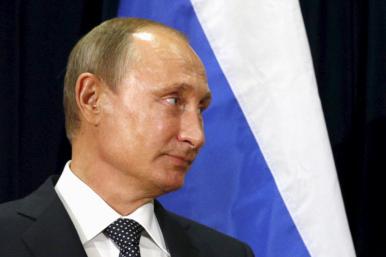
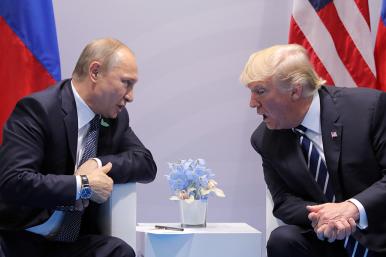
Trump in a Meeting with Putin
Articles & Testimony
After the Weekend's Iran-Israel Attacks, a Burden on Trump to Confront Russia and Engage Europe
Before the next shoe drops in Syria, the administration needs to get blunt with Putin and ask EU officials to warn Tehran about renewed sanctions.
Feb 12, 2018
◆
  • Dennis Ross
Multimedia
Brief Analysis
Charting Sectarianism in the Syria War
Does Syria's climate of ethnic and sectarian hostility stem from seven years of war, or do its social fissures predate the conflict?
Feb 8, 2018
◆
  • Fabrice Balanche
  • Andrew J. Tabler
Video
Brief Analysis
Rolling Back Iran's Foreign Legion
Two experts diagnose the Shia militia problem in Lebanon, Syria, and Iraq, offering concrete advice for reducing the power of Iran's proxies.
Feb 6, 2018
◆
  • Hanin Ghaddar
  • Phillip Smyth
Brief Analysis
Supporting the New Gulf Effort to Ease Yemen's Humanitarian Crisis
Riyadh and its allies are finally moving to reduce the humanitarian impact of their blockade, so U.S. officials and other actors should take corresponding steps to assist aid flows, secure ceasefires, and promote a diplomatic solution to the crisis.
Feb 5, 2018
◆
  • Michael Knights
In-Depth Reports
Iran's Foreign Legion:
The Impact of Shia Militias on U.S. Foreign Policy
The leading such group is Lebanese Hezbollah, but Iraq's PMF and Yemen's Houthis also pose serious threats.
Feb 1, 2018
Brief Analysis
With or Without Putin, Israel Is Willing to Enforce Lebanon Redline
Through Moscow meetings and public statements, Israeli officials have made clear that Iranian weapons facilities in Lebanon are a game changer, so escalation is quite possible if Tehran ignores their warnings.
Feb 1, 2018
◆
  • David Makovsky
Brief Analysis
Containing the Afrin Crisis: Turkey's Goals and Military Challenges
Given the continued Islamic State threat in Syria, Washington cannot afford what is shaping up to be a bloody conflagration between allies it needs to eradicate the group.
Jan 31, 2018
◆
  • Barak Barfi
Articles & Testimony
NATO Leaders Need to Have a Frank Talk with Turkey's President -- Behind Closed Doors
By helping Erdogan break his authoritarian habit now, Washington and Paris can prevent the nightmare scenario of a Turkey crippled by its own self-destructive tendencies.
Jan 26, 2018
◆
  • Soner Cagaptay
Articles & Testimony
How to Stop the War Between Turkey and the Syrian Kurds
Fighting between two vital U.S. allies will only strengthen Assad and Iran.
Jan 25, 2018
◆
  • James Jeffrey
  • David Pollock
Articles & Testimony
Conflict and Cover-Up: The Real Story of What Is Happening in Yemen
As Saudi military failures draw ever-sharper criticism, Iran seems content to support proxy actions that stop just short of prompting a direct clash with Riyadh.
Jan 25, 2018
◆
  • Simon Henderson
Articles & Testimony
The Evolution of Shia Insurgency in Bahrain
With Iran's help, militant cells are poised to add unmanned vehicles, anti-armor weapons, and other potent capabilities to their existing IED and combat skill set.
Jan 24, 2018
◆
  • Michael Knights
  • Matthew Levitt
Brief Analysis
The UAE/Qatar Rivalry Is Escalating
In light of Emirati complaints about the Qatari air force intercepting civilian airliners, Washington should caution both sides in the ongoing Gulf dispute.
Jan 17, 2018
◆
  • Simon Henderson
Video
Middle East FAQs Volume 1: What is the Shia Crescent?
Institute experts Patrick Clawson, Hanin Ghaddar, and Nader Uskowi discuss Iran's growing influence from the Persian Gulf to the Mediterranean and beyond.
Jan 17, 2018
◆
  • Patrick Clawson
  • Hanin Ghaddar
  • Nader Uskowi
In-Depth Reports
Regional Pushback, Nuclear Rollback:
A Comprehensive Strategy for an Iran in Turmoil
This past October, President Trump rolled out a new U.S. strategy toward Iran focused, in the president's words, on the country's destabilizing regional activities, support for terrorist proxies, and proliferation of missiles; he also mentioned the need to fix "serious flaws" in the July 2015 nuclear deal. Trump's plan, however
Jan 11, 2018
◆
  • Michael Eisenstadt

Pagination

  • Previous page ‹ Previous
  • First page « First
  • …
  • Page 66
  • Page 67
  • Page 68
  • Page 69
  • Current page 70
  • Page 71
  • Page 72
  • Page 73
  • Page 74
  • …
  • Last page Last »
  • Next page Next ›
Supported by the

Military and Security Studies Program

The Washington Institute's Military and Security Studies Program has established itself as an unrivaled source of reliable, incisive, and forward-looking analysis concerning several of the most critical national-security challenges facing the United States today: The U.S. military role in the Middle East, Iran's nuclear program and its proxy armies, the ongoing conflict is in Iraq, Lebanon, Syria, and Yemen, the regional proliferation of missiles and weapons of mass destruction, the security dimensions of the Arab-Israeli conflict, and many other security issues on the frontline of the U.S. policymaking agenda.

Sign Up for Email Updates from The Washington Institute

Never miss a breaking event on U.S. policy interests in the Middle East. Customize your subscription to our expert analysis, op-eds, live events, and special reports.


Sign up

Featured experts

Michael Eisenstadt
Michael Eisenstadt
Michael Eisenstadt is the Kahn Senior Fellow and director of The Washington Institute's Military and Security Studies Program.
Grant Rumley
Grant Rumley
Grant Rumley is the Meisel-Goldberger Senior Fellow and Director of the Diane and Guilford Glazer Foundation Program on Great Power Competition and the Middle East at the Washington Institute for Near East Policy.
Elizabeth Dent - source: The Washington Institute
Elizabeth Dent
Elizabeth Dent is the Nathan and Esther K. Wagner Senior Fellow at the Washington Institute for Near East Policy, where she focuses on U.S. foreign and defense policy toward the Gulf states, Iraq, and Syria.
Background image with TWI branding
logo
wordmark
Homepage

1111 19th Street NW - Suite 500
Washington D.C. 20036
Tel: 202-452-0650
Fax: 202-223-5364

Footer contact links

  • Contact
  • Press Room
  • Subscribe

The Washington Institute seeks to advance a balanced and realistic understanding of American interests in the Middle East and to promote the policies that secure them.

The Institute is a 501(c)3 organization; all donations are tax-deductible.

Footer quick links

  • About TWI
  • Support the Institute
  • Alumni

Social media

  • The Washington Institute on Facebook facebook
  • The Washington Institute on X x
  • The Washington Institute on YouTube youtube
  • The Washington Institute on LinkedIn linkedin

© 2025 All rights reserved.

Footer

  • Employment
  • Privacy Policy
  • Rights & Permissions