Sabina Henneberg is a Senior Fellow at The Washington Institute and director of its Junior Research Program.
Brief Analysis
The crisis will challenge economic and political stability in the Maghreb countries, but they will also have opportunities—with Washington’s help—to fortify their prewar progress by filling gaps in global energy markets and other key sectors affected by the war.
Although the Iran war is 1,600 miles away from the Maghreb, the governments and populations of Algeria, Libya, Morocco, and Tunisia are nonetheless experiencing spillover effects. In a region divided between energy importers and exporters and connected to the Middle East by contentious issues such as political Islamism and Arab-Israel normalization, these wartime effects could foreshadow deeper ramifications depending on how the conflict unfolds.
Economic Effects
The war’s clearest effects in the Maghreb are in the energy sector. In theory, exporters Algeria and Libya could increase their natural gas and oil supplies to Europe amid constraints on flows from the Persian Gulf; indeed, Italian Prime Minister Giorgia Meloni recently visited Algiers to make this appeal. Yet both countries would face challenges in doing so.
Algeria sells substantial amounts of gas abroad, including liquefied natural gas (export capacity of 1,215 billion cubic feet per year) and piped gas (3,262 billion cubic feet per year). Yet sustaining the record levels it achieved after Russia’s invasion of Ukraine has been difficult. To direct significantly more gas to Europe while still meeting insatiable domestic demand, its state energy firm Sonatrach would likely need additional investments to improve infrastructure and enhance refining and production capacity.
Similarly, Libya has struggled to hit its oil production targets. Political divisions and economic mismanagement have constrained funding to this sector, which still needs considerable investment despite concluding a relatively successful bidding round in the weeks before the war. Libya presently produces around 1.7 million barrels of crude per day, and its National Oil Corporation has set a target of two million by 2030. Yet if it hopes to capitalize on high wartime energy prices and continue positioning itself as a reliable supplier, it will have to address the domestic roadblocks.
For energy importers Tunisia and Morocco, the spike in global prices could severely pressure state budgets due to the large energy subsidies each government provides. The effects could be especially acute in Tunisia, where public debt exceeds 80 percent of GDP. As such, each dollar added to the price of oil means approximately 164 million dinars ($55 million) in extra government expenditures, potentially raising parts of the budget by 50 percent. Both countries also face risks from higher transport costs, which would threaten key sectors such as agriculture, fishing, construction, manufacturing, and food distribution.
Other spillover effects could hurt all four countries. Most notably, they each rely on food imports, leaving them vulnerable to food price fluctuations. Likewise, the broader effects of growing fiscal deficits and inflation could threaten social and political stability—especially in Tunisia, which has spent the better part of fifteen years buffeted by revolution and tumultuous governance ever since a poor street vendor immolated himself to draw attention to repeated government harassment.
Political and Geopolitical Effects
Official North African responses to the war have emphasized the need for restraint, respect for national sovereignty, and solidarity with the Arab countries that have come under attack. But there are notable differences. For instance, while Tunisia has avoided singling Iran out for criticism, Morocco has directly condemned the regime’s actions.
Algeria’s wartime diplomacy has drawn particular attention. Historically, its relations with Iran have been closer than those of its neighbors—Rabat cut ties with Tehran in 2008 based on accusations of proselytizing, while Tunisia’s ties have been stable but never deep. Yet Algiers has been reluctant to directly condemn Iran for attacking the Gulf states, in contrast to its criticism of Israel for attacking Iran during the June 2025 war. This reticence is especially notable in the context of Algeria’s ongoing feud with the United Arab Emirates, the country that has been targeted by Iran the most over the past month; specifically, the UAE has been accused of supporting “hostile elements” in Algeria. This may be why President Abdelmadjid Tebboune has telephoned several Arab leaders during the war while pointedly excluding the UAE.
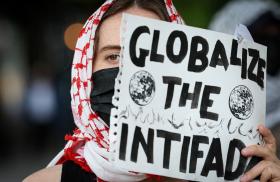
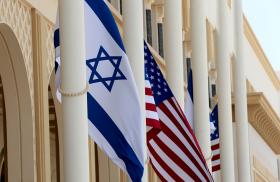
The war could also have domestic political ramifications in Morocco, where Islamist parties hope to make a comeback in this fall’s parliamentary election following their defeat in 2021. The mainstream Islamist Justice and Development Party has directly criticized Israel and the United States for attacking Iran. For its part, the government—which normalized relations with Israel in 2020—has prohibited wartime protests organized by pro-Palestinian groups, whom the monarchy and aligned political parties see as a potential threat. This continues a trend on display since the start of Israel’s Gaza military operations in 2023, which the Moroccan public has largely opposed.
Security Concerns
Although extremist activities in the Maghreb have largely been contained over the past decade, the Iran war could stir them up again. Tunisia and Algeria have strong security partnerships with the United States and play a stabilizing role in the region, in contrast to the proliferation of violent armed groups in neighboring Libya and the nearby Sahel. Yet social and/or economic dissolution could threaten this relative stability.
The crisis could affect the Western Sahara conflict as well. When the Iran war broke out, Morocco appeared to renew its push for the U.S. Congress to designate the Polisario Front—the secessionist group that claims to represent the disputed territory’s indigenous Sahrawi people—as a terrorist organization based on its alleged ties to Tehran (see more on this issue below).
Implications for the United States
Washington has an interest in helping Maghreb countries avoid destabilization—economic or otherwise—due to the war, in part because this could further expose them to extremist influence from the neighboring Sahel. Perhaps the most at-risk state is Tunisia, whose economic position has grown increasingly precarious since the COVID-19 pandemic and the onset of the Ukraine war. Yet all of the Maghreb countries will feel inflation and other indirect economic repercussions, which could in turn affect stability and governance in the region more generally. Morocco, for example, is one of the world’s major producers of phosphate fertilizer, and many of its supplies for that industry come from the Gulf states. Hence, global phosphate flows could be hindered by wartime supply chain disruptions. Even apparent good news could have negative consequences—for instance, increased energy revenues in Libya could deepen political divisions between factions vying for those resources and increase the risk of oil blockades by armed groups.
At the same time, the current state of disarray in the Middle East may offer certain opportunities:
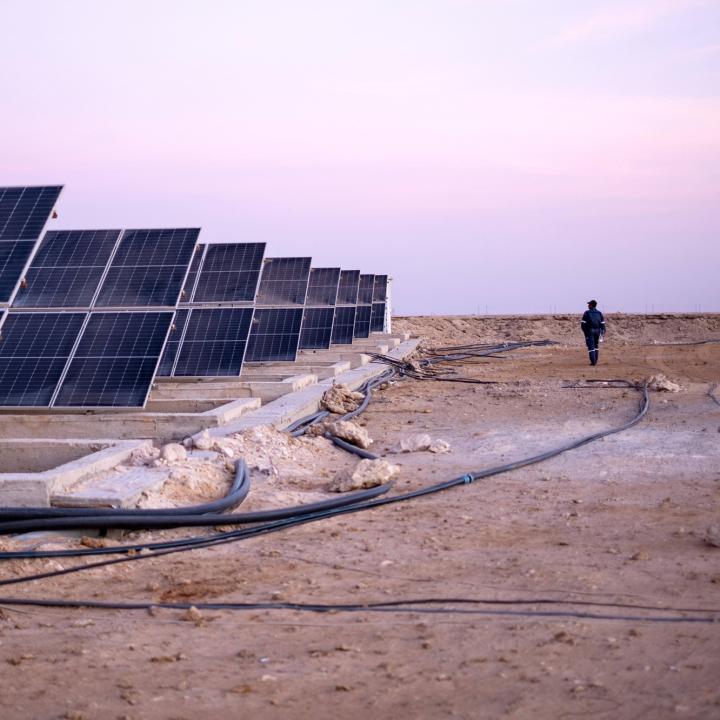
In Morocco, authorities have made significant strides in shifting to renewable energy and could take advantage of a global energy shock to accelerate these investments. They could also find ways of turning the phosphate supply chain problem into a benefit, becoming a global leader in fertilizers in the process.
Algeria could work out new ways to balance its traditional self-reliance with evolving global conditions. For example, it could continue diversifying economically while also helping to fill gaps in world energy markets by enhancing its gas sector to boost production.
In Libya, where the United States has sought to broker a power-sharing arrangement among political elites, the Iran war may give the country another chance to overcome its perennial divisions and demonstrate its reliability as an oil supplier.
For the United States to protect its own interests in the Maghreb, policymakers must continue engaging across the region, even when the bandwidth for U.S. diplomacy is stretched by the Iran war and other Middle East crises. Washington should also avoid the temptation to inflict punitive measures on countries that do not vocally align with it against Tehran. Another key step is to maintain a long-term view of the region’s potential, for example by encouraging steps that increase energy investments in Algeria (including the transfer of shale exploration technology) and Libya. This could help ensure that the Maghreb is poised to become a stronger security and economic partner after the war ends.
Additionally, U.S. policymakers should persist in the quiet but important work of advancing a diplomatic resolution to the Western Sahara dispute. Bringing all parties to the table was significant, as was persuading Morocco to submit an enhanced autonomy plan to serve as a basis for negotiations. Yet Rabat’s renewed push for U.S. sanctions on the Polisario Front suggests that it sees the Iran war as an opportunity to consolidate the Trump administration’s December 2020 recognition of its sovereignty over Western Sahara. And even before the war, progress on overcoming key roadblocks was reportedly limited. Accordingly, Washington may need a mix of bigger carrots and bigger sticks—as well as sustained engagement—to change this dynamic.