Skip to main content
The Washington Institute for Near East Policy
Menu
Toggle Main Menu
Homepage
Main navigation
Analysis
Experts
About
Support
Maps & Multimedia
Trending:
Terrorism
Great Power Competition
Iran
Lebanon
Gulf States
Toggle List of
All Regions & Issues
Regions & Countries
Egypt
Gulf States
Iran
Iraq
Israel
Jordan
Lebanon
North Africa
Palestinians
Syria
Turkey
Issues
Arab & Islamic Politics
Arab-Israeli Relations
Democracy & Reform
Energy & Economics
Great Power Competition
Gulf & Energy Policy
Military & Security
Peace Process
Proliferation
Terrorism
U.S. Policy
Close List of All Regions and Issues
Close
Search Policy Analysis
TWI English
TWI Arabic:
اللغة العربية
Fikra Forum
Close Menu
Close
Search Policy Analysis
Search
Breadcrumb
Policy Analysis
All Policy Analysis by April Longley Alley
Filter by:
Keyword
Region
- Any -
Egypt
Gulf States
Iran
Iraq
Israel
Jordan
Lebanon
North Africa
Palestinians
Syria
Turkey
Issue
- Any -
Arab & Islamic Politics
Arab-Israeli Relations
Democracy & Reform
Energy & Economics
Great Power Competition
Gulf & Energy Policy
Military & Security
Peace Process
Proliferation
Terrorism
U.S. Policy
Date Published
- Any -
Past 7 Days
Past 30 Days
Past Year
Custom range...
Start date
End date
Type
- Any -
Articles & Testimony
Brief Analysis
In-Depth Reports
Sort by
Oldest first
Newest first
Found
16
results
Articles & Testimony
Iran’s Second Front
The latest Houthi offensive has shattered the status quo along Yemen’s west coast, upended a years-long truce, and set the stage for further consolidation of their control in the north—but the victory is also Iran’s.
Sep 11, 2026
◆
April Longley Alley
Allison Minor
Articles & Testimony
A Saudi-Emirati Thaw Can Help Contain Iran
The Gulf needs a joint front on deterrence, engagement, and freedom of navigation.
Aug 3, 2026
◆
Allison Minor
April Longley Alley
Brief Analysis
Yemen’s Truce at Risk
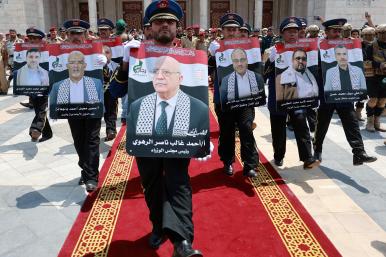
High-profile funeral events in Iran provided an opportunity for the Houthis to pressure Saudi Arabia, and for Tehran to demonstrate support to its partner and signal it has cards to play at another maritime chokepoint.
Jul 16, 2026
◆
April Longley Alley
Articles & Testimony
How the Looming Houthi Threat Could Turn the Iran War
Whether the U.S. truce with Iran breaks down or winds up rewarding the regime, the previously restrained Houthis may take it as a signal to resume their own aggression.
Jun 9, 2026
◆
April Longley Alley
Articles & Testimony
Saudi Arabia, the UAE, and the Limits of Gulf Unity
If left unchecked, the reemerging rift between the two Gulf powerhouses could fragment the region into competing poles, further roil markets, and destabilize fragile states in the area.
Spring 2026
◆
April Longley Alley
Brief Analysis
The Houthis Join the War
Why did the group strike now, what might they do next, and how could it affect the U.S.-Israeli war with Iran?
Apr 1, 2026
◆
April Longley Alley
Video
Brief Analysis
Countering Threats from Iran’s Proxies and Partners During Wartime
Three experts discuss how Hezbollah, the Yemeni Houthis, and pro-Iran militias in Iraq have reacted to the war so far, outlining steps Washington and its regional partners can take to keep them from escalating further.
Mar 13, 2026
◆
Hanin Ghaddar
April Longley Alley
Michael Knights
Brief Analysis
The Wartime Role of Iran’s “Axis”: Countering Proxy and Terrorist Threats
Washington Institute fellows assess how Hezbollah, the Houthis, Iraq’s Hashd, and other Iranian proxies and allies are responding to the war, as well as how the Trump administration and partner governments might counter the risk of terrorist attacks given Tehran’s long track record of foreign plots.
Mar 5, 2026
◆
Assaf Orion
Hanin Ghaddar
Michael Knights
April Longley Alley
Michael Jacobson
Matthew Levitt
Brief Analysis
War Comes to the Gulf
With Iran seemingly intent on continuing its strikes against Gulf targets and regional leaders mulling whether and how to respond, what can policymakers and military planners expect to see next in terms of likely target sets, risks to civilian areas, concerns over air defense munition supplies, and potential repercussions for energy and commercial shipping interests?
Mar 3, 2026
◆
Elizabeth Dent
Michael Eisenstadt
Noam Raydan
April Longley Alley
Brief Analysis
Epic Fury and Roaring Lion: From War Scenarios to Pressing Postwar Questions in Iran
Washington Institute experts assess the immediate implications of U.S.-Israeli military strikes on Iran, including the regime’s future after major leadership losses, reactions inside Iran and Lebanon, the fallout for the Gulf states, the contours of potential diplomacy once the fighting stops, and more.
Mar 1, 2026
◆
Assaf Orion
Michael Eisenstadt
Holly Dagres
Patrick Clawson
Hanin Ghaddar
April Longley Alley
Richard Nephew
Maps & Graphics
Brief Analysis
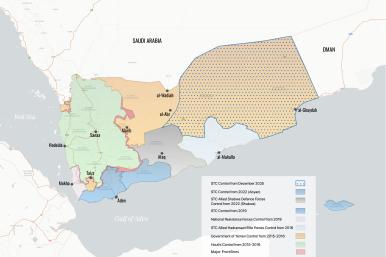
Yemen’s Seismic Shift Has Consequences Beyond Its Borders
U.S. allies Saudi Arabia and the UAE are on a collision course in Yemen, as local forces threaten to reopen a war that could boost the Houthis, deepen Red Sea instability, and otherwise undermine the Trump administration’s Middle East goals.
Dec 22, 2025
◆
April Longley Alley
Articles & Testimony
The Middle East’s Most Overlooked Threat
The Houthis, STC, and other players are making moves that could spark a new civil war in Yemen, potentially upending the perceived balance of power ushered in by the Gaza truce.
Dec 18, 2025
◆
April Longley Alley
Brief Analysis
Perspectives on Muhammad bin Salman’s Visit to Washington
Washington Institute experts discuss each government’s likely agenda for the landmark visit, from dealmaking in the energy and AI sectors to deepening the bilateral defense relationship and taking the difficult next steps in the fragile Gaza ceasefire plan.
Nov 14, 2025
◆
Dennis Ross
Elizabeth Dent
April Longley Alley
Simon Henderson
Henry Tugendhat
Noam Raydan
Articles & Testimony
After Israel’s Strike on Qatar, a Strategic Shift
The silver lining to the Doha attack may be the newfound “Gulf 3” alignment between Saudi Arabia, the UAE, and Qatar, whose wealth, diplomatic clout, and good relations with the Trump administration uniquely position them to help on a wide range of pressing regional issues.
Oct 20, 2025
◆
April Longley Alley
Abdulkhaleq Abdulla
Brief Analysis
Toward a More Comprehensive (and Effective) U.S. Policy on Yemen
The Houthis pose even more of a risk to U.S. and Gulf interests than they did before the Gaza war, so Washington and its regional partners need to develop an approach that is more fit for purpose.
Sep 18, 2025
◆
April Longley Alley
Brief Analysis
Israel and the Houthis Are Entering a Dangerous Escalation Cycle
Despite their confident saber rattling, both sides face real constraints that could impede their operational goals, and their actions increase the risks to maritime security, energy exports, and broader regional stability.
Sep 5, 2025
◆
April Longley Alley