- Policy Analysis
- PolicyWatch 4205
Wartime Support to Iran: Implications for the Middle East and Beyond
Three experts explore the regional and global implications of Russian and Chinese support for Tehran, including how much this assistance actually affects U.S. efforts to weaken the regime’s capabilities and bring the crisis to an end.
On April 23, The Washington Institute held a virtual Policy Forum with Hasan Alhasan, Nicole Grajewski, and Matthew Tavares. Alhasan is a senior fellow at the International Institute for Strategic Studies and a former senior analyst on the staff of HRH the Crown Prince of Bahrain. Grajewski is an assistant professor at the Centre de Recherches Internationales, a nonresident scholar with the Nuclear Policy Program at the Carnegie Endowment for International Peace, and an associate with the Project on Managing the Atom at Harvard’s Belfer Center. Tavares is a former Pentagon official and coauthor (with Anna Borshchevskaya) of the recent Washington Institute report “After Ukraine: Prospects for a Russian Resurgence in the Middle East.” The following is a rapporteurs’ summary of their remarks.
Hasan Alhasan
China has provided Iran with military support across several domains, and this assistance appears to have affected Iranian performance during the war. Some of this support has been public. For example, the Chinese artificial intelligence company MizarVision published satellite imagery of U.S. military assets at Prince Sultan Air Base in Saudi Arabia just days before Iran attacked the facility. Similarly, Tehran’s reported purchase of Chinese satellite access enabled high-resolution surveillance and real-time tracking of both U.S. military assets and civilian infrastructure in the Gulf, helping to explain the precise nature of Iranian strikes on Gulf petrochemical and energy facilities. Other apparent support has included Chinese dual-use exports to Tehran (e.g., sodium perchlorate, a precursor material for rocket fuel), as well as potential use of the BeiDou Navigation Satellite System to improve Iranian drone and ballistic missile guidance.
For Beijing, such moves represent a low-cost opportunity to entangle the United States militarily, test Chinese-supplied capabilities in a real-world conflict, and see whether regional confidence in the United States begins to crack. Any such fissures likely owe less to U.S. tactical performance—which has been impressive—than to deeply flawed political assumptions and a strategic planning process that did not accurately assess the length of the war or Iranian retaliation and resilience. Beijing will seek to exploit any cracks by expanding its defense industrial footprint in a region where it has historically not done so.
The war’s tactical lessons will likely be shared widely across the Gulf states, even if strategic responses diverge. The United Arab Emirates will probably double down on its cooperation with the United States and Israel, while Saudi Arabia is looking to build a regional quad with Egypt, Pakistan, and Turkey. Another important lesson is the need for deeper regional resilience. Gulf states tend to conduct resilience measures at the individual national level, creating single points of failure across power, water, and energy systems. Addressing this vulnerability will entail replicating existing regional models (e.g., the Gulf Cooperation Council electricity interconnection grid) in other sectors such as water and food security.
Moreover, the China-Gulf relationship is too significant to be reduced to the question of military support for Iran. Beijing remains the Gulf states’ largest trading partner, retains meaningful leverage over Tehran, and is well positioned to supply the industrial components the Gulf will need for reconstruction. Recently, Crown Prince Khalid bin Muhammad of Abu Dhabi visited Beijing despite the UAE absorbing most of Iran’s Gulf attacks, speaking to the durability of that relationship. In contrast, Gulf relations with Russia are narrowly centered on co-managing oil markets through OPEC+ and therefore lack the same strategic depth.
The most consequential risk now facing the Gulf states is the possibility that President Trump may concede too much in a settlement with Iran, including potential U.S. military withdrawals from the region in exchange for nuclear assurances. Likewise, if Washington offers sanctions relief without constraints on Iran’s ballistic missile program, drone capabilities, and support for regional militias, the regime would be left with greater financial resources to rebuild its arsenal.
Ultimately, however, Tehran’s most significant strategic levers in this conflict have been its endurance and its ability to leverage geography and fairly low-tech assets to hold the Strait of Hormuz hostage. Russian and Chinese support are not central to either of those levers.
Nicole Grajewski
While the Russian-Iranian defense relationship traces back to the Soviet era, it expanded during Syria’s civil war and has increased further during the current crisis. In addition to being Tehran’s primary arms supplier, Moscow has also likely provided the regime with updated technological know-how on the one-way attack drones that Iran previously supplied to Russia for use in the Ukraine war. Evidence of this can be seen in the drone swarm strikes that Iran has launched across the Gulf. This degree of bilateral information and resource sharing goes beyond the physical transfer of munitions and bears close watching.
In addition, Iran’s reported use of Russian intelligence, surveillance, and reconnaissance (ISR) for targeting and battle damage assessments has been crucial to its Gulf campaign. The data it receives through these capabilities has allowed for more sophisticated operations targeting command and control centers, among other sensitive sites. It remains unclear whether Iran is getting this data through ground stations or other sources. A recent Financial Times report also indicates that Tehran has acquired access to a Chinese satellite and used it to track U.S. military installations.
Aside from making use of foreign assistance, Iran has focused on deploying a mosaic defense strategy during the war, delegating responsibilities across regional divisions of the Islamic Revolutionary Guard Corps. Open-source information indicates that individual commanders from the IRGC’s Aerospace Force have led the regime’s targeting operations. Specific high-profile attacks—including the missile strike on Bahrain after the ceasefire went into effect, as well as strikes on Azerbaijan and Turkey—may have resulted from this division of responsibilities. Iran will likely continue using the strategies it has deemed effective; it has also begun excavating rubble from the entrances of missile storage facilities.
Although it is too early to assess the war’s long-term impact on the Russian-Iranian defense relationship, Tehran will need to reconstitute its military after the fighting stops, and Moscow may play a role in this effort. Possibilities for such support include assistance in the nuclear domain or coproduction of missiles and drones.
Matthew Tavares
After four years of war in Ukraine, the renewed depth of Russian-Iranian technical cooperation and the revitalization of the Kremlin’s defense industrial base are surprising. Moscow has been selling equipment to Tehran for decades, but various aspects of the relationship have deepened, and their growing strategic communion has allowed for tactical cooperation on the battlefield as well as military-industrial cooperation. For example, at the Alabuga Special Economic Zone in Tatarstan, Russia has been producing and improving Iranian-designed drones. Since the Iran war broke out, Ukrainian analysts have noted Tehran’s use of these relatively cheap UAVs to conduct saturation and swarm attacks that overwhelm expensive U.S. and Gulf air defense systems.
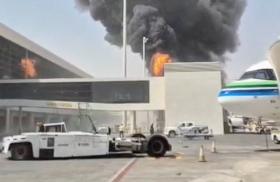
The heavy damage suffered by a U.S. E-3 AWACS aircraft at Prince Sultan Air Base is pivotal to understanding the risk that previously “safe” facilities in the Middle East now face. The United States did not recognize the efficacy of overhead data collection by Russia and China, resulting in operational blind spots in terms of force posture and the ability to relocate quickly. American operations so far have been supported by critical AI technology, resulting in fewer personnel conducting large swaths of successful targeting operations. Yet despite the United States attriting almost all of Iran’s major air defense systems and eroding its ballistic launch capabilities, the simple, decentralized systems that were taken out have essentially been externalized to Russia, complicating the supply chain.
On the flip side, Ukraine now has framework arrangements with various Gulf states to help resupply their defense industrial bases and share tactical and technical know-how on addressing aerial threats. This includes identifying targets before their entrance into the airspace, mobilizing assets on the ground and in the air, and intercepting targets at a high degree of accuracy and a low cost. This will yield great advantages for the Gulf states going forward.
Thus far, Russia’s wartime support to Iran has been important but not pivotal. The United States is still well positioned to maintain a blockade on the Strait of Hormuz indefinitely if it so chooses, and Iranian officials appear to be underestimating Washington’s resolve to hold this position. As the war continues, another potential round of major allied strikes could be more punishing than previous waves given the level of intelligence collection and monitoring. On the strategic planning side, the United States should be looking to improve the scale and pace of its defense industrial base in order to keep up with its adversaries. And from a policy planning perspective, Washington must heed the war’s lessons to better prepare for future risks, especially regarding Russia and China’s ability to collect information and mimic AI capabilities.
This summary was prepared by Shivane Anand, Maya Chaovat, and Wiam Hammouchene. The Policy Forum series is made possible through the generosity of the Winkler Lowy Foundation.