Andrew J. Tabler is the Martin J. Gross Senior Fellow in the Linda and Tony Rubin Program on Arab Politics at The Washington Institute, where he focuses on Syria and U.S. policy in the Levant.
Brief Analysis
Washington’s message to Syrian officials should be simple: foreign energy capital is unlikely to flow quickly as long as the outside world sees their government as an opaque regime with unclear authority, factional infighting, uncertain legal protections, and unresolved military tensions with powerful neighbors.
On May 7, the Syrian Petroleum Company (SPC) announced dramatic fuel price increases as high as 30 percent, sparking a wave of public anger. Ironically, the hikes came just after the company’s CEO, Youssef Qablawi, announced that energy production had risen sharply due to the government’s recent seizure of hydrocarbon-rich northeastern territories from the Syrian Democratic Forces (SDF), the Kurdish-led group that aformerlya served as Washington’s chief security partner in the area. Qablawi and Syrian American business groups had also noted that new deals were being discussed with major U.S., European, and Arab Gulf producers, making Syria appear to be one of the hottest new energy markets in the Middle East.
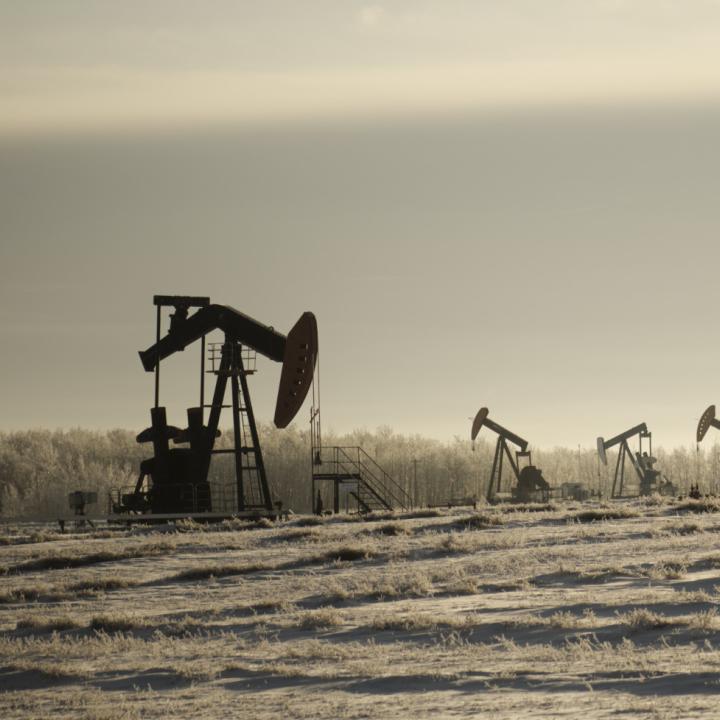
Indeed, expanding local energy production is one of the most powerful ways to fuel Syria’s recovery and reconstruction after a decade and a half of war. Unfortunately, despite recent high-profile support from senior Trump administration officials, most of these agreements remain stuck at the preliminary phase for two reasons.
First, the administration has retained Syria’s formal designation as a State Sponsor of Terrorism—an approach that gives Washington strong leverage to ensure that President Ahmed al-Sharaa’s young government stays on the path of reform, but also creates major regulatory and financial obstacles for international investors. Second, confusion persists over who holds contracting authority and general decisionmaking power within the SPC due to tensions between Qablawi and the company’s board (see below).
Without clarity on both issues, foreign involvement in Syrian energy will be constrained, the country will remain dependent on increasingly costly imports, and its economic recovery will proceed far more slowly than the public expects, raising the risks of greater political instability. This scenario would undermine Washington’s efforts to bring Syria into a closer U.S. orbit and cut off Iranian influence in the Levant.
Then as Now, Public Sentiment Intertwined with Energy Supply
For decades, the Assad regime used the energy sector not just as an economic asset, but as a political tool. International investment helped sustain oil and gas production, and the resultant revenues funded subsidies for diesel, gasoline, cooking gas, and electricity, enabling the Alawite-dominated minority regime to secure acquiescence from Syria’s Sunni Arab majority.
The civil war shattered that model. After losing major hydrocarbon regions to Sunni Arab and Kurdish armed groups, the regime was forced to acquire oil from its patrons in Iran in order to maintain the subsidies and keep fuel prices artificially low. Even then, shortages and lengthy queues became chronic, and Tehran could not supply the natural gas needed for electricity generation, resulting in long daily power outages.
When Sunni armed groups led by Sharaa’s faction overthrew Bashar al-Assad in December 2024, Iran cut off this support entirely, at a time when Syria’s largest energy-producing regions were still controlled by the SDF. In response, Damascus turned to imported oil from the Gulf states and Russia, alongside gas shipments from Qatar and Israel (via Jordan) and Azerbaijan (via Turkey). These emergency arrangements made fuel more readily available and increased electricity access from roughly 1 hour per day to around 6-12 hours. Yet this approach was both expensive and politically unsustainable.
This January, after months of stalled negotiations, government troops forcibly retook Syria’s energy heartland from the SDF. Afterward, many Syrians expected Damascus to restore subsidies or at least reduce prices as a dividend of this military victory and political consolidation. Instead, the SPC has now sharply increased prices for diesel, gasoline, and liquefied petroleum gas.
The backlash has been immediate. On May 12, BBC Monitoring reported widespread anger among Syrians on the street and online, with many noting they were already struggling with the soaring cost of living even before the fuel spike. Some also voiced deep cynicism about Sharaa’s government; for example, one interviewee warned, “People have nothing to lose. We are going back to 2011,” while Kurdish commentator Mahmod Kolo even declared, “Syria was the farm of Assad and the Baath, and has become the farm of [Sharaa] and the Forty Thieves.”
Creating Outsize Expectations
Given Qablawi’s remarks this year, it is understandable why Syrians were expecting cheaper, more abundant energy. At the U.S.-Syria Energy Symposium in Washington on March 26, he appeared alongside U.S. envoy Tom Barrack and outlined ambitious production figures and goals. For example, he claimed that:
SPC oil production had risen above 100,000 barrels per day, up from just 10,000-15,000 before the government retook the northeast. Yet elsewhere in the same speech, he cited only a 30-40 percent increase.
Syria could reach 200,000 bpd by the end of 2026 and 800,000 by 2029 via onshore production alone. Notably, the latter figure is more than double Syria’s 2011 level and well above its historic peak.
Rehabilitation of gas production in Homs province could increase output by 50 percent in the near term.
To meet these targets, Qablawi announced preliminary agreements reportedly worth as much as $28 billion.
Some of these announcements involve credible legacy operators. UK-based Gulfsands—the first foreign producer to formally move toward resuming operations in Syria—is apparently in the process of returning to Block 26 after lifting force majeure. France’s TotalEnergies and Croatia’s INA have been linked to discussions over restarting operations in eastern and central Syria, while ConocoPhillips and Novaterra have signed a memorandum of understanding (MOU) on restoring gas production and exploring additional reserves. Meanwhile, Shell has apparently transferred its long-dormant Euphrates Basin assets to the SPC as part of a broader withdrawal from high-risk operating environments.
New entrants have added to the sense of momentum. U.S.-based HKN reportedly forged an unprecedented production-sharing agreement in the SPC’s biggest northeastern fields, while Saudi Arabia’s ADES Holding has signed a contract to increase gas production in central Syria. Moreover, a much-publicized consortium—reportedly involving the American firms Argent LNG, Baker Hughes, and Hunt along with the Saudi firms ACWA Power and TAQA—has signed an MOU with the SPC to pursue oil and gas development in the northeast.
The electricity sector has seen ambitious announcements as well. Qatar’s UCC Holding, part of the Power International Holding empire, has reportedly signed multiple agreements to build power plants in a consortium with Turkish and American partners. If realized, the deal could materially improve Syria’s chronic electricity shortages.
Even offshore exploration has returned to the conversation. Damascus has floated plans for five offshore blocks and reached MOUs involving Chevron, Italy’s ENI, QatarEnergy, TotalEnergies, and Turkish firms.
On paper, all of this momentum is impressive. In reality, however, most of these deals are of the MOU variety rather than finalized commercial commitments. (It should be mentioned that various regional pipeline and transit projects could wind up boosting Syria’s energy sector even apart from the above understandings; the status and prospects of these initiatives will be discussed in a separate PolicyWatch.)
Clarifying the Two Main Obstacles
During his March symposium appearance with Qablawi, Barrack acknowledged a major obstacle to progress: the fact that Syria’s placement on the U.S. government’s highest export-control risk tier creates major licensing burdens for equipment containing significant American content. The State Sponsor of Terrorism designation further discourages investment by raising various banking restrictions, sanctions screening requirements, financing barriers, and legal liabilities.
The other main obstacle is the SPC’s aforementioned internal dysfunction. Multiple reports suggest a growing dispute between Qablawi and the company’s board over governance, contracting authority, and general control of the energy sector. While Qablawi is a Syrian of Palestinian origin and a U.S. citizen, several of the board’s members—including its chair, Energy Minister Muhammad al-Bashir—are closely linked to Hayat Tahrir al-Sham, the former jihadist group that was led by Sharaa for years before spearheading the offensive that toppled Assad. Beginning in April, several HTS-linked board members reportedly threatened to resign with the intent of pressuring Sharaa to restructure the company and curb the CEO’s authority. On May 13, the president approved new regulations and “fundamental amendments” curtailing Qablawi’s powers in favor of “collective management to prevent unilateral decisionmaking” in the energy sector. More announcements on these matters are expected shortly.
Qablawi’s appointment itself may be controversial with some Syrians because it was allegedly made at Washington’s urging. Whatever the case, if foreign investors are uncertain whether he can sign and truly enforce oil and gas agreements, the recent commercial momentum could quickly evaporate.
Recommendations
Although Syria’s energy sector can still become the most powerful driver of the country’s reconstruction, energy optimism is not the same as energy recovery. Damascus has encouraged public expectations with ambitious production targets, splashy announcements, and politically useful promises of imminent investment. Yet most of these deals remain preliminary, the SPC remains riven by infighting and unresolved governance questions, and U.S. sanctions architecture continues to deter commercial participation.
This creates a dangerous political dynamic inside Syria. After years of inflation and deprivation, the people were led to expect imminent relief and were instead saddled with higher fuel prices—an outcome that undermines the government’s ability to establish legitimacy and trust.
The situation is worrisome in Washington as well, but also a potential source of leverage. The State Sponsor of Terrorism designation remains one of the U.S. government’s few major levers over Damascus. Yet if Trump administration officials want Syria’s energy sector to stabilize the country rather than deepen public disillusionment, they need to clearly define the political and governance benchmarks Damascus must meet to lift this designation and fully normalize bilateral relations. This includes action on the following fronts:
Minority representation. Following a recent cabinet reshuffle, only three of Syria’s twenty-three ministers hail from minority backgrounds—a potentially big problem in a country whose population is over a quarter minority and recently exited a long civil war marked by brutal sectarian strife. Sharaa removed the sole Druze representative, in part because Damascus remains at odds with that community over local governance and military integration. At minimum, Washington should encourage Sharaa to boost minority representation in parliament through his seventy direct appointments.
Regulatory reforms. As Barrack noted in March, Damascus will not attract sufficient foreign energy investments until it establishes frameworks for arbitration and dispute resolution, creates a transparent tax and fiscal regime, and makes visible progress on commercial law, contracts, and the overall legal and regulatory framework.
Border security. Syria’s original terrorism designation in 1979 was issued because of its support for leftist Palestinian groups who wished to attack Israel. Washington should therefore urge Damascus to address security concerns along the Golan Heights frontier, which would serve the dual purpose of satisfying Israel’s requirements to prevent cross-border attacks and assuaging investor concerns about stability.
For Syrian officials, the message is simple: they want foreign capital to flow quickly given the country’s many urgent needs, but they have to understand that such a pace is impossible so long as the outside world sees their government as an opaque regime with unclear authority, factional infighting, uncertain legal protections, and unresolved military tensions with powerful neighbors. Syria may indeed be one of the Middle East’s most promising post-conflict energy opportunities. But until politics catches up with ambition, the sector will generate more headlines than actual recovery.
Andrew Tabler is the Martin J. Gross Senior Fellow at The Washington Institute. Previously, he served as senior advisor to the U.S. special envoy for Syria and director for Syria at the National Security Council.