Simon Henderson is the Baker Senior Fellow and director of the Bernstein Program on Gulf and Energy Policy at The Washington Institute, specializing in energy matters and the conservative Arab states of the Persian Gulf.
Articles & Testimony
Firsthand recollections of how the Islamic Revolution progressed on the ground raise questions about the current protest movement’s prospects for success.
Trying to predict what will happen in Iran is challenging, perhaps impossible. Believe me, I know. I have been here before.
In December 1978, three months after joining the Financial Times in London and despite never having been to Iran, I was sent to Tehran to cover the revolution. For the next two years, the revolution, the US embassy hostage crisis, and the start of the 1980-88 Iran-Iraq war dominated my life.
In late 1978 the country was already in crisis. In August of that year a cinema in the southern city of Abadan had been deliberately set ablaze, trapping around 400 people. The next month, soldiers fired on demonstrators in Jaleh Square, Tehran, killing scores. But, when I first went, the only thing I knew about Iran was that it was ruled with American and British support by the shah, who was kept in power by the feared Savak intelligence agency.
Within a few days of arriving I had the “splash,” the front-page lead of the FT: “Million join in peaceful protest march in Tehran.” In the next day’s edition my story was “More deaths as anti-shah protests grow.”
But the FT’s main interest was oil, so I headed to Ahwaz in the oil-rich southwest of the country, where I interviewed an American oil executive who told me he had had a death threat left on his desk: “Hell, I’ve been in this business too long—that sort of thing doesn’t scare me.” A week later I reported his assassination.
Economically, the country was in a deepening mess. Oil workers were on strike, reducing production to “near zero.” Gasoline was rationed, despite the country’s huge oil reserves, among the world’s largest. The lack of fuel for power stations meant electricity was cut off every evening, being reconnected only in the early hours of the following morning.
Those who could afford it were fleeing the country, even if it meant leaving assets like property behind. The main opposition was already identifiably “Islamic.” Mosques in Tehran and the surrounding area organised buses to bring demonstrators into the city. The women all wore chador cloaks or at least head scarves, and grouped separately from men. The historical opposition to the shah’s rule had been the communist Tudeh party, but its members did not seem to be a major force any longer.
Danger was always close. On December 28 I was caught on the wrong side of a demonstration when army rangers opened fire at a crowd of several thousand. Fortunately it was mostly into the air but, yes, it was very scary. A month later, a thug in the crowd waved a knife at my throat, earning me a reporting mention in The Washington Post.
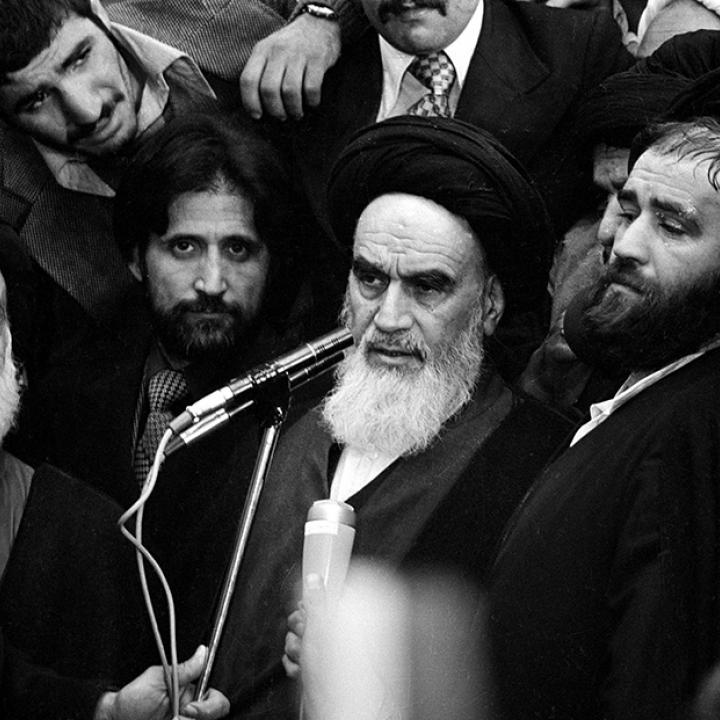
The challenge of day-to-day reporting is firstly to find out and judge the significance of what is going on, and secondly to look for trends. In retrospect, the course of the 1979 revolution is clear: demonstrations; loss of government control; exit of the shah, Mohammad Reza Pahlavi (who, it turned out, had cancer); return of Ayatollah Khomeini from exile in France; resignation of interim prime minister Shahpour Bakhtiar (later murdered in France by Iranian agents); then finally, a few days of anarchy until pro-Khomeini forces overcame resistance.
But at the time this chronology was anything but clear. Remember, this was before the internet, with only short-wave radio reception from the BBC, and only intermittent overseas telephone and telex communications.
So far, this time, we are notionally much better informed. Despite challenges, especially in the last few days, news is still getting through. We have had demonstrations and multiple deaths—at least 500—but not yet loss of government control. Also, the protesters lack any obvious leadership and coordination.
Despite rumours of Supreme Leader Ali Khamenei planning to go into exile, he seems still to be in the country. In 1979 the armed forces turned out to be reluctant to shoot demonstrators. The revolutionary guards and the guys in black on motorbikes are yet to show similar scruples this time.
So we are left thinking, is this another revolution or just another round of discontent of the kind which has erupted every few years and then petered out, as in the “women, life, freedom” protests of 2022? Could the Islamic Republic remodel itself, less Khamenei (and mullahs), more Masoud Pezeshkian, the suited but tieless president elected in 2024, who is regarded within the establishment as a reformist? And what about Israel, still worried about Iran’s damaged but not destroyed nuclear programme, and itself very vulnerable to Iran’s high-precision missiles?
The wild card, at least this week, is the late shah’s son, Reza Pahlavi, who seems to be taking on a leadership role for which he has previously shown neither enthusiasm nor particular ability. Yet the 65-year-old, who lives in a Washington suburb, appears to be a unifying character in contrast to his father’s divisiveness.
So far, this Pahlavi’s main challenge is that he lacks any sign of support from US President Donald Trump, who is expected to be briefed on his options. Meanwhile, Tehran is seeking talks with Washington, an old time-wasting gambit. It looks like being a busy next few days.
Simon Henderson is the Baker Senior Fellow at The Washington Institute and director of its Bernstein Program on Gulf and Energy Policy. This article was originally published on the Arabian Gulf Business Insight website.