Robert Satloff is the Segal Executive Director of The Washington Institute, a post he assumed in January 1993.
In-Depth Reports
Despite rhetoric to the contrary, neither side can claim a decisive win, and an uneasy status quo could persist as long as Trump, the ceasefire guarantors, and Israeli leaders keep a lid on their frustrations.
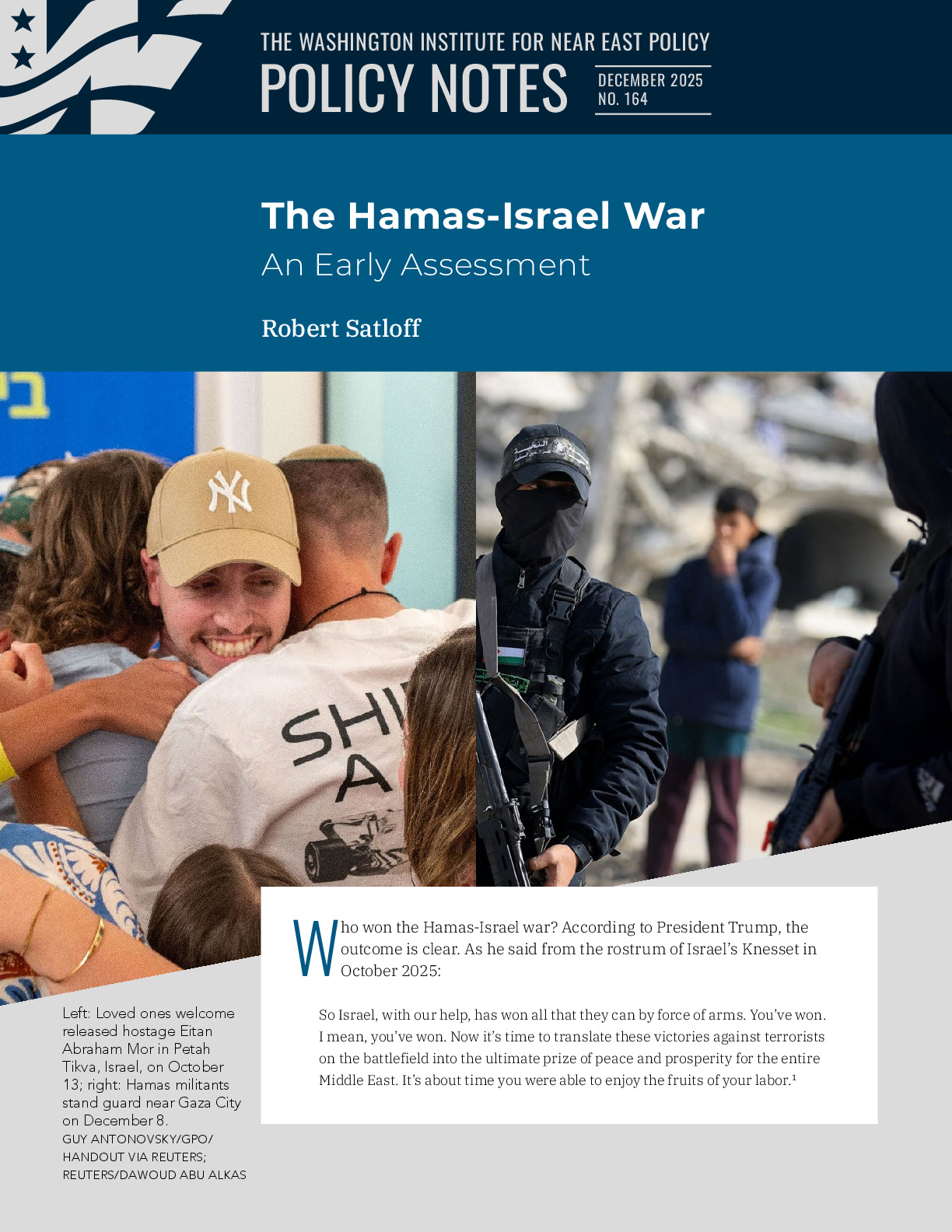
Three months after Israel and Hamas agreed to a U.S.-brokered ceasefire, the strategic outcome of the war remains uncertain. Both sides can point to meaningful achievements, but neither can claim decisive victory. Whereas Israel gained the release of its remaining hostages and a Gaza buffer zone to prevent future attacks, Hamas still controls nearly half the territory while its longtime patrons, Qatar and Turkey, have attained unprecedented standing in Washington. Uncertainty now looms as President Trump prepares to announce the transition to “phase two” of the ceasefire, which will see a raft of hopeful initiatives crash into the reality of a Gaza divided between Israeli and Hamas zones of control, without any agreed path toward disarming the terrorist group—the necessary precondition for any real progress toward full implementation of the ceasefire.
In this timely and provocative Policy Note, Washington Institute Executive Director Robert Satloff explains that several factors could shake up the status quo in Gaza. These include President Trump’s impatience for results, discontent from the Qatari and Turkish ceasefire guarantors, and Israeli unease at its enemy’s stubborn survival. While outlining the potential for a total breakdown of the ceasefire and return to full-scale hostilities, Satloff also argues that Jerusalem has a powerful interest in preventing a situation in which the White House is forced to choose between Israel and the ceasefire’s guarantors—and offers ways to avoid that deeply problematic scenario.