Michael Singh is the Managing Director and Steven D. Levy Senior Fellow at The Washington Institute.
Brief Analysis
While the United States and Israel are winning based on measures like the degradation of Iran’s naval force and missiles, a broader victory will require securing domestic support and avoiding the maximalism that has hindered past American military efforts.
One week into the war with Iran, the United States seems to have settled on four primary objectives: (1) destroying Iran’s navy; (2) destroying Iran’s missile capabilities; (3) preventing Iran from developing nuclear weapons; and (4) preventing Iran from supporting proxy groups, such as Hezbollah in Lebanon or the Houthis in Yemen. Administration officials—notably President Trump in his initial remarks regarding the war—have hinted that regime change is also among their goals, but have consistently excluded this message in recent days.
As is often the case, American and Israeli aims significantly overlap but are not identical. Israel appears most squarely focused on the missile threat posed by Iran; indeed, even had the United States not intervened, Israel likely would have done so in order to degrade Iran’s missile capabilities. Israel also appears more intent on regime change than does the United States, focusing heavily in the conflict’s early days on killing regime political and military leaders, most notably Supreme Leader Ali Khamenei.
Successes and Challenges
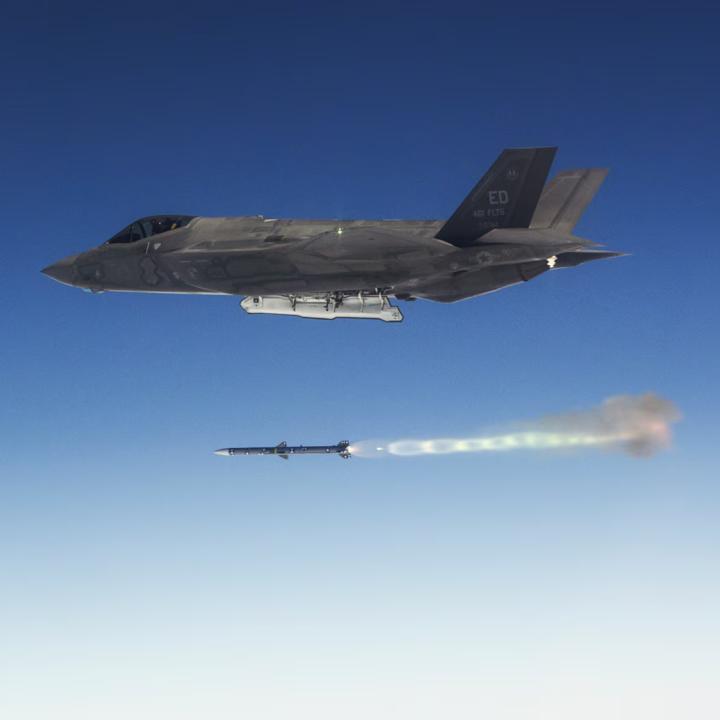
It is unclear how either the United States or Israel measures progress toward these objectives, or how to independently measure that progress at this stage. According to the U.S. Defense Department, numerous Islamic Republic of Iran Navy ships have been eliminated, but this leaves out the Islamic Revolutionary Guard Corps Navy’s (IRGCN’s) fleet of fast boats, autonomous naval systems, and midget submarines. U.S. officials have also asserted that Iran’s missile threat is “declining,” but they have not clarified how many missiles or what types Iran still possesses. Iran’s ability to continue firing missiles and drones is concerning, and may be a function of the U.S. decision not to employ ground forces, which is likely rooted more in politics than strategy. AsU.S. and partner interceptor stockpiles dwindle, this Iranian fire could become significantly more damaging, putting a premium on quickly finding and destroying Iran’s remaining capabilities.
Compared with the effort to destroy Iran’s navy and missiles, progress on the campaign’s other objectives is even harder to assess. Iran’s nuclear sites were significantly damaged in June 2025 strikes by the United States and Israel. The remnants of that program—especially Iran’s stockpile of enriched uranium—are thought to be buried in the rubble of those destroyed facilities. Thus, while the United States and Israel have reportedly conducted further strikes on Iranian nuclear sites such as those at Natanz, certain tasks such as removing the enriched uranium or verifying that other sites do not pose a proliferation risk likely cannot be done through strikes alone. Likewise, while degrading the IRGC can undermine Iran’s ability to support its proxies, countering other key elements of that support, such as financing, calls for the use of different tools.
While regime change may not be an explicit goal of the American campaign, it is arguably the one on which the clearest progress has been made. For all its pretenses of theocracy or democracy, Iran is most accurately described as a dictatorship, featuring one-man rule wielded by just two figures in the Islamic Republic’s nearly fifty-year history. The death of former leader Ali Khamenei will usher in major change, though it is impossible at this stage to know its direction.
For its part, Iran has responded to the U.S. and Israeli campaign not with the massive missile salvos it employed in 2024 and 2025 but with smaller barrages aimed at a far wider set of targets. Iran has launched missiles and drones against every Gulf Cooperation Council state as well as Jordan, Cyprus, Turkey, and of course Israel. In doing so, it has inflicted little damage so far—though as noted above, this may change if interceptor stockpiles fail—and has also failed to generate the outcry for a ceasefire that may have been its intended objective.
Tehran has had greater success in haltingcommercial shipping through the Strait of Hormuz—less through the application of force and more through deterrent threats. Thus far, U.S. efforts to encourage this shipping to resume have availed little, and as buffers in the energy market erode—e.g., stored oil, increased production elsewhere—the world may see far sharper increases in energy and food prices, which will generate greater pressure for a cessation of hostilities. Any success Iran has had in slowing shipping through the Strait, however, owes at least in part to Washington’s failure to adequately plan for this and other contingencies such as the need to evacuate American citizens from the region or at least provide them with forewarning of conflict. A lean interagency process can produce decisions that are fast and bold, but the tradeoff is often this sort of oversight, which can be avoided by bringing additional experts into the planning loop.
Next U.S. Steps
To secure not just military successes but a strategic victory in the conflict with Iran, the United States should consider an approach grounded in the following ideas:
Shore up domestic support. Domestic political support is critical to any war effort, and the Trump administration stumbled at the outset by failing to clearly communicate the need for and objectives of this war.While disputes over war powers are common between Congress and the executive branch, the importance of public support should not be dismissed. That support is attainable—past polls suggest that Americans identify Iran as a top security concern, and weakening the Iranian regime and degrading its threats to U.S. national security have been objectives shared across administrations of both parties. The Trump administration should increase the pace and transparency of briefings by policy professionals describing U.S. progress against key goals, and provide as clear a sense as possible of its theory of victory.
Keep objectives focused, prioritize speed. The conundrum that U.S. officials face is that while the United States and Israel are clearly winning the war in military terms, if they stopped fighting today they would be judged to have lost. If commercial shipping does not quickly resume, or if Iran retains the ability to menace the Middle East with missiles and drones—or to resume its progress toward a nuclear weapon—then the war will have achieved little at great cost. While no amount of military force can permanently deny Iran these capabilities, the minimal condition for victory must be eliminating Iran’s ability to pose a serious conventional or nuclear threat to the United States, Israel, or the broader region. Some will insist that the war is a failure unless regime change is achieved, arguing that leaving the regime in place will enable the persistence of Iran’s threats to U.S. national security in some form. However, the belief that victory in war requires the achievement of maximalist aims led to costly multi-decade conflicts in Iraq and Afghanistan, and the Trump administration should not repeat the error in Iran.
And in the longer term:
Pressure the regime if it survives. If regime change does not occur, or if a new regime remains dedicated to threatening U.S. security, then the administration should maintain a strategy of pressure similar to the one that weakened Iran prior to this conflict. Such pressure should include the continued enforcement of sanctions and—if necessary—additional military strikes if Iran seeks to rebuild its missile or nuclear capabilities, taking advantage of the regime’s depleted defenses. Critically, such a pressure strategy should include assisting the Iranian people to bring about political change through tools such as funding or technological assistance, but should stop short of strategies like arming separatist groups that could lead to Iran’s fragmentation.
Seize regional opportunities. The conflict has already given rise to political opportunities outside Iran to turn military success into longer-term strategic gains. These opportunities take two forms: First, in countries dominated by Iran-backed groups—e.g., Hezbollah in Lebanon, the Houthis in Yemen, or Shia militants in Iraq—Washington should look to marginalize those groups and strengthen legitimate political actors through diplomatic, economic, and security support. Second, Washington should aim to strengthen the regional security, economic, and political architecture it has been slowly building, including through initiatives such as the Abraham Accords. By expanding the conflict to include not just Israel but Gulf Arab states, Iran has underscored that its enemies face threats that are better countered collectively than individually. Much like it did at the Madrid Conference following the Gulf War in 1991, the United States should take advantage of its own success and Iran’s errors to knit its regional partners more closely together.
Michael Singh is the managing director and Lane-Swig Senior Fellow at The Washington Institute.