Simon Henderson is the Baker Senior Fellow and director of the Bernstein Program on Gulf and Energy Policy at The Washington Institute, specializing in energy matters and the conservative Arab states of the Persian Gulf.
Articles & Testimony
The longstanding balance of Gulf security—in which states quietly maintained ties with Tehran while relying on Washington as the ultimate guarantor—is now under strain, making the future of their investment flows into the United States difficult to judge.
It may be premature to discuss the end of the US-Israel war with Iran, but it is not too early to consider how the fighting is reshaping political and commercial relationships between the Arab Gulf states and Washington. Before February 28, when the US and Israel assassinated supreme leader Ayatollah Ali Khamenei and much of Iran’s top leadership, the Gulf—along with much of the global economy—was thriving. Now, despite efforts to stay out of the mire, GCC states have become targets for Iranian aggression, and their business models are under strain.
Those models—built on providing an attractive commercial environment for foreign capital, with first-class infrastructure and a relatively liberal social climate—were underpinned by Gulf governments recycling petrodollars into global markets as well as by domestic investment. This dynamic was not lost on US President Donald Trump.
Less than a year ago, in May 2025, Trump visited Saudi Arabia, Qatar and the UAE, celebrating their ties with the US and highlighting the scale of Gulf investment commitments into the American economy. The total figures announced exceeded $2 trillion. Even allowing for Trump-style hyperbole, the sums were significant. And although cooperation in AI is hard to depict graphically, there was the very visual headline of Qatar’s gift to Trump of a $400m Boeing 747 for use as the new Air Force One.
That was then. This is now. The longstanding balance of Gulf security—in which states quietly maintained ties with Tehran while relying on Washington as the ultimate guarantor—is under strain.
Gulf states have always understood that US support—from thousands of miles away—depends on the administration in power in Washington, which can change every four or eight years. Maintaining some level of relationship with Tehran has therefore remained a pragmatic necessity. Now Trump’s comments suggesting the US may not prioritise securing the Strait of Hormuz have unsettled both global markets and Gulf policymakers.
The UAE has moved quickly to signal its neutrality: “We made it clear to the Iranians that in the event of war, UAE territory and airspace wouldn’t be used for strikes on Iran,” Yousef Al Otaiba, the UAE’s ambassador to the US, wrote in a Wall Street Journal op-ed on March 25.
Yet that position is becoming increasingly difficult to hold. Persistent Iranian drone and missile attacks on Gulf infrastructure point to a regional order that is visibly fracturing. The old balance, it seems, is breaking down.
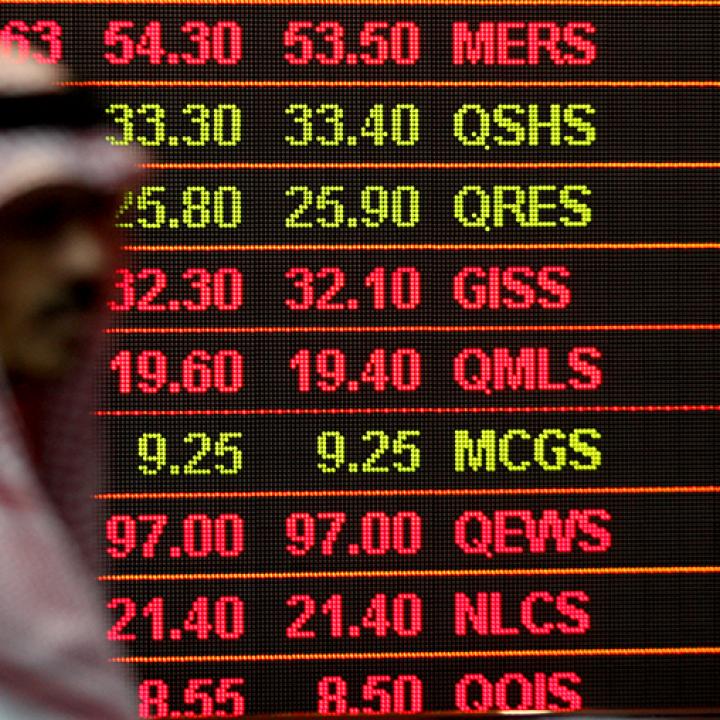
The most immediate pressure point is oil. While prices have surged, supply uncertainty remains acute due to Iran’s grip on the Strait of Hormuz. Without a predictable revenue stream, long-term investment planning becomes significantly more difficult.
Nevertheless, Saudi Arabia pushed ahead with a well-attended investment conference at Miami Beach in late March. Trump, the keynote speaker, claimed Iran was “begging for a deal.” Yasir Al Rumayyan, governor of the Public Investment Fund, reiterated the kingdom’s commitment to global investment despite uncertainty and said a new five-year strategy would be unveiled soon.
While Trump’s day-to-day utterances can surprise and confuse, it’s safe to say his principal focus is usually economic. He will want to resettle the markets and set the US back on its growth path.
His timeframe is more difficult to predict. The midterm elections in November are for Congress, not for him directly. At present, the Republican Party appears to be losing its already thin majority in the House of Representatives.
In a televised address to the nation on Wednesday evening, Trump said the war with Iran is close to being finished and claimed the US has largely degraded Iran’s military capabilities. At the same time, he signalled further strikes over the next few weeks, offering no clear endgame.
What comes next remains uncertain. As ever with Trump, today’s position may not hold tomorrow.
For the Gulf states, the implications are immediate: investment flows into the US will remain difficult to judge until the Strait of Hormuz is functioning normally and attacks on regional infrastructure subside. Whether that stability requires a fundamental shift inside Iran is still unclear.
Simon Henderson is the Baker Senior Fellow at The Washington Institute and director of its Bernstein Program on Gulf and Energy Policy. This article was originally published on the Arabian Gulf Business Insight website.