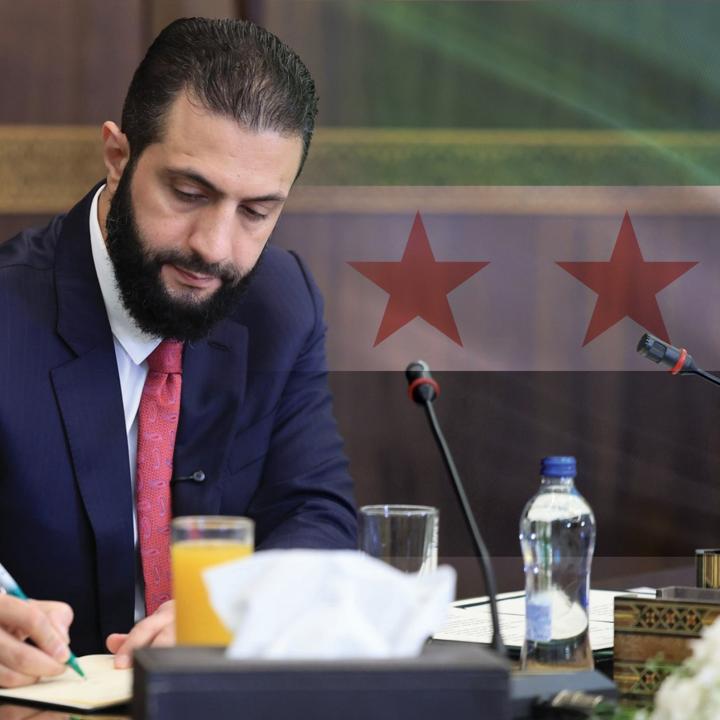
Aaron Y. Zelin is the Gloria and Ken Levy Senior Fellow at the Washington Institute for Near East Policy, where his research focuses on Sunni Arab jihadist groups in North Africa and Syria, foreign fighting, and online jihadism.
In-Depth Reports
The transitional leadership can claim several successes, but a shadow government, opaque economic practices, and uneven accountability for former regime crimes could undermine progress.
A year after the collapse of the Assad regime, Syria’s transitional leadership can claim tangible successes in seeking to rebuild a state hollowed out by civil war, corruption, and decades of authoritarian rule. The government in Damascus is restoring basic services like electricity and schooling, reopening diplomatic channels, and pursuing investment opportunities with regional partners like Saudi Arabia. But a pervasive shadow government, opaque economic practices, and uneven accountability for former regime crimes threaten to undermine this progress and the public’s trust. Syria’s ultimate trajectory remains an open question, and the leadership will need discipline to avoid a return to the conflict so common in post–civil war states.
In this Policy Note, expert Aaron Zelin draws on two visits to Syria along with written and oral sources to assess governance under the transitional authorities, mapping both progress and obstacles. He also offers recommendations for U.S. policy, from sanctions relief to transitional justice, making clear that a successful Syria will promote regional stability and American interests.