- Policy Analysis
- PolicyWatch 4181
Energy and Shipping Risks in the Iran War
Mar 9, 2026
Also available in

Brief Analysis
Four experts explain why reversing the conflict’s effects on oil and gas production and tanker traffic from the Gulf will likely take much longer than many people realize, with only limited supply alternatives in the meantime.
On March 9, The Washington Institute held a virtual Policy Forum with Lauren Holtmeier, Matt Smith, Richard Nephew, and Tomer Raanan. Holtmeier is a Middle East reporter with S&P Global Energy. Smith is the lead oil analyst at the energy market intelligence firm Kpler (Americas). Nephew, the Institute’s Bernstein Adjunct Fellow, previously served as U.S. deputy special envoy for Iran and principal deputy coordinator for sanctions policy at the State Department. Raanan is a maritime risk analyst with Lloyd’s List. The following is a rapporteurs’ summary of their remarks.
Lauren Holtmeier
While Iranian attacks have hit key energy infrastructure in the region since the war erupted, the full extent of the damage remains to be determined. Oil facilities in Saudi Arabia (specifically the Ras Tanura complex), Qatar, Iraq, and Bahrain have been compromised. Damage caused to storage facilities in Oman, the Emirati port of Fujairah, and similar targets will also hurt oil production, as will Israeli hits on Iranian oil depots. Such disruptions have greatly affected loadings from key ports in the Gulf, which have decreased from between 10-19 million barrels per day (b/d) previously to just 3 million this week, according to data from S&P Global.
In response, Qatar has declared force majeure on exports of liquefied natural gas (LNG), while Bahrain has done the same for its Bapco refinery. Oil fields have been shut down in northern Iraq, and various energy companies across the Middle East have evacuated their staff.
Although high oil prices may benefit producers in the short term, long-term shutdowns can incur substantial costs by causing damage to their fields and facilities. Additionally, the longer a field remains shut down, the longer it takes to become operational again. Qatar, for example, has stated that it does not expect operations to restart until at least three weeks after the fighting stops. Other officials have estimated that facilities in Gulf Cooperation Council countries can withstand six weeks of disruption before sustaining significant damage. Iraq, OPEC’s second-biggest oil producer, is even more vulnerable to these risks due to its older infrastructure and reliance on oil revenue. So far, it has seen shutdowns in both its southern and northern fields, while exports through the Iraq-Turkey Pipeline are down to zero.
There are some options to bypass the Strait of Hormuz energy chokepoint, but they are limited. Saudi Arabia’s Yanbu port on the Red Sea and the Emirati port of Fujairah remain the primary alternatives, with Yanbu already loading up to 2 million b/d day during the war compared to 800,000 last month. Egypt has also expressed willingness to support oil exports through its SUMED pipeline.
Matt Smith
The United States lacks adequate leverage to control global oil prices, so reopening the Strait of Hormuz is the only way to bring them down. U.S. Energy Secretary Chris Wright has offered an optimistic forecast of a temporary disruption lasting a matter of weeks, but the strait will likely remain closed for much longer, pushing oil prices to unprecedented levels (e.g., $150 per barrel).
Although the United States has enough domestic oil production to meet its own energy needs, prices are set by global markets. The strait’s closure has cut flows to Asia and Europe, and the resulting supply shortage is causing oil prices to spike globally. Indeed, close to 90 percent of Middle East energy exports are sold to Asian markets. China receives 45 percent of its oil from the region, and India 50 percent. China has a significant onshore energy reserve, but it does not have the security of supply to refill those stocks once depleted. India has a dramatically smaller onshore reserve and lacks an adequate alternative supply.
Moreover, alternative suppliers generally do not match the quality of Middle Eastern crude. The United States can only replace 2 of the 15 million b/d cut off by the strait’s closure, and American crude is incompatible with refineries designed for Middle Eastern oil. Tapping the U.S. Strategic Petroleum Reserve would relieve some market anxiety but cannot solve the underlying supply shortage.
U.S. producers will benefit from the resulting price surge, but Russia will be a major beneficiary as well because its crude is a legitimate substitute for Middle Eastern oil. Previously, Moscow was forced to sell its oil at a discount because of Western sanctions, but India has now been granted a waiver to purchase this oil and is buying it at elevated rates.
As for natural gas, Qatar supplies 20 percent of the world’s LNG, with most of it going to Asia. European LNG prices have already nearly doubled because U.S. exports may get redirected to Asia instead of their usual European destinations.
Richard Nephew
U.S. policy options to mitigate oil market disruptions are limited. Price pressures are driven more by market and commercial risk perceptions than by immediate shortages. Globally, a significant amount of oil remains available in inventories or is already in transit. The bigger concern is how much production will be shut down and how long it will take to restore. Bringing production back online can be slow and technically complicated, and that potential delay is what many markets are reacting to.
Washington’s (limited) policy options include:
- Releasing supply through the Strategic Petroleum Reserve or similar reserves elsewhere. Yet while this could signal that supply remains available, such reserves are limited, and tapping them would not address the core problem of long-term production.
- Assuring Iran that its energy infrastructure will not be further targeted. The United States and Israel could attempt to reestablish the tacit bargain that energy facilities are off limits, much like the mutual restraint shown toward that sector during the June 2025 war. Yet such assurances would be difficult to make credible, particularly if Tehran concludes that pressure on energy flows remains a key source of leverage. Even so, signaling a desire for restraint could help calm markets somewhat.
- Increasing supply indirectly by allowing exports of sanctioned Russian (or even Iranian) oil while restricting access to the resulting revenue (e.g., payments could be placed in special escrow accounts). Yet such mechanisms would take time to implement, would require coordination with financial institutions in other countries, and would still run the risk of revenue getting back to U.S. adversaries.
- Providing military escorts for ships transiting the Strait of Hormuz or offering insurance support through U.S. government-backed financial institutions. These steps are unlikely to fully mitigate risk, however, since escort vessels could themselves become targets, and historical experience shows that such operations can escalate into armed hostilities.
- Craft U.S. legislation compensating companies for ships or cargo lost in transit. Rather than traditional insurance schemes or the more limited plans offered through the U.S. International Development Finance Corporation (DFC), legislation would enable firms to file claims directly with the U.S. government for reimbursement. Yet the requisite congressional action seems highly unlikely in the current political environment.
Iranian officials understand the leverage created by attacking and threatening energy flows, including the political sensitivity of gasoline prices in the United States. So far, Tehran has avoided sustained, significant attacks on major infrastructure such as refineries, export terminals, and pipelines. Most disruptions have stemmed from transit risks and precautionary shutdowns rather than heavy long-term damage. This distinction is important. Sustained attacks on pumping stations, storage facilities, refineries, or export terminals could produce far more severe and longer-lasting supply disruptions.
Notably, Iran retains substantial military options to carry out such attacks. Beyond medium-range ballistic missiles, it has large numbers of shorter-range missiles positioned along the Gulf and capable of targeting ships and nearby land infrastructure. It could also escalate using drones, unmanned surface vessels, the maritime harassment tactics used by the Yemeni Houthis before the war, and mining efforts in the Strait of Hormuz. Limited minelaying alone—or even just the perception of it—could substantially deter commercial shipping.
Tomer Raanan
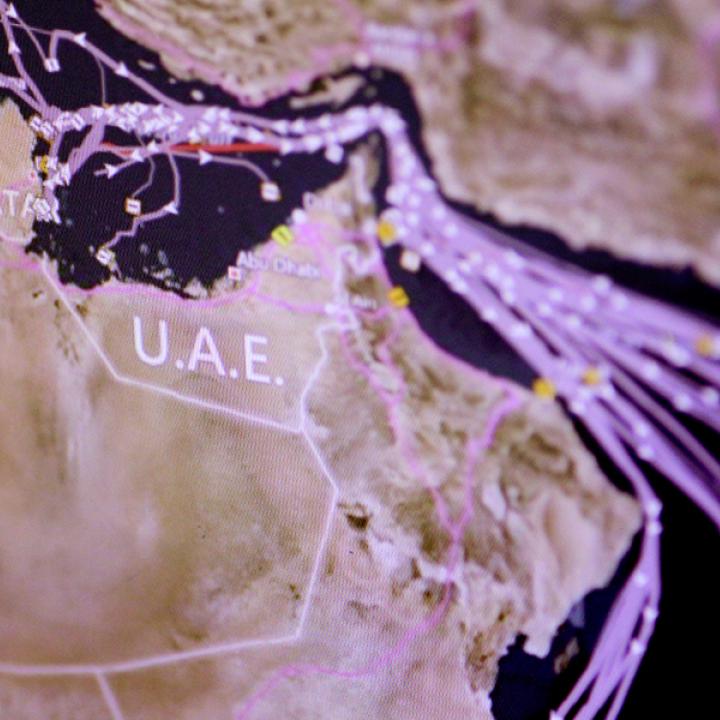
Maritime traffic in and out of the Strait of Hormuz has slowed to a trickle since the war began, and approximately half of the tankers still transiting the waterway belong to the “shadow fleet” linked to Russia and Iran. Some Greek-owned vessels have entered the strait, and at least one has exited laden with cargo. Meanwhile, Iran continues to load oil and liquefied petroleum gas for export (likely to China), and a few of these vessels have exited the Strait (notably, LPG is a highly flammable cargo). Tracking traffic in the strait is difficult now due to vessels transiting with their transponders turned off and significant signal interference in the area.
Both war risks and high insurance costs are making tankers hesitate to transit the strait. Insurance is available but at much higher costs than usual. Even if certain companies can recoup those costs, they may still decide not to transit given the risk posed to their vessels and sailors. Insurers consider vessels linked to the United States and Israel as more likely to be attacked, so they face even higher costs—which could be one reason for Washington’s newly announced $20 billion reinsurance plan.
The potential for U.S. military escorts through the strait remains uncertain. Industry officials were told by the U.S. Navy that such escorts were “off the table,” but less than twenty-four hours later, President Trump announced it was a possibility. Shipowners have indicated that the president’s announcement does not change their calculations, but industry calculations have been changing rapidly as the situation develops and could shift again. If U.S. Navy escorts begin and prove successful, shipowners could become more willing to make the transit.
Before escorts can begin, however, Iran’s antiship capabilities would need to be targeted more effectively. During recent crises in the Red Sea, the United States and its allies downed hundreds of drones and missiles, but this did not result in a meaningful return of traffic. In the Strait of Hormuz, even a single tanker being hit while under escort could cause all shipowners to conclude that the transit is too risky even with military help. Moreover, securing the strait would not necessarily prevent Iran from targeting vessels elsewhere in the Gulf.
This summary was prepared by Wiam Hammouchene, Maya Chaovat, Ari Nagle, and Gabriel Wein. The Policy Forum series is made possible through the generosity of the Winkler Lowy Foundation.
About the Authors




Share