

TWI logo The Washington Institute for Near East Policy
logo
wordmark
Homepage

Main navigation

  • Analysis
  • Experts
  • About
  • Support
  • Maps & Multimedia
Trending:
  • Military & Security
  • Proliferation
  • Israel
  • Iran
  • Lebanon
  • Syria

Regions & Countries

  • Egypt
  • Gulf States
  • Iran
  • Iraq
  • Israel
  • Jordan
  • Lebanon
  • Middle East
  • North Africa
  • Palestinians
  • Syria
  • Turkey

Issues

  • Arab & Islamic Politics
  • Arab-Israeli Relations
  • Democracy & Reform
  • Energy & Economics
  • Great Power Competition
  • Gulf & Energy Policy
  • Military & Security
  • Peace Process
  • Proliferation
  • Terrorism
  • U.S. Policy
TWI English
TWI Arabic: اللغة العربية Fikra Forum

Breadcrumb

  • Policy Analysis

Arab & Islamic Politics

Policy Analysis on Arab & Islamic Politics

Filter by:

Articles & Testimony
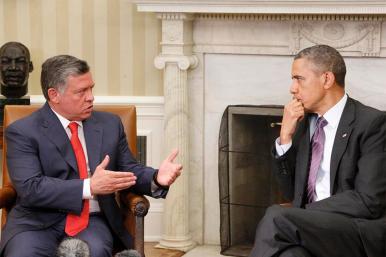
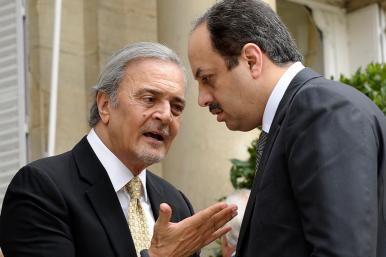
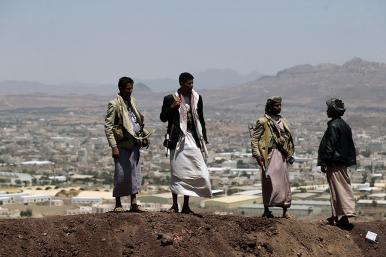
This Photo Explains the United States' Relationship with Saudi Arabia
The kingdom's existential struggle with Iran could have drastic implications for the Middle East.
Sep 15, 2014
◆
  • Simon Henderson
Brief Analysis
Resetting the U.S.-Kurdish-Baghdad Relationship
Washington should keep pressuring Baghdad to make early, ungrudging goodwill gestures toward the Kurds instead of reverting to hardball negotiations and broken promises.
Sep 15, 2014
◆
  • Michael Knights
Articles & Testimony
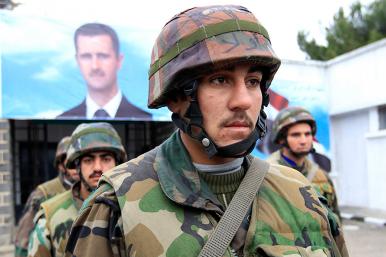
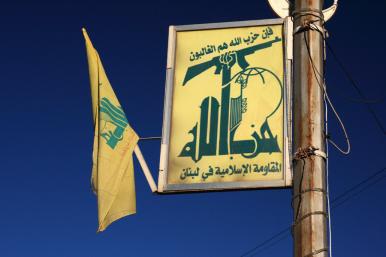
Hezbollah's Syrian Quagmire
By siding with the Assad regime and taking up arms against Sunni rebels, Hezbollah has placed itself at the epicenter of a sectarian conflict that has nothing to do with its purported raison d'etre of fighting Israel.
Sep 11, 2014
◆
  • Matthew Levitt
In-Depth Reports
How Iranians Might React to a Nuclear Deal
As the P5+1 and Iran negotiate about the nuclear impasse, Iranian factional politics has heated up. Supreme Leader Ayatollah Ali Khamenei has made disparaging comments about the nuclear negotiations, yet supported continuing the talks. The Rouhani government is facing a variety of criticisms: it is vigorously defending its record at
Sep 11, 2014
◆
  • Patrick Clawson
  • Mehdi Khalaji
Articles & Testimony
Islamists Are Not Our Friends
Despite tensions stemming from their domestic policies, non-Islamist actors such as Egypt and the Gulf monarchies are America's natural partners in the region because they favor stability and the free flow of oil and gas while opposing terrorism.
Sep 11, 2014
◆
  • Dennis Ross
In-Depth Reports
Revealing Trends in Turkey's Presidential Election
On August 10, Recep Tayyip Erdogan continued his prolific electoral run by collecting almost 52 percent of the vote in Turkey's presidential poll, easily besting his chief rival, Ekmeleddin Ihsanoglu, who represented the left-right CHP/MHP coalition. A large part of Erdogan's success lay in peeling away conservative MHP voters through
Sep 7, 2014
◆
  • Soner Cagaptay
Articles & Testimony
Is Islamism Compatible with Democracy?
Despite the authoritarian impulses of Turkey's long-governing AKP, the country's civil society has become too diverse for President Erdogan or any other single leader to control entirely.
Sep 5, 2014
◆
  • James Jeffrey
  • Soner Cagaptay
Brief Analysis
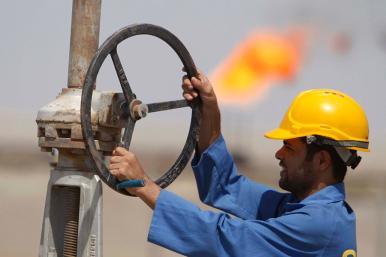
Jordan's Energy Decision: Go with Israel
Today's draft agreement will have to withstand domestic and foreign pressure on Amman.
Sep 3, 2014
◆
  • Simon Henderson
  • David Schenker
Articles & Testimony
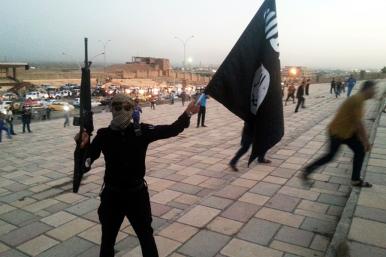
A Strategy for Beating the Islamic State
Since containment is no longer a viable option, Washington must build a regional coalition of the willing to roll back the terrorist group.
Sep 2, 2014
◆
  • Dennis Ross
Articles & Testimony
Lebanon and the ISIS Threat
Lebanon is in grave danger of becoming the next ISIS victim, and recent clashes in Arsal were just a taste of things to come.
Aug 28, 2014
◆
  • David Daoud
Articles & Testimony
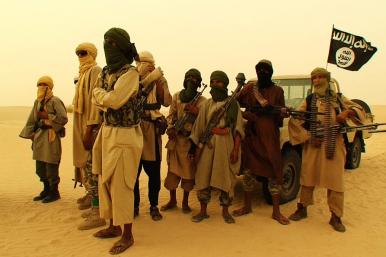
Algeria's Role in Solving the Libya Crisis
Aside from potential military intervention, the Algerian government can leverage its diplomatic ties to mediate between the conflicting Libyan parties, thwart a possible ISIS takeover, and eliminate the threat to the Sahel region as a whole.
Aug 28, 2014
◆
  • Yacine Boudhane
Articles & Testimony
ISIL's Political-Military Power in Iraq
Much of the group's early military success was due to the weakness and unpreparedness of its enemies, so the right blend of countermeasures could still roll it back.
Aug 28, 2014
◆
  • Michael Knights
Brief Analysis
Saudi Arabia Ups Pressure on Qatar
The visit of a top-level Saudi delegation to Doha hints at exasperation with Qatari policies.
Aug 27, 2014
◆
  • Simon Henderson
Brief Analysis
U.S. Allies Bombing Islamists: The UAE Airstrikes on Libya
A coalition of like-minded Arab states -- Saudi Arabia, Egypt, and the United Arab Emirates -- is emerging to confront militant Islamism.
Aug 25, 2014
◆
  • Simon Henderson
In-Depth Reports
Khalifa Haftar: Rebuilding Libya from the Top Down
As a leading Libyan military figure carries out a comprehensive campaign to uproot extremism in his country, Washington and its allies will have to find a way to balance his efforts against the need to curb growing violence and nurture a pluralistic state.
Aug 20, 2014
◆
  • Barak Barfi
Articles & Testimony
The Real Middle East Crisis Is Economic
It would be naive to think that economic growth will solve all of the Middle East's thorny dilemmas; but it would be equally naive to believe that they can be solved without it.
Aug 19, 2014
◆
  • Michael Singh
Brief Analysis
Helping Iraq's Next Prime Minister Seize the Moment
As Abadi's ratification approaches, Washington should encourage him to swiftly signal his commitment to decentralization, security reform for the Sunnis, and a revenue-sharing deal with the Kurds.
Aug 15, 2014
◆
  • Michael Knights
Articles & Testimony
Hariri Returns to Lebanon: The Challenges Ahead
If Hariri is to lead Lebanon out of the current morass, he will have to take a risk and stray from Beirut's well-worn path of complete acquiescence to Hezbollah.
Aug 14, 2014
◆
  • David Schenker
Articles & Testimony
Maliki's Inevitable Demise
The naming of a new prime minister should give Iraq's various constituencies another chance -- perhaps their last chance -- to unite under one flag and one government.
Aug 14, 2014
◆
  • Gary Grappo
Articles & Testimony
Iraq's City of Orphans
The world came to the rescue of the refugees on Mount Sinjar, so why does it continue to ignore thousands more Iraqi minorities who face imminent threat of extermination by jihadists?
Aug 14, 2014
◆
  • Michael Knights

Pagination

  • Previous page ‹ Previous
  • First page « First
  • …
  • Page 83
  • Page 84
  • Page 85
  • Page 86
  • Current page 87
  • Page 88
  • Page 89
  • Page 90
  • Page 91
  • …
  • Last page Last »
  • Next page Next ›
Supported by the

Linda and Tony Rubin Program on Arab Politics

The Washington Institute's Linda and Tony Rubin Program on Arab Politics focuses on social, political, and economic developments in the Arab world, with an emphasis on the Arab countries of the Levant.

Sign Up for Email Updates from The Washington Institute

Never miss a breaking event on U.S. policy interests in the Middle East. Customize your subscription to our expert analysis, op-eds, live events, and special reports.


Sign up

Featured experts

David Schenker
David Schenker
David Schenker is the Taube Senior Fellow at The Washington Institute and director of the Linda and Tony Rubin Program on Arab Politics. He is the former Assistant Secretary of State for Near Eastern Affairs.
Ghaith al-Omari
Ghaith al-Omari
Ghaith al-Omari is the Rosalinde and Arthur Gilbert Foundation Senior Fellow in The Washington Institute's Irwin Levy Family Program on the U.S.-Israel Strategic Relationship.
Hanin Ghaddar
Hanin Ghaddar
Hanin Ghaddar is the Friedmann Senior Fellow at The Washington Institute's Rubin Family Arab Politics Program, where she focuses on Shia politics throughout the Levant.
Background image with TWI branding
logo
wordmark
Homepage

1111 19th Street NW - Suite 500
Washington D.C. 20036
Tel: 202-452-0650
Fax: 202-223-5364

Footer contact links

  • Contact
  • Press Room
  • Subscribe

The Washington Institute seeks to advance a balanced and realistic understanding of American interests in the Middle East and to promote the policies that secure them.

The Institute is a 501(c)3 organization; all donations are tax-deductible.

Footer quick links

  • About TWI
  • Support the Institute
  • Alumni

Social media

  • The Washington Institute on Facebook facebook
  • The Washington Institute on X x
  • The Washington Institute on YouTube youtube
  • The Washington Institute on LinkedIn linkedin

© 2025 All rights reserved.

Footer

  • Employment
  • Privacy Policy
  • Rights & Permissions