Michael Jacobson is the Mark and Wayne Levy Senior Fellow in The Washington Institute's Jeanette and Eli Reinhard Program on Counterterrorism and Intelligence.
Scott Allan teaches counterterrorism policy at George Washington University.
Articles & Testimony
The United States is safer from catastrophic terrorism, but emerging technologies, weakened international partnerships, and allied military drawdowns in Africa are creating new blind spots.
Twenty-five years after 9/11, the country is now much more protected from another catastrophic terrorist attack. But the US has taken its eye off the ball and is exposing itself to some of the risks the 9/11 Commission warned about more than two decades ago. The Commission urged counterterrorism professionals to think in an as “out of the box” manner as terrorists themselves, to stay ahead of emerging threats, and to build strong partnerships around the world to tackle these challenges. The country is currently falling short on all three fronts.
The 9/11 Commission famously warned of a “failure of imagination,” noting that the federal government had not been thinking creatively enough to predict what Al Qaeda could do. Before 9/11, few had envisioned that airplanes could be used as weapons.
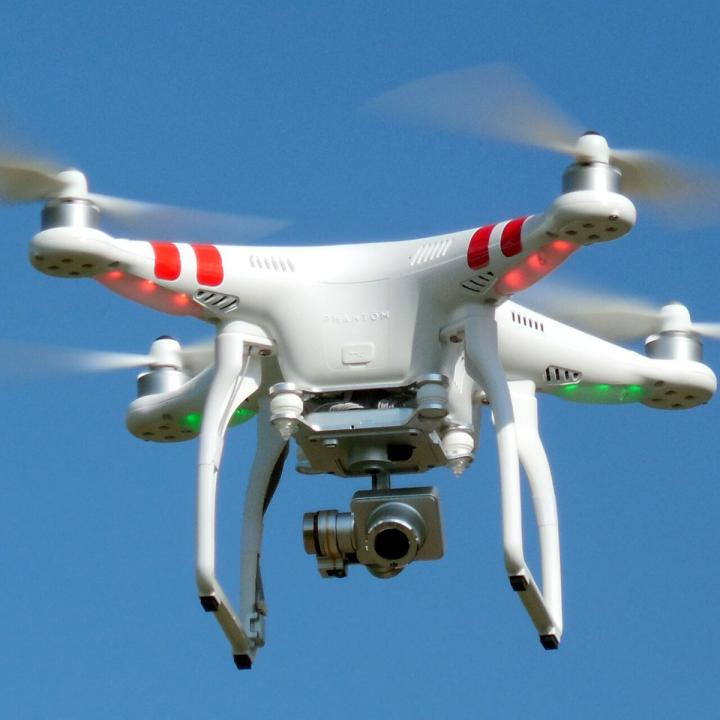
This fundamental shortcoming remains today—and is more concerning than ever with increasing terrorist access to increasingly dangerous technologies. Drones are a particular peril, with both global jihadists and Iran-linked groups using them to conduct surveillance, record battlefield propaganda, and launch attacks. Despite plenty of warning, the US government is still ill-prepared to tackle the rapidly rising drone threat. It has been too focused on sorting out the jumbled patchwork of federal and state law enforcement authorities rather than planning for the full spectrum of potential attacks.
China is one of the main producers of drones, which makes it far easier for groups such as Hezbollah and the Houthis to procure this technology through front companies and cutouts without Western government detection. Even Israel, which has focused extensively on the threat of drones, was still caught off guard recently by Hezbollah drones controlled by fiber optic cable and thus impossible to jam. All this should be a wake-up call for the counterterrorism community.
The 9/11 Commission also warned about the dangers of allowing terrorist threats to the United States to metastasize overseas and urged policy makers to focus on them before they came to our shores—unlike the lackadaisical approach to Al Qaeda’s safe haven in Taliban-ruled Afghanistan in the years leading up to 9/11.
Both Al Qaeda and the Sunni jihadists of the Islamic State group, the most lethal terrorist group to emerge since 9/11, have branches in Africa that have been growing stronger. In May, General Dagvin Anderson, the commander of the US Africa Command, testified before Congress, calling Africa “the epicenter of global terrorism.” He noted that “ISIS leadership is African; Al Qaeda’s economic engine is in Africa,” and that both groups have “the will and intent to strike” the United States. Further increasing the African dangers is the burgeoning partnership between Al Shabab, Al Qaeda’s Somalia branch, and the Iran-linked Houthis.
Despite this clear threat, Anderson assessed that AFRICOM’s regional posture has been reduced by 75 percent, which has helped contribute to an “intelligence black hole.” This is exactly the type of void that the 9/11 Commission warned about. While the United States remains reluctant to fight these groups directly, it must have a full intelligence picture so that it can disrupt any terrorist plot.
The 9/11 Commission also underscored the importance of partnerships in counterterrorism efforts, writing that “practically every aspect of US counterterrorism strategy relies on international cooperation.” Then-CIA Director George Tenet testified before the 9/11 Commission that Al Qaeda had a presence in 60 countries, helping illustrate why a global coalition was needed to fight this enemy. This is even more true now. Terrorist groups operate increasingly and easily across borders, sending money, communicating, distributing propaganda, shipping weapons, and traveling in ways that are harder to detect and stop.
Building and strengthening international partnerships was a key feature of the US counterterrorism agenda and priorities for much of the post-9/11 era. The United States created and helped lead institutions dedicated to improving counterterrorism cooperation, including the now 90-member Global Coalition to Defeat ISIS, the Global Counterterrorism Forum, and several new UN bodies. The United States also developed and advocated for UN Security Council resolutions on foreign terrorist fighters and terrorism financing, among other subjects. US diplomacy has likewise been instrumental in persuading other governments to designate the Islamic Revolutionary Guard Corps and Hezbollah as terrorist entities.
The Trump administration’s counterterrorism policies and strategy do not attach the same value to these partnerships. Unlike in the 2018 Trump counterterrorism strategy, this year’s White House document largely ignores the importance of international partnerships and diplomacy, or ways that the United States could mobilize the international community against shared terrorist threats. Additionally, President Trump issued an executive order in May withdrawing the United States from 66 international organizations, including three with a counterterrorism mission that the State Department had been instrumental in creating.
Preventing major attacks against our country is a real achievement of the post-9/11 era, but the United States should not take this track record for granted. Both growing and newly emerging terrorist threats will be grave challenges, especially against the many competing national security priorities, limitations on resources, and overall counterterrorism fatigue and complacency. But by following the 9/11 Commission’s recommendations, we will dramatically increase our odds at disrupting what the terrorists have planned next.
Michael Jacobson is the Mark and Wayne Levy Senior Fellow at The Washington Institute and former director of strategy, plans, and initiatives in the State Department’s Counterterrorism Bureau. Scott Allan teaches counterterrorism policy at George Washington University. This article was originally published on the Boston Globe website.