David Schenker is the Taube Senior Fellow at The Washington Institute and director of the Linda and Tony Rubin Program on Arab Politics. He is the former Assistant Secretary of State for Near Eastern Affairs.
Articles & Testimony
The international community has held nearly a dozen donor conferences to support Lebanon’s insolvent military and economy, but they all failed, largely because the country has not made the hard decisions necessary to help itself.
On March 5, France is going to pass the hat for Lebanon’s perennially broke military, hosting a fundraising conference for the Lebanese Armed Forces. But potential donor states—and especially the United States—should hesitate before opening their wallets.
The LAF’s need is real. It faced financial challenges long before Lebanon’s 2019 financial crisis, but the LAF’s recently expanded responsibilities are pushing it to the brink. Since August 2025, Beirut has charged the LAF with disarming Hezbollah, the Iran-backed Shiite militia. Six months on, this unprecedented mission is straining the under-resourced LAF.
But potential donors should condition their investment on real results. Lebanon committed to disarming Hezbollah in its November 2024 ceasefire agreement with Israel, yet LAF performance to date has been uneven. The LAF has been worryingly reactive, responding almost exclusively to taskings by the US and French-led disarmament “Mechanism” based on Israeli intelligence to identify and seize Hezbollah arms caches. Worse, instead of collecting weapons, the LAF has often prioritized avoiding confrontation with Hezbollah. This deferential approach—and Lebanon’s long tradition of deferring difficult decisions that could shake its weak state—has sapped momentum toward disarmament.
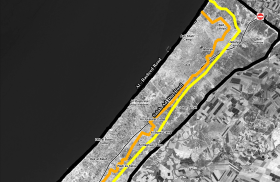
Lebanon, Israel, and the United States disagree about how much has been achieved. In early January, the LAF declared that it had completed phase one of Hezbollah disarmament, establishing a Lebanese state monopoly on arms south of the Litani River. Israel acknowledges that the LAF has collected a lot of Hezbollah munitions but warns that work along its border with Lebanon is “far from sufficient.” As if to prove Israel’s point, in February—a month after Lebanon’s “mission accomplished” victory lap—the US Central Command issued a statement congratulating the LAF for discovering a “massive underground Hezbollah tunnel” used to store missiles and attack drones.
Despite the diverging assessments, in mid-February the LAF presented plans for phase two, confiscating Hezbollah’s arms up to the Awali River, some 25 miles south of Beirut, over the next four to eight months. This will be far more challenging than the inconclusive first phase. Licking its wounds, Hezbollah largely consented to being neutered south of the Litani River, seemingly coordinating and deconflicting the process with the LAF. But Hezbollah has categorically rejected the push to disarm further north and has threatened “civil war” should the LAF persist.
The problem goes beyond the risk-averse LAF. Beirut has been fickle about providing political cover for the military’s mission. While Lebanese leaders continue to advocate for the process, behind-the-scenes reports suggest that the government is simultaneously negotiating a compromise with Hezbollah. Overall, Lebanon’s attitude toward the disarmament process reflects a stunning lack of urgency. Perhaps for good reason: since 2005, Hezbollah has murdered dozens of its local political opponents, and last August killed six
LAF soldiers in a boobytrap explosion at a militia arms depot. Meanwhile, every day since the signing of the nominal ceasefire, Israel has bombed Hezbollah personnel and assets in Lebanon, hitting targets apparently too sensitive for the LAF to engage. In the first year of agreement alone, Israel killed more than 370 Hezbollah operatives in over 1,200 airstrikes.
Israeli air operations alone will not remove Hezbollah’s vast and dispersed arsenal. Only Lebanese boots on the ground can finish the job. So prior to 2005, the US provided the LAF with $1.5 million per year in military assistance, funding training programs for Lebanese officers. That year, after the Lebanese rose up and ended the nearly 30-year Syrian occupation, Washington increased annual aid to Lebanon to $70 million. Since then, the US has given the LAF more than $2 billion, never asking or expecting that the LAF contest Hezbollah. That arrangement changed only when Beirut signed onto the 2024 ceasefire that ended Hezbollah’s war on Israel.
As the LAF moves on to the next, more challenging stage of the process, some tough love from Washington will be needed to keep disarmament on track. Given the importance of the mission to Lebanese sovereignty and regional security, the Trump Administration—in coordination with the donor countries meeting in Paris—should condition military assistance to the LAF on performance. An objective assessment of LAF progress should be conducted by both the Mechanism and US Central Command, both of which have assets and personnel in Lebanon.
Only by calling balls and strikes can Lebanon be held to account for its inaction on disarming Hezbollah. Should the LAF meet Lebanon’s ceasefire commitments, it would reduce the necessity for Israeli kinetic activity, which Beirut routinely condemns. Washington could also help the LAF by designating and forcing the removal of Hezbollah-friendly officers in the ranks who are impeding weapons collection by colluding with the militia.
In recent decades, the international community has held nearly a dozen donor conferences to support Lebanon’s failing economy and insolvent military. None succeeded, largely because Lebanon did not take the hard decisions necessary to help itself. Confronting Hezbollah is risky, but timidity is riskier. More than a year since Lebanon committed to disarmament, Hezbollah still asserts its right to “resistance” and to wielding the weapons that let it dominate the state.
Hezbollah is degraded but defiant. The current LAF playbook appears to be to stall and hope for a possible change in the status quo in Iran, Hezbollah’s patron. Absent regime change in Tehran, however, Lebanon’s Hezbollah dilemma will persist. The Trump administration should not underwrite Lebanon’s continued vacillation. Lebanon and its military can indeed make progress toward disarming Hezbollah. If the LAF chooses not to, the Israeli Air Force will.