Matthew Levitt is the Fromer-Wexler Senior Fellow and director of the Reinhard Program on Counterterrorism and Intelligence at The Washington Institute.
Articles & Testimony
Faced with brain drain, ideological distortion, and a wavering strategic focus, U.S. counterterrorism officials are being asked to do more with less today than their predecessors post-9/11.
Twenty-five years after 9/11, the U.S. counterterrorism community still must stop threats to the United States—but with fewer resources, additional responsibilities, and new threats. Directing the counterterrorism community to do more with less is a recipe for disaster.
After al-Qaeda’s September 2001 attacks on the World Trade Center and the Pentagon, Washington built an extensive counterterrorism bureaucracy to guide the U.S. response to the threat of al-Qaeda specifically and terrorism more broadly. This enterprise proved highly effective tactically, foiling attacks and disrupting terrorist networks. Strategically, it was less successful: more people are radicalizedtoward violent extremism today than in 2001, creating a more diverse and globally dispersed terrorist threat.
Those U.S. tactical successes came at an unsustainable cost. According to one study, from fiscal year 2002 to 2017, the United States spent 16 percent of its discretionary budget on counterterrorism, totaling $2.8 trillion, or an average of $186.6 billion annually over 15 years. Over time, both Democratic and Republican administrations grasped the need to end “forever wars” budgeting for a more sustainable long-term counterterrorism posture and share the burden of combating groups like al-Qaeda.
In 2017, the first Trump administration explicitly reordered the U.S. prioritization of international threats, placing counterterrorism behind strategic competition with China and Russia and threats from Iran and North Korea. As Secretary of Defense Jim Mattis framed the priorities in 2018, “Great Power competition, not terrorism, is now the primary focus of U.S. national security.” But the first Trump team did little to shift resources to match this declared shift in priorities. The Biden administration also didn’t do much to budget limited resources against those emerging threats, as well as other challenges like pandemics and climate change.
The changes that followed, first implemented under the first Trump administration and then continued under the Biden administration, amounted to a tectonic shift in U.S. counterterrorism policy. Instead of the old model in which America took the lead in fighting terrorism around the world while asking allies and partners to join in, we now have a “partner-led, U.S.-enabled” model in which America merely supports partners who take the lead combating terrorism closer to their borders.
This shift was long overdue, but focusing only on terrorists with the current intent and capability to attack the U.S. homeland or Americans abroad is highly risky. For example, Somalia’s al-Shabab terrorist group seemed not to threaten the homeland, until it did. The same is true for the Yemen-based al-Qaeda in the Arabian Peninsula (AQAP) and extremist groups in Africa like Jama’at Nusrat al-Islam wal-Muslimin. With thousands of operatives and the ability to raise tens of millions of dollars through kidnap-for-ransom plots, al-Qaeda and Islamic State affiliates in Africa have both the motive and the money to quickly pivot to targeting U.S. interests, should they so decide. Worse: just when the United States needs better and timelier intelligence to forecast coming threats, the U.S. military is redeploying from places like Niger and Nigeria.
The issue isn’t just shrinking U.S. capacities but wavering U.S. focus. In May, the White House released its counterterrorism strategy, which sees today’s terrorist threats through distorting ideological glasses. According to the Trump strategy, today’s threats come from “legacy Islamist terrorists” like Islamic State and al-Qaeda, violent left-wing extremists, and narco-terrorists and transnational gangs. The strategy addresses Iran and its proxies sporadically throughout the document, but its absence from this list of “major types” of terrorist threats stands out given that it was produced in the middle of a war with Iran.
To be sure, the threat from far-left extremism has risen, but not as much as some make out. Yet the Trump strategy lacks a concurrent appreciation of the threat of far-right extremism. According to the Anti-Defamation League, all extremist-related murders in the United States in 2024 were committed by right-wing extremists.
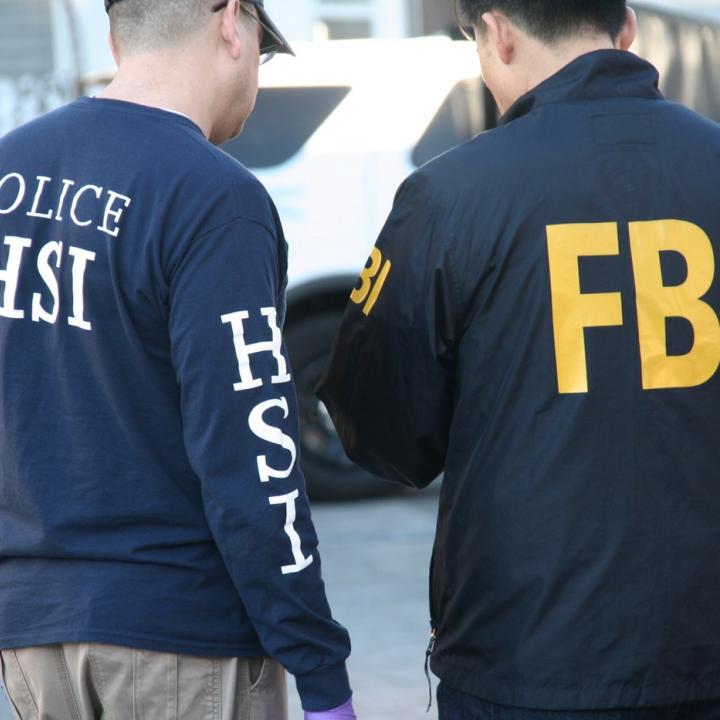
Today, some counterterrorism professionals have been reassigned to immigration enforcement; other fine agents have been removed from their assignments for investigating the January 6, 2021 attack on the U.S. Capitol, leading to a “brain drain” from counterterrorism agencies. About 300 FBI agents have left the bureau since Trump’s second term began. Meanwhile, incoming intelligence and law enforcement officials have reportedly had to pass loyalty tests.
Finally, the Trump administration’s decision to designate drug cartels as foreign terrorist organizations is drawing funds and personnel away from actual terrorism cases. The cartels are a threat to the United States, of course, but they need not be reclassified as terrorists to be a priority. Better to beef up the Drug Enforcement Administration’s capabilities than to pull counterterrorism resources away from the actual counterterrorism mission.
The U.S. intelligence community is being tasked to better forecast tomorrow’s terrorist threats just as it is losing expertise and gaining peripheral responsibilities. Jihadist groups in Africa may not be targeting the homeland today, but they could tomorrow. America faces serious threats from both far-left and far-right groups here at home, and Iranian agents and proxies have intensified their international terrorist plots, including in America.
On counterterrorism, America is now experiencing not only “a failure of imagination” (as the 9/11 Commission famously invoked that frame) but also of policy and leadership. Today, ideology is trumping data when it comes to assessing the most pressing terrorist threats to the country. We are not safer for it.
Matthew Levitt is the Fromer-Wexler Senior Fellow at The Washington Institute and director of its Reinhard Program on Counterterrorism and Intelligence. This article was originally published on the Just Security website.