- Policy Analysis
- Articles & Op-Eds
Grim Anniversary in Sudan’s ‘Forgotten’ War
Also published in Arab News
If the international community lags on the Sudan file or allows local forces to keep treating peace conferences as just another arena for their rivalries, the result will be even more space for bad actors to massacre civilians and loot the country’s wealth.
Within days, Sudan will enter its fourth year of war, and the world is distracted again. Just as the Gaza war once stole international attention from Sudan and turned its conflict into a forgotten crisis before it slowly resurfaced, the same pattern is repeating itself today. The war on Iran has consumed Washington and Western capitals. And yet there are still those trying to keep the Sudan file alive.
In an effort to revive the issue, Massad Boulos, US senior adviser for Arab and African affairs, disclosed discussions he held with Jens Hanefeld, German ambassador to the US, about arrangements for the Third International Conference on Sudan, scheduled for Berlin on April 15, coinciding with the third anniversary of the war’s outbreak. Boulos confirmed in an online post that the meeting addressed the roles of the parties co-hosting the conference and ways to strengthen international coordination to ensure its success. This move carries weight given its timing, as the Sudan issue has slipped down the list of international priorities amid the preoccupation with the Iranian crisis and its wide regional consequences.
From this angle, the Berlin conference can be read as an attempt to reinsert Sudan into the international agenda after months of declining diplomatic momentum. Yet these efforts run into complex internal challenges from the start, reflecting the depth of Sudan’s divisions and the absence of any consensus around a potential negotiating path.
Forces aligned with the government and the military announced their boycott of the conference, citing what they described as an imbalance in the participant lists in favor of the Sumoud civilian coalition at the expense of other political forces and figures. The Rapid Support Forces and their self-declared government, on the other hand, welcomed the initiative—a move that reflects a political awareness of the importance of being present on international platforms as part of the battle for legitimacy. These diverging positions once again expose a deeply complex internal Sudanese scene, where the calculations of political forces intersect with the interests of military actors, while the priority of the ordinary citizen, who bears the heaviest cost of the war, is largely absent.
More telling is that a conference of this level of international coordination is still met inside Sudan with widespread suspicion, sometimes framed as a “foreign conspiracy,” when in reality it is at its core a political and humanitarian dialogue platform. This reveals one of the most glaring paradoxes of the current Sudanese scene: International initiatives are rejected before they are even tested. The Berlin conference thus becomes a test of whether Sudanese political forces can treat such initiatives as an opportunity to end the war rather than as another arena for political rivalry, and at the same time a test of the international community’s seriousness in pushing the file forward again.
This is where Sudanese leaders face a responsibility they cannot avoid. Dialogue is not one option among many, it is the first and only path toward the peace that Sudanese people want. Whatever the differences and competing calculations, sitting at the dialogue table and seizing every opportunity to bring positions closer together is the bare minimum required from any party that claims to be working in the country’s interest. Without dialogue, and without genuine willingness to make concessions, nothing will move on the ground.
But what matters even more than ending the war is what comes after it. Sudan needs more than a ceasefire. It needs a genuine national reconciliation built on an inclusive and lasting framework for a future that has room for everyone, where no one is excluded and no legitimacy is built on the ruins of others. This requires a collective vision for the post-war period, because the end of fighting will not mean the end of the crisis. Sudan’s war was rooted in political exclusion, the absence of social justice, and the unequal distribution of wealth. Unless these underlying crises are addressed, any peace agreement risks becoming the starting point for a new round of conflict under different names.
The problem was never the absence of initiatives or mediation efforts. It has always been the absence of willingness to accept a settlement. This is clearly visible in the entrenched intransigence of the military establishment and its rejection of the Quad mechanism, as well as in the RSF’s maneuvers, publicly endorsing ceasefires while repeatedly violating them, and in the broader absence of any serious sign that the warring parties are genuinely willing to make the concessions needed for a comprehensive political solution. As a result, every new initiative becomes just another stop in a long road of obstruction, rather than a real chance to end the war.
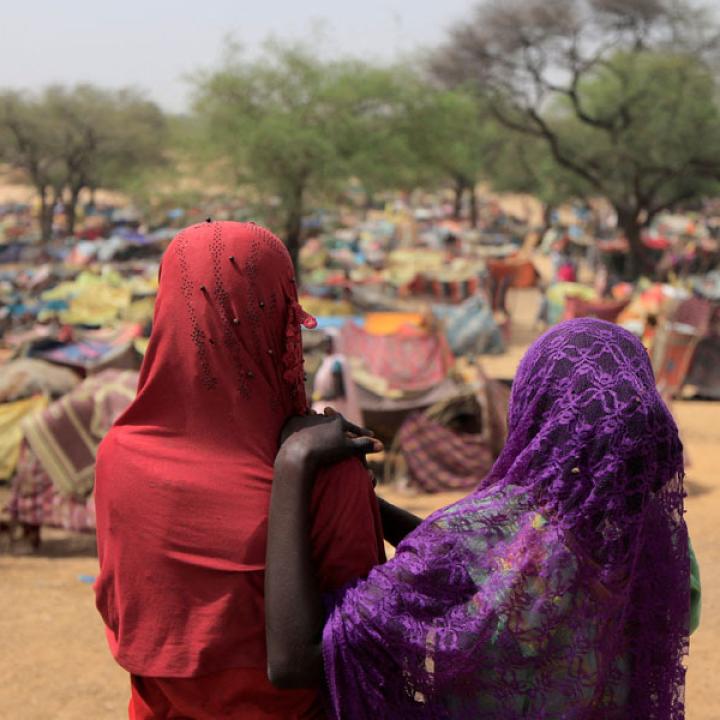
As the crisis enters its fourth year, with the world preoccupied by other conflicts and crises, Sudan’s file risks disappearing once again from the list of issues that receive meaningful international attention. And that absence, it seems, only creates more space for further killing, displacement, and looting of the country’s wealth by actors who simply do not care about the fate of the Sudanese citizen.
Areig Elhag is the Arabic content editor at The Washington Institute and former producer of the award-winning television program Between Two Niles. This article was originally published on the Arab News website.