TWI logo The Washington Institute for Near East Policy
logo
wordmark
Homepage

Main navigation

  • تحلیل‌ها
  • کارشناسان
  • درباره‌ما
  • پشتیبانی
  • نقشه و چند رسانه‌ای
مباحث روز :
  • نظامی و امنیتی
  • منع اشاعه
  • اسرائیل
  • ایران
  • لبنان
  • سوریه

منطقه‌ها و کشورها

  • اردن
  • اسرائیل
  • ایران
  • ترکیه
  • خاورمیانه
  • سوریه
  • شمال آفریقا
  • عراق
  • فلسطینی‌ها
  • لبنان
  • مصر
  • کشورهای حاشیه‌خلیج فارس

موضوع

  • انرژی و اقتصاد
  • تروریسم
  • خلیج و سیاست حوزه انرژی
  • دمکراسی و اصلاح
  • رقابت قدرت‌های بزرگ
  • روابط عرب و اسرائیل
  • سیاست آمریکا
  • عرب و اسلام سیاسی
  • فرایند صلح
  • منع اشاعه
  • نظامی و امنیتی
TWI English
TWI Arabic: اللغة العربية Fikra Forum

فلسطینی‌ها

Policy Analysis on فلسطینی‌ها

Filter by:

Articles & Testimony
Israel, the Palestinian Authority, and Barriers to Peace
A former senior State Department advisor discusses the concrete steps Washington and other actors can take to improve conditions on the ground, setting the stage for future peacemaking even if more ambitious initiatives are not currently in the cards.
۶ ژوئیه ۲۰۱۶
◆
  • David Pollock
Brief Analysis
Israel's Calculus for Reconciliation With Turkey
While the agreement is unlikely to reset relations between two leaders who have profoundly different worldviews, it may catalyze economic and security initiatives that benefit mutual Israeli, Turkish, Palestinian, and U.S. interests.
۱ ژوئیه ۲۰۱۶
◆
  • David Makovsky
Brief Analysis
Activism in the Israeli-Palestinian Conflict: Clouds and Wind, but No Rain?
The recent flurry of international and regional activism may ultimately result in parameters and UN resolutions that dictate the agenda for the next U.S. administration, so Washington and other actors should weigh each initiative carefully.
۲۱ ژوئن ۲۰۱۶
◆
  • Michael Herzog
Benjamin Netanyahu
Articles & Testimony
How Netanyahu Could Surprise Us Again
The heated criticism of his government's rightward shift is obscuring the fact that Arab officials continue to work with Israel on various important initiatives, creating room for potential diplomatic developments that could render outside peacemaking forays moot.
۲ ژوئن ۲۰۱۶
◆
  • David Pollock
Brief Analysis
Losing by Winning: The Rupture of the Israeli Center
The new Israeli government reflects the country's increasing polarization and leaves Netanyahu with limited room for maneuver, making it difficult for him to preempt the growing momentum behind efforts to internationalize the Palestinian issue.
۳۱ مه ۲۰۱۶
◆
  • David Makovsky
  • Dennis Ross
Articles & Testimony
U.S. Support of Palestinian Security Forces and the Politics of Succession
Convincing Abbas to clarify succession and return the security services to nonpolitical control will require higher-level engagement from Washington and other parties.
۲۴ مه ۲۰۱۶
◆
  • Ghaith al-Omari
  • Mitchel Hochberg
Brief Analysis
Netanyahu's Sudden Coalition Shift: Early Implications
The prime minister has made a seemingly bitter tradeoff: although he is gaining six seats to ensure his political survival, he has saddled himself with a fierce rival, potentially alienated a loyal, experienced defense minister, and left the door open to unfavorable international initiatives.
۱۹ مه ۲۰۱۶
◆
  • David Makovsky
Fikra Forum
Fikra Forum
On the Significance of Dialogue
The principal gain yielded by the exchange of ideas between two adversaries is mutual understanding. Admittedly, at the conclusion of a dialogue it could turn out that the pair really do have irreconcilable views – but at least the discussion has allowed both participants to map out the other’s position
۱۳ مه ۲۰۱۶
◆
  • Mohammed Dajani
Articles & Testimony
The Israeli Defense Forces Fill the Void
Given the diplomatic vacuum that formed after the collapse of peace negotiations in 2014, the IDF has increasingly asserted itself as a stabilizer on Israeli-Palestinian issues and a guardian of democratic values at home.
۶ مه ۲۰۱۶
◆
  • David Makovsky
  • Gabrielle Chefitz
In-Depth Reports
U.S. Military Engagement in the Broader Middle East
Reflecting broad foreign policy themes dating to World War I, U.S. grand strategy in the Middle East since the Cold War has focused on establishing and managing a global security system to contain and deter outside threats. Given Eurasia's demographic and economic/technical strength, a dominant power or powers arising from
۳ مه ۲۰۱۶
◆
  • James Jeffrey
  • Michael Eisenstadt
Israeli and Palestinian children join the mayor of Jerusalem to release doves.
Articles & Testimony
Want to Keep Students from Turning to BDS? Try Mock Peace Negotiations with a Twist
The divisive discourse on many American campuses threatens to doom Jewish and Muslim student leaders to the mistakes of the past, but bringing them together for mock negotiations is a proven way of helping them understand each other's arguments, grievances, and hopes.
۲۵ آوریل ۲۰۱۶
◆
  • David Makovsky
  • Ghaith al-Omari
Brief Analysis
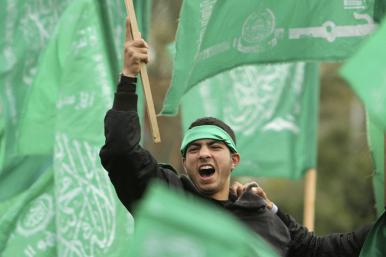
Hamas Is Testing Israel Once Again
The group likely hopes to avoid harsh retaliation by staging attacks from the West Bank instead of Gaza, but Israel could still decide to take forceful action given the nature of the latest plot.
۲۲ آوریل ۲۰۱۶
◆
  • Nadav Pollak
Fikra Forum
Fikra Forum
The Arab-Israeli Peace Process is More Important Now than Ever
April 22, 2016 In the 1990s and early 2000s, American media referred to the Israeli-Palestinian conflict as the “Middle East Peace Process,” a testament to the positive political developments achieved in Wye River and Oslo under the stewardship of former President Bill Clinton. President Clinton, a self-declared “honest-broker,” took calculated
۲۲ آوریل ۲۰۱۶
◆
  • Dani Tahrawi
Brief Analysis
Limiting Incursions in Area A: The Next Step for Israeli-Palestinian Security Coordination
Ongoing bilateral security discussions aim to decrease controversial Israeli operations in parts of the West Bank, and their chances for success largely depend on avoiding the political obstacles associated with a formal agreement.
۲۰ آوریل ۲۰۱۶
◆
  • Ghaith al-Omari
In-Depth Reports
Mixed Messages:
Abbas and Palestinians on Israel, 2014-16
In this new Policy Focus, David Pollock analyzes a significant transition in PA messaging, both governmental and in the Palestinian street, that has taken place during the past two years.
۲۰ آوریل ۲۰۱۶
◆
  • David Pollock
Brief Analysis
Israel and Turkey Approaching Reconciliation Amid Policy Challenges
Normalization negotiations seem closer than ever to conclusion and should be encouraged, but significant differences remain, especially on Gaza, Hamas, and Egypt, and they will likely prevent a return to past bilateral intimacy.
۱۹ آوریل ۲۰۱۶
◆
  • Michael Herzog
  • Soner Cagaptay
Fikra Forum
Fikra Forum
Security Coordination: Between the Desire to End it and the Need to Continue It
April 8, 2016 Future relations between the Palestinians and the Israelis will likely be hamstrung by issues of the past. Namely, Israel continues to illegally occupy and support settlements in Palestinian territory, among other restrictive activities. As a result, the Palestinian Authority (PA) has warned Israel of its readiness to
۸ آوریل ۲۰۱۶
◆
  • Adel Al-Astel
Fikra Forum
Fikra Forum
Teaching Arabic in Israeli Schools: Between Security Preoccupations and the Cultural Dimension
April 8, 2016 Language plays a key role in the lives – and deaths – of humans. Great speeches have stirred many nations and religions into terrible wars. Conversely, language has also given voice to peace talks and anti-violence rallies. In other words, it has consistently been a mutable force
۸ آوریل ۲۰۱۶
◆
  • Mohamed Abdelaziz
Brief Analysis
How Would Palestinians React to a UNSC Parameters Resolution?
If Washington and other parties hope to enshrine the contours of future peacemaking through a Security Council resolution, they will need to overcome numerous obstacles relating to Palestinian politics, regional priorities, and America's diminished standing in the region.
۱۶ مارس ۲۰۱۶
◆
  • Ghaith al-Omari
Fikra Forum
Fikra Forum
Hezbollah Labeled Terrorist by GCC States – But What Do Their People Think?
March 8, 2016 In a remarkable if little-noticed development last week, all six GCC states – Saudi Arabia, Kuwait, the UAE, Qatar, Oman, and Bahrain – formally designated the Lebanese movement Hezbollah as a terrorist organization. This week, Israeli Prime Minister Netanyahu called this step “important and even amazing,” but
۸ مارس ۲۰۱۶
◆
  • David Pollock

Pagination

  • Previous page ‹ Previous
  • First page « First
  • …
  • Page 28
  • Page 29
  • Page 30
  • Page 31
  • Current page 32
  • Page 33
  • Page 34
  • Page 35
  • Page 36
  • …
  • Last page Last »
  • Next page Next ›

Sign Up for Email Updates from The Washington Institute

Never miss a breaking event on U.S. policy interests in the Middle East. Customize your subscription to our expert analysis, op-eds, live events, and special reports.

Sign up

Background image with TWI branding
logo
wordmark
Homepage

1111 19th Street NW - Suite 500
Washington D.C. 20036
Tel: 202-452-0650
Fax: 202-223-5364

Footer contact links

  • تماس
  • اتاق خبر
  • Subscribe

هدف انستیتو واشنگتن، تعمیق درکی متعادل و واقع‌بینانه از منافع آمریکا در خاورمیانه و نیز پیشبردِ سیاست‌هایی برای حفظ آن منافع است.

انستیتو واشنگتن یک سازمان غیرانتفاعی دارای مجوز 501(c)3 است که تمامی کمک‌های مالی به آن شامل معافیت مالیاتی خواهد شد.

Footer quick links

  • درباره انستیتو واشنگتن
  • پشتیبانی از انستیتو
  • Alumni

Social media

  • The Washington Institute on Facebook facebook
  • The Washington Institute on X x
  • The Washington Institute on YouTube youtube
  • The Washington Institute on LinkedIn linkedin

© 2025 کلیه حقوق محفوظ است

Footer

  • استخدام
  • حریم خصوصی
  • حقوق و مجوزها