Patrick Clawson is the Morningstar Senior Fellow and Research Counselor at The Washington Institute.
Brief Analysis
American negotiators may be feeling pressure to achieve a deal, but they should also appreciate and capitalize on the mounting economic strain facing leaders in Tehran.
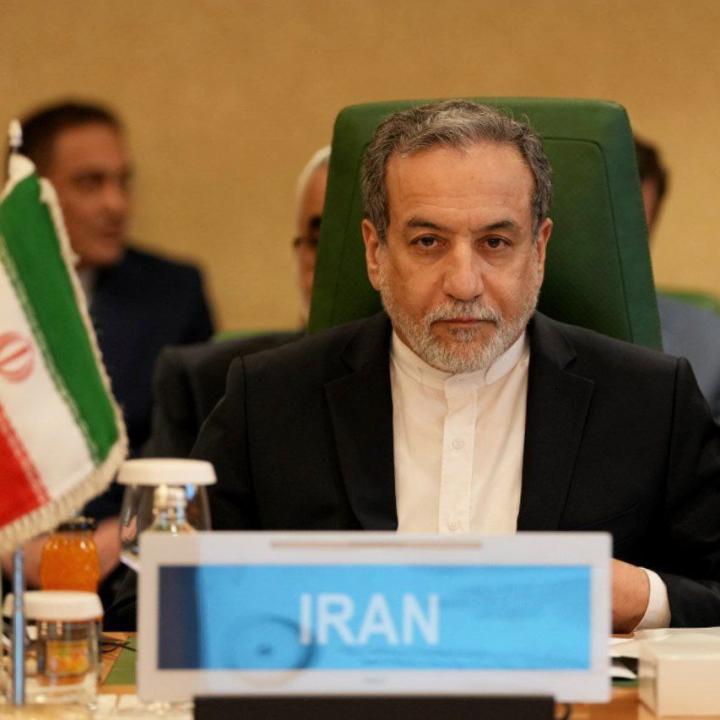
On September 23, the day after lengthy Qatari-mediated exchanges between Iranian Foreign Minister Abbas Araghchi and U.S. envoys Steve Witkoff and Jared Kushner, the Tasnim News Agency—affiliated with Iran’s Islamic Revolutionary Guard Corps (IRGC)—accused Araghchi of negotiating without authorization and demanded a formal apology. Iranian hardliners also attacked Araghchi. For example, Ebrahim Rezaei, spokesman for the Majlis’s National Security and Foreign Policy Commission, labeled the contact an “illegal meeting” and a “sign of weakness.”
No Clear Decisionmaker in Iran
Infighting has long been part of Tehran’s politics, but the lack of a national arbiter is new. Since the death of Supreme Leader Ali Khamenei, the country has lacked a figure to grant final authority to a negotiator’s work. Mojtaba Khamenei has not played such a role since ascending to the leadership. His public messages this week covered only the new school year and condolences for the death of a grand ayatollah. President Masoud Pezeshkian insisted that Iran’s seven-day peace proposal was approved by Mojtaba, but the Supreme Leader has not formally commented on the offer. Perhaps he is engaging in deniability, or perhaps he prefers silence to exposing the limits to his authority. Either way, Mojtaba cannot be expected to provide definitive support for any deal.
While many Iranian leaders continue their vitriolic rhetoric, Tehran has shown it can be influenced by the threat of attacks. Consider that Iran has not carried out strikes on Israel since June 8—and those were the first strikes since April 5—despite ongoing Israeli operations against Hezbollah and Hamas. In August, Iran warned Washington it would respond harshly if Israel attacked the Hezbollah bunkers on the Ali al-Taher ridge in southern Lebanon but then did nothing when Israel overran the bunkers, where IRGC officers were present.
Deteriorating Iranian Economy
Although the U.S. blockade has been very effective at preventing new Iranian oil exports by sea, the task of degrading Iran’s oil income is taking time. For one thing, Iran generated income from exporting about 60 million barrels worth about $6 billion in the monthlong period beginning in June when the blockade was lifted. And Iran had stored tens of millions of barrels on ships outside the Strait of Hormuz or on land in China, but that number could now be down to 15 million barrels and could be exhausted soon. Given that payments for oil shipped typically occur up to two months after a vessel leaves the export terminal, Iran will continue until the end of December to book payment for sale of oil stored outside the Strait—although getting access to those funds may be difficult. But as Treasury Secretary Scott Bessent recently indicated, Iran is undoubtedly feeling the pressure.
In addition to Washington’s most effective step, sustaining the blockade, the administration is applying economic pressure by other means. A Treasury Department threat of severe consequences issued September 8 against actors that accommodate airlines serving Iran evidently has had much impact. Some regional countries—Azerbaijan, Georgia, Oman, Turkmenistan, and the United Arab Emirates—have banned flights from Iran, although flights abroad remain possible to Russia (across the Caspian Sea) and China (across Afghanistan), and some airlines can fly to Turkey and with U.S. permission to religious sitesin Iraq. Iranian leaders have threatened retaliation. Mohammad Mokhber, an advisor to the Supreme Leader, said on September 25, “If Iran cannot fly and receive airport services, no country in the region will have that possibility either.” Commenting similarly in a September 23 interview, the influential Supreme National Security Council (SNSC) secretary, Mohsen Rezaei, said, “Their airports will have no flights.” But Iran has taken no steps so far; indeed, the SNSC has denied reports that kinetic attacks on neighboring airports were under consideration.
Iran also has taken only very modest steps to counter the U.S. blockade. About 30 percent of Iran’s 42 million tons of 2024 imports came by land, but burdensome paperwork has prevented Iran from increasing these numbers, along with the logistical shortcomings of using trucks as opposed to ships—each of which can carry as many as three thousand trucks. At the main Iran-Pakistan crossing, just 40 of the 700 queued trucks cross daily, and the 3,700 trucks at the principal Turkey crossing typically wait twenty or more days. Similarly, Iran could easily eliminate the gasoline shortage caused by the cutoff of imports. Purchasing gasoline in Iran requires cards issued to car owners, meaning reducing access is technically easy and does not even require raising prices, but the government fears protests such as those that occurred in 2019. Minor moves taken by the regime include doubling the per-gallon price to 17 U.S. cents beyond the basically free twenty-nine gallons allotted each month, and promising to improve supply of compressed natural gas, which many Iranian cars can use as a substitute fuel, despite erratic supplies.
Policy Advice for Washington
The Trump administration can press its advantage against Iran by following several guidelines:
Recognize that Tehran’s winter is coming. Energy shortages will become much worse if winter weather in Iran is tough. Last winter, Iran cut off many commercial users of natural gas and implemented lengthy electricity blackouts, which even in other seasons last two hours a day in Tehran. Washington can afford to be patient. Tehran seems unimpressed by the (correct) argument that it could get a better deal from President Trump before the midterm U.S. election.
Show ways to intensify pressure. The restrictions on Iranian airlines were a surprise success largely because of unexpected cooperation by regional states. The key to making them work has been vigorous U.S. diplomacy to impress on regional governments and firms that Washington means business. The challenge now is to come up with additional such measures. Each possibility—such as tightening restrictions on U.S. dollar use in transactions with Iran (e.g., via Iraq) or pressing ports not to accommodate ships serving Iran—requires active enforcement, which will be easier to accomplish if other governments are sympathetic. And each measure needs to be accompanied by plans to counteract possible Iranian retaliation, such as strikes on regional airports.
Don’t take “no” for an answer.Iran has repeatedly changed positions it previously described as immutable. For instance, the regime has insisted it would not hold discussions with the United States while being attacked. In his September 23 television interview, Rezaei declared that Iran’s “new diplomacy will not return to the past” and that until Washington implements Iran’s conditions, “neither will the Strait of Hormuz open nor will there be any negotiation.” But within days, Iran held talks with the United States via intermediaries during the UN General Assembly session. While at first insisting those talks were not “negotiations,” Araghchi remarked on September 27 that “we stand ready for diplomacy.”
Press for direct talks. An important test of Tehran’s intentions will be whether it accepts direct talks with Washington. Indirect negotiations have a poor track record. In 2021–2022, Iran’s refusal to sit with the United States dragged out the European-run talks. Consider, by comparison, how the 2015 nuclear deal came only after bilateral talks replaced the “P5+1” format with Europe, Russia, and China. Washington should make clear to all intermediaries that while it appreciates their efforts, real progress is unlikely until Tehran and Washington sit together at the same table.
But don’t take a “yes” as definitive.Given the political infighting in Iran, certain actors there can be expected to advance their domestic political standing by sabotaging any agreement. Whenever entering into a deal, Washington needs to have a plan for responding to Iranian noncompliance. Ideally, this would involve inflicting greater pain on Iran than the United States sustained, rather than a simple tit-for-tat. This pain need not be kinetic, but kinetic options should be developed—including strikes in major Iranian cities, where they would be widely observed, not just along the isolated Iranian Gulf coast.
Improve credibility while preserving unpredictability. Israeli credibility has deterred Iran from attacking the country, even as the Islamic Republic has continued hitting U.S. assets in the region. The Trump administration, for its part, has vacillated between bloodcurdling threats and blandishments—and Tehran has taken notice, as reflected in Araghchi’s comment that “we are waiting for the definitive views to be conveyed through the intermediaries.” The challenge is to improve U.S. credibility while leveraging U.S. unpredictability.
For Iran, unpredictability combined with lack of credibility applies in spades, exemplified by repeated threats on which it has not followed through and failure to abide by its avowed commitments, such as opening the Strait following the June memorandum of understanding. As U.S. ambassador to the United Nations Michael Waltz said, “The president is just not confident the Iranians are coming in good faith,” calling this lack of confidence “common sense.”
The most likely scenario will involve some months of back-and-forth maneuvering, although each side is entirely capable of an October surprise. Both could use the appearance of progress, even if a deal is minimal and temporary—and if such a deal will arouse deep skepticism within U.S. and Iranian public opinion. Also possible is a negative surprise, such as Iranian cyberattacks or aggression on another front. All in all, however, the U.S. team should bear in mind that as much pressure as it feels, Iranian officials have at least equal reason to worry that time is not on their side.
Patrick Clawson is the Morningstar Senior Fellow at The Washington Institute and director of its Viterbi Program on Iran and U.S. Policy.