David Schenker is the Taube Senior Fellow at The Washington Institute and director of the Linda and Tony Rubin Program on Arab Politics. He is the former Assistant Secretary of State for Near Eastern Affairs.
Articles & Testimony
Recent Lebanese media engagement with Israelis is a welcome sign, but U.S. mediators should let this organic trend gain momentum for the time being rather than pressuring Beirut to make immediate legislative changes.
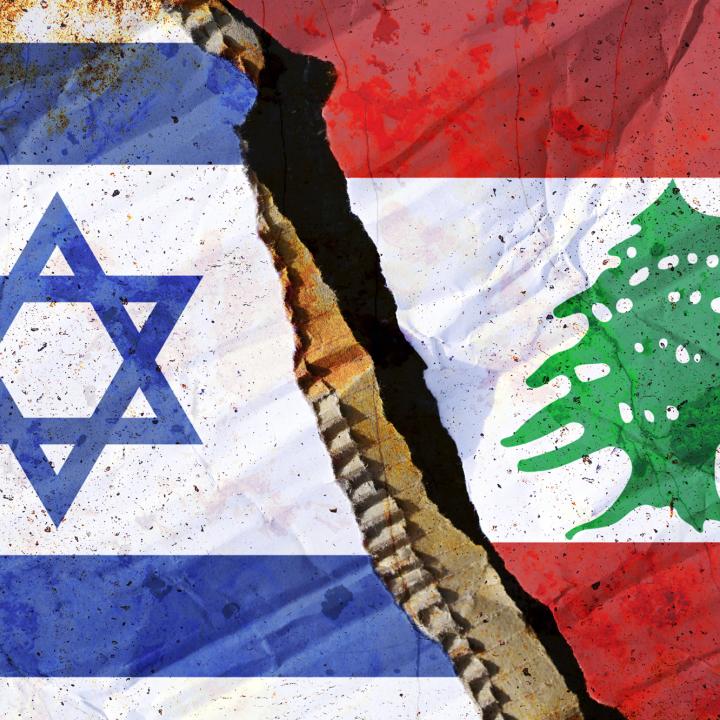
Last week in Washington, Lebanon and Israel declared their intent to end the state of war and committed to draft a peace treaty. The Framework Agreement is ambitious and faces significant obstacles to implementation, including, principally, Iran-backed Hezbollah. But Lebanon’s own antiquated boycott regulations are also a barrier to improved relations between the neighboring states.
On April 23, President Trump was introduced to Lebanon’s Orwellian censorship laws. In the Oval Office after the second round of U.S.-brokered Israeli-Lebanese peace talks, Anthony Merchek, a correspondent with MTV, asked Trump about Lebanon’s draconian “anti-normalization” laws that bar Lebanese citizens from engaging with their Israeli neighbors. “It’s a crime to talk with Israel?” Trump asked, seemingly unaware of the proscription. “Well, I’m pretty sure that will be ended very quickly. I’ll make sure of that,” he added.
The president will have his work cut out for him. Lebanon’s restrictions have existed for the past 71 years. But the direct peace negotiations between Lebanon and Israel are challenging this taboo on Lebanese contact with Israelis. Increasingly, Lebanese are talking about ending these anachronistic statutes—and some are even flagrantly violating this outdated ban.
Fittingly, Lebanese journalists are leading the charge. Since the launch of direct talks, several reporters have aired interviews with Israelis on Lebanese television channels and websites. These scoops can get Lebanese correspondents into serious trouble. Lebanese military courts routinely prosecute and sentence Lebanese civilians to jail time. Harassment and threats by Hezbollah and its media outlets are also not uncommon.
Israel has reportedly raised the ban during the peace negotiations, but changing the anti-normalization laws isn’t a Lebanese priority. Nonetheless, Lebanese journalists and media outlets increasingly appear to be disregarding the prohibition.
Shortly after the talks started, for example, the U.S.-based Lebanese journalist Hanin Ghaddar—a colleague of mine at The Washington Institute for Near East Policy—interviewed the Israeli expert on Hezbollah Sarit Zehavi for the Lebanese-owned news website This Is Beirut. A month later, on May 29, the same site posted a lengthy interview with Yechiel Leiter, the Israeli ambassador to Washington, who leads the Israeli delegation at the peace talks. The following week, on June 4, Leiter again appeared in the Lebanese media, this time on the Beirut-based Al Jadeed television station. In an unprecedented step, the channel’s Washington correspondent Pedro Ghanem asked the Israeli ambassador a question, which he answered.
These exchanges may seem trivial, but under Lebanese law they constitute criminal offenses. Nevertheless, just a day later, during a prime-time interview on Lebanon’s most popular TV channel, LBCI, anchor Toni Mrad interviewed Israeli journalist Barak Ravid, a reporter for Axios in Washington and a correspondent for Israel’s Channel 12 News. The interview was widely covered and interpreted in the regional media—both Arab and Israeli—as an act of defiance by the Lebanese media.
It’s not clear whether these latest Lebanese engagements with Israelis will be prosecuted by the Lebanese authorities. But the military court has clearly taken notice and is apparently looking to stem the tide. Shortly after the LBCI episode, the tribunal sentenced Maria Maalouf—a Lebanese journalist residing in the United States—to 15 years in prison for a 2021 interview with the Israeli channel Kan News. And in separate but related proceedings, the military court sentenced two other Lebanese nationals in absentia to hard time for social media postings that the court deemed pro-Israel or critical of Hezbollah.
In other words, while Lebanon’s leaders are negotiating with Israel about forging peace and disarming Hezbollah, the Lebanese deep state is indicting Lebanese citizens advocating the very same things. Meanwhile, the pro-Hezbollah paper Al Akhbar is lamenting the trend toward normalization with Israel. Al Jadeed’s coverage, one article stated, had “surpassed the Hebrew channels” in promoting the Israeli narrative. Days later, another commentary disparaging LBCI bemoaned—without irony—journalists’ “disdain” for Lebanese law.
In spite of—or perhaps because of—the criticism, the night that article was published, Al Jadeed doubled down. During his talk show, host George Salibi directed a question to Hassan Fadlallah, a Hezbollah member of Lebanon’s parliament. Salibi read from his phone a query posed moments earlier on the social media platform X by an Israeli army spokesperson. Fadlallah was scandalized. An Al Akhbar article the next day said the incident “raises increasing questions about the trajectory of some Lebanese media outlets.” Indeed it does.
Over the past months, we’ve seen a move toward more normal—if not normalized—relations between Lebanon and Israel. Yet it’s unclear whether the recent flurry of Lebanese media engagements with Israelis represents an opening of the floodgates. Clearly, many among Lebanon’s Fourth Estate understand these laws—originating in 1955—to be outdated, stifling, and largely in the interests of Hezbollah. But Beirut hasn’t decided where it will come down. Amid the peace talks and Israel’s ongoing military incursion into Lebanon, President Joseph Aoun’s government is under enormous pressure from Hezbollah. The new U.S.-Iran Memorandum of Understanding—which links the reopening of the Strait of Hormuz to Lebanon—has buoyed the Iran-backed militia and added to the pressures on the government.
Given all this recent media engagement, U.S. mediators might be tempted to start pressing Lebanon to rescind or suspend its anti-normalization laws. But absent concrete progress on the ground, doing so could undermine Beirut’s already tenuous credibility. For the time being, the wiser U.S. approach would be to stand aside, let this organic normalization gain momentum, and intercede only to dissuade the Lebanese government from prosecuting cases.
Buoyed by the U.S.-Iran agreement to reopen the Strait of Hormuz, Hezbollah will try to roll back this nascent glasnost in the Lebanese media. The militia opposes the direct peace talks, and the only engagement with Israel it wants is military confrontation. But if the peace negotiations and the media actions persist, Lebanon may have a chance to reach a new normal with its neighbor.
David Schenker is the Taube Senior Fellow at The Washington Institute and director of its Rubin Program on Arab Politics. This article was originally published on L’Orient Today’s website.