TWI logo معهد واشنطن لسياسات الشرق الأدنى
logo
wordmark
Homepage

Main navigation

  • تحليل
  • الخبراء
  • حول المعهد
  • الدعم
  • الخرائط والوسائط المتعددة
الأكثر شيوعاً:
  • الإرهاب
  • منافسة القوى العظمى
  • إيران
  • لبنان
  • دول الخليج العربي

المناطق والبلدان

  • إسرائيل
  • إيران
  • الأردن
  • العراق
  • الفلسطينيون
  • تركيا
  • دول الخليج العربي
  • سوريا
  • شمال أفريقيا
  • لبنان
  • مصر

القضايا

  • الإرهاب
  • الخليج وسياسة الطاقة
  • الديمقراطية والإصلاح
  • السياسة الأمريكية
  • السياسة العربية والإسلامية
  • الشؤون العسكرية والأمنية
  • الطاقة والاقتصاد
  • العلاقات العربية الإسرائيلية
  • انتشار الأسلحة
  • عملية السلام
  • منافسة القوى العظمى
TWI English
TWI Arabic: اللغة العربية Fikra Forum

الديمقراطية والإصلاح

Policy Analysis on الديمقراطية والإصلاح

Filter by:

Articles & Testimony
Selective Service
Critics of the Bush administration's pro-democracy strategy in the Middle East have been pointing to this week's Egyptian election, which resulted in a landslide for Hosni Mubarak, as proof of a policy that's got little bark and even less bite. A policy with real teeth, they argue, would have demanded
٠٨‏/٠٩‏/٢٠٠٥
In-Depth Reports
Charting the Winds of Change:
America and the Middle East, 2005
When The Washington Institute was founded in 1985, the Middle East was a critical front in the Cold War, Ayatollah Khomeini was at the vanguard of the Islamic revolution, the Arab-Israeli peace process was stagnant, and America was still reeling from the ignominy of withdrawing its Marine contingent from Lebanon
٠١‏/٠٩‏/٢٠٠٥
In-Depth Reports
America and the Middle East, Circa 2005:
Critical Choices for the Next Administration
Keynote addresses by Stephen Hadley and Wendy Sherman. With Fareed Zakaria, Tzipi Livni, Hassan Abu Libdeh, Dan Senor, R. James Woolsey, James Steinberg, Frank Wisner, Martin Kramer, Larry Diamond, Jana Hybaskova, Josef Joffe, Denis Pietton, and others.
٣١‏/٠٧‏/٢٠٠٥
Articles & Testimony
Speed Trap
In her Senate nominating testimony last week, Undersecretary of State-designate for public diplomacy Karen Hughes characterized America's challenge to win allies and understanding around the globe as a "struggle of ideas." Here's a story of what happened when one bright idea -- ahem, my bright idea -- offered as a
٢٧‏/٠٧‏/٢٠٠٥
Articles & Testimony
The Brain Drain That Wasn't
Is there a foreign-student crisis in American higher education? Last November, the Institute of International Education reported "the first absolute decline in foreign enrollments" at American colleges and universities in more than three decades. Overnight, the 2.4 percent one-year drop in foreign students became a national cause clbre, and America's
١٨‏/٠٧‏/٢٠٠٥
Articles & Testimony
Mixed Message
Secretary of State Condoleezza Rice, America's most politically powerful pianist, delivered a virtuoso performance in Cairo on Monday. She struck just the right notes in a speech calling on Arab states to implement a long list of democratic reforms. Two days earlier in Ramallah, however, Rice's tune was uncharacteristically flat
٢٢‏/٠٦‏/٢٠٠٥
Articles & Testimony
U.S. Policy toward a Weak Assad
Bashar al-Assad's rule of Syria has been characterized by vacillation and a constant pattern of miscalculation. Whether his regime can survive its most profound error and the potential loss of its control of Lebanon remains to be seen. For now, U.S. policy, while emphasizing the need for full implementation of
٠١‏/٠٦‏/٢٠٠٥
◆
  • Dennis Ross
Brief Analysis
The Democracy Dilemma in the Middle East:
Are Islamists the Answer?
On April 19, 2005, Reuel Marc Gerecht and Robert Satloff held a policy debate at The Washington Institute's Special Policy Forum. Mr. Gerecht is a resident fellow at the American Enterprise Institute and author of The Islamic Paradox: Shiite Clerics, Sunni Fundamentalists, and the Coming of Arab Democracy (2004). Dr
٠٣‏/٠٥‏/٢٠٠٥
◆
  • Robert Satloff
Articles & Testimony
Memo to: Karen P. Hughes<br>
Re: The Mission of Public Diplomacy
Congratulations on your nomination as undersecretary of state for public diplomacy. Though this is a third-level State Department appointment, with an office about a half-mile away from your former prime spot in the West Wing of the White House, it is actually one of the most important jobs in the
٢٨‏/٠٣‏/٢٠٠٥
Articles & Testimony
Thinking the Unthinkable
What do Georgia, Ukraine, and Lebanon have in common? Their publics have said no to fear. They would not be silenced or intimidated as they rejected the fraudulent elections and corrupt governments imposed on them. Iraqi Shiites and, to a lesser extent, the Kurds could be added to this list
٢١‏/٠٣‏/٢٠٠٥
◆
  • Dennis Ross
Brief Analysis
Assessing the Bush Administration’s Policy of 'Constructive Instability' (Part I):
Lebanon and Syria
The Bush Administration's policy of "constructive instability" in the Middle East is facing a critical juncture in Lebanon. Taking advantage of a rare confluence of events and international interests, President George W. Bush has focused U.S. efforts on one plank of UN Security Council Resolution (UNSCR) 1559 -- the withdrawal
١٥‏/٠٣‏/٢٠٠٥
◆
  • Robert Satloff
Brief Analysis
After the Hariri Assassination:
Syria, Lebanon, and U.S. Policy
When Bashar al-Asad assumed power in 2001, there was widespread optimism that he would, by virtue of his British education and Western outlook, modernize the Syrian government and expand individual and political rights. Yet, after a short period of preliminary change, dubbed the "Damascus Spring," Asad proved unwilling or unable
١٠‏/٠٣‏/٢٠٠٥
Brief Analysis
Changing Turkish Public Attitudes toward the United States:
Premises and Prospects
American and Turkish media have been awash recently with news of increased Turkish resentment toward the United States. Media coverage has focused on negative portrayals of U.S. foreign policy in Turkey, including recent opinion polls such as a January 19 BBC survey, according to which 82 percent of Turks oppose
٠٧‏/٠٣‏/٢٠٠٥
◆
  • Soner Cagaptay
Brief Analysis
Security, Reform, and Peace:
The Three Pillars of U.S. Strategy in the Middle East
The United States is facing an extraordinary moment of challenge in the Middle East, one that demands an integrated U.S. strategy built on a set of three pillars: security, reform, and peace. The security agenda is the most pressing, but it alone is not sufficient. If the United States wants
٢٢‏/٠٢‏/٢٠٠٥
In-Depth Reports
Security, Reform, and Peace:
The Three Pillars of U.S. Strategy in the Middle East
The United States is facing an extraordinary moment of challenge in the Middle East, one that demands an integrated U.S. strategy built on a set of three pillars: security, reform, and peace. The security agenda is the most pressing, but it alone is not sufficient. If the United States wants
١٨‏/٠٢‏/٢٠٠٥
Brief Analysis
Bush's Inaugural Address:
Reactions from the Arab and Iranian Press
In his inaugural address on January 20, President George W. Bush declared that "it is the policy of the United States to seek and support the growth of democratic movements and institutions in every nation and culture, with the ultimate goal of ending tyranny in our world." What follows is
٢٥‏/٠١‏/٢٠٠٥
Brief Analysis
The Bush Administration and the Middle East:
Agenda for 2005
As the Bush administration prepares for the next four years, there are clear indications that there will be a greater focus on domestic policy issues -- such as Social Security -- during the president's second term in office. But the transformation of the Middle East is among the four broad
١١‏/٠١‏/٢٠٠٥
Brief Analysis
Banning Hizballah TV in America
Seeking to prevent terror propaganda and incitement to terror in America, the U.S. government added al-Manar (Arabic for "the beacon"), the official television mouthpiece of Hizballah, or the Lebanese Party of God, to the Terrorism Exclusion List (TEL). By designating the network as a terrorist organization the government will effectively
١٧‏/١٢‏/٢٠٠٤
◆
  • Avi Jorisch
  • Matthew Levitt
Brief Analysis
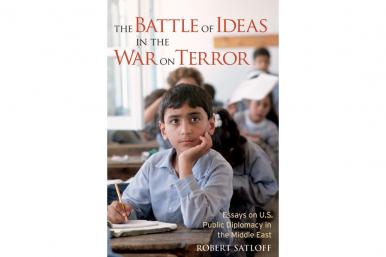
How to Win the Battle of Ideas in the War on Terror
On November 10, 2004, Robert Satloff, executive director of The Washington Institute, and Fouad Ajami, director of the Middle East Studies Program at Johns Hopkins University's School of Advanced International Studies, addressed a Special Policy Forum luncheon on the occasion of the release of Dr. Satloff's new Institute monograph, The
١٩‏/١١‏/٢٠٠٤
◆
  • Robert Satloff
In-Depth Reports
The Battle of Ideas in the War on Terror:
Essays on U.S. Public Diplomacy in the Middle East
Introduction Even before the flames raging within the twisted steel of the fallen World Trade Center towers were extinguished, a debate began to flare up regarding the motivations of the perpetrators. How could Arab Muslim society produce young, well-educated men filled with such hatred toward America that they would kill
٢٥‏/١٠‏/٢٠٠٤
◆
  • Robert Satloff

Pagination

  • Previous page ‹ Previous
  • First page « First
  • …
  • Page 115
  • Page 116
  • Page 117
  • Page 118
  • Current page 119
  • Page 120
  • Page 121
  • Page 122
  • Page 123
  • …
  • Last page Last »
  • Next page Next ›
Supported by the

Project Fikra: Defeating Extremism through the Power of Ideas

Fikra n. [Arabic] "Idea"

The Washington Institute's Project Fikra is a multiyear program of research, publication, and network-building designed to generate policy ideas for promoting positive change and countering the spread of extremism in the Middle East.

Sign Up for Email Updates from The Washington Institute

Never miss a breaking event on U.S. policy interests in the Middle East. Customize your subscription to our expert analysis, op-eds, live events, and special reports.

Sign up

Featured experts

Catherine Cleveland
كاثرين كليفلاند
كاثرين كليفلاند هي زميلة أقدم في زمالة عائلة "كروفت-واغنر" في معهد واشنطن.
Ben Fishman
بين فيشمان
بين فيشمان هو زميل أقدم في برنامج الزمالة "ستيفن د. ليفي" في "برنامج «روبين فاميلي» حول السياسة العربية" في معهد واشنطن حيث يركز على شمال أفريقيا.
Background image with TWI branding
logo
wordmark
Homepage

1111 19th Street NW - Suite 500
Washington D.C. 20036
Tel: 202-452-0650
Fax: 202-223-5364

Footer contact links

  • الاتصال بالمعهد
  • غرفة الصحافة
  • الاشتراك

معهد واشنطن يسعى إلى تعزيز فهم متوازن وواقعي للمصالح الأمريكية في الشرق الأوسط والنهوض بالسياسات التي تؤمّنها.

المعهد هو منظمة 501(c)3 ؛ جميع التبرعات معفاة من الضرائب.

Footer quick links

  • حول معهد واشنطن
  • ادعم المعهد
  • روّاد المعهد

Social media

  • The Washington Institute on Facebook facebook
  • The Washington Institute on X x
  • The Washington Institute on YouTube youtube
  • The Washington Institute on LinkedIn linkedin

© 2026 جميع الحقوق محفوظة.

Footer

  • توظيف
  • نهج الخصوصية
  • الحقوق والأذونات