TWI logo معهد واشنطن لسياسات الشرق الأدنى
logo
wordmark
Homepage

Main navigation

  • تحليل
  • الخبراء
  • حول المعهد
  • الدعم
  • الخرائط والوسائط المتعددة
الأكثر شيوعاً:
  • الإرهاب
  • منافسة القوى العظمى
  • إيران
  • لبنان
  • دول الخليج العربي

المناطق والبلدان

  • إسرائيل
  • إيران
  • الأردن
  • العراق
  • الفلسطينيون
  • تركيا
  • دول الخليج العربي
  • سوريا
  • شمال أفريقيا
  • لبنان
  • مصر

القضايا

  • الإرهاب
  • الخليج وسياسة الطاقة
  • الديمقراطية والإصلاح
  • السياسة الأمريكية
  • السياسة العربية والإسلامية
  • الشؤون العسكرية والأمنية
  • الطاقة والاقتصاد
  • العلاقات العربية الإسرائيلية
  • انتشار الأسلحة
  • عملية السلام
  • منافسة القوى العظمى
TWI English
TWI Arabic: اللغة العربية Fikra Forum

الديمقراطية والإصلاح

Policy Analysis on الديمقراطية والإصلاح

Filter by:

In-Depth Reports
The Palestinians:
Between State Failure and Civil War
Despite functioning as a de facto state since its creation in 1994, the Palestinian Authority has long been crippled by "the four Fs": fawda (chaos), fitna (strife), falatan (lawlessness), and fassad (corruption). These conditions -- the hallmarks of state failure -- continue to define life in the PA-controlled West Bank
٢٠‏/١٢‏/٢٠٠٧
◆
  • Michael Eisenstadt
Articles & Testimony
Libya Doesn't Deserve the Red Carpet
Libyan leader Col. Muammar Qaddafi spent five days in France last week meeting with senior officials and signing billions of dollars' worth of business deals. The trip -- Mr. Qaddafi's first to France since 1973 -- marked the full normalization of European relations with the longtime pariah state. It also
١٧‏/١٢‏/٢٠٠٧
◆
  • David Schenker
Brief Analysis
Elections in Jordan:
Poor Showing for Islamists
During last month's elections in Jordan, the Islamists suffered an unprecedented defeat. Previously, the Islamic Action Front (IAF) -- Jordan's largest political party -- controlled an impressive bloc of 17 of 110 seats. But the IAF ran only twenty-two candidates in the latest contest and won just six seats. This
١٣‏/١٢‏/٢٠٠٧
◆
  • Hassan Barari
Brief Analysis
Elections in Lebanon:
Implications for Washington, Beirut, and Damascus
In the months leading up to the November 23 end of Lebanese president Emile Lahoud's term in office, political factions have been vying to choose the country's next chief executive. These elections pit candidates affiliated with the pro-West March 14 majority bloc against the Syrian-Iranian allied opposition led by Hizbballah
٢٧‏/١١‏/٢٠٠٧
◆
  • David Schenker
Brief Analysis
Lebanon's Presidential Crisis
As the end of the Lebanese presidential term neared and then passed on November 23, domestic and international forces have ratcheted up their involvement in electing the country's new president. But the political focus of the presidential elections has shifted from democratic and constitutional ideals to concerns about preventing civil
٢٦‏/١١‏/٢٠٠٧
◆
  • Robert Rabil
Articles & Testimony
How to Win the War of Ideas
The resignation of Karen P. Hughes as undersecretary of state for public diplomacy gives President Bush an opportunity to fix one of the most glaring blunders in his administration's response to the attacks of Sept. 11, 2001 -- a failure to prioritize ideological warfare over public relations. Today, most Americans
١٠‏/١١‏/٢٠٠٧
Brief Analysis
Presidential Elections in Lebanon:
Consensus or Conflagration?
On October 31, Saad Hariri, leader of the "March 14" majority bloc in the Lebanese parliament, met with opposition leader Michel Aoun, head of the Hizballah-allied Free Patriotic Movement (FPM), the largest Maronite Christian party in Lebanon. Discussions focused on the September 25-November 25 presidential elections, which will decide whether
٠١‏/١١‏/٢٠٠٧
◆
  • David Schenker
Brief Analysis
Democracy in Slow Motion:
Oman Goes to the Polls
Tomorrow, around 400,000 Omani men and women are expected to vote in elections for eighty-five seats on the nation's Majlis al-Shura, or Consultative Council. Among the conservative Arab states of the Persian Gulf region, Oman -- a key U.S. ally and exporter of oil and gas, strategically positioned opposite Iran
٢٦‏/١٠‏/٢٠٠٧
◆
  • J. Scott Carpenter
  • Simon Henderson
Brief Analysis
Promoting Arab Democracy (or Not):
What the Past Should Tell Us about the Future (Part II)
On October 3, 2007, Robert Satloff, Kenneth Wollack, Lorne Craner, and Michael Mandelbaum addressed a Policy Forum at The Washington Institute. Dr. Satloff is executive director of the Institute. Mr. Wollack is president of the National Democratic Institute for International Affairs and chairman of the board for the U.S. Committee
٢٤‏/١٠‏/٢٠٠٧
◆
  • Robert Satloff
  • Michael Mandelbaum
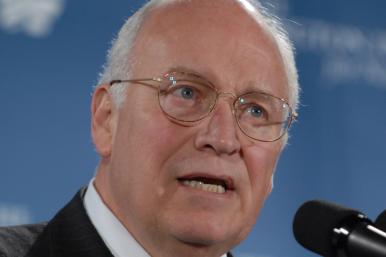
Vice President Richard B. Cheney addresses the 2007 Weinberg Founders Conference - source: The Washington Institute
Articles & Testimony
Vice President Cheney:
Address to The Washington Institute's Weinberg Founders Conference
On October 21, 2007, Vice President Richard Cheney delivered a special address to The Washington Institute's 2007 Weinberg Founders Conference.
٢٢‏/١٠‏/٢٠٠٧
◆
  • Richard B. Cheney
In-Depth Reports
Women, Youths, and Change in the Middle East
On October 20, 2007, Jared Cohen, Shaha Ali Riza, and Tulin Daloglu addressed The Washington Institute's Weinberg Founders Conference. Mr. Cohen is a member of the State Department Policy Planning Staff, responsible for public diplomacy, and the author of Children of Jihad: Journeys into the Hearts and Minds of Middle
٢٠‏/١٠‏/٢٠٠٧
In-Depth Reports
Books, Foreign Policy, and the Middle East
On October 20, 2007, Martin Kramer, Jason Epstein, Kanan Makiya, and Bob Woodward addressed The Washington Institute's Weinberg Founders Conference. The event marked the launching of the Washington Institute Book Prize, a competition which will culminate in inaugural awards in September 2008. Dr. Kramer is the Wexler-Fromer fellow at The
٢٠‏/١٠‏/٢٠٠٧
◆
  • Martin Kramer
Brief Analysis
Promoting Arab Democracy (or Not):
What the Past Should Tell Us about the Future (Part I)
On October 3, 2007, J. Scott Carpenter addressed a Policy Forum at The Washington Institute marking the launch of Project Fikra, a new Washington Institute program focused on empowering Arab moderates and liberals in their struggles against extremism. Mr. Carpenter is a Keston Family fellow at the Institute and former
١٨‏/١٠‏/٢٠٠٧
◆
  • J. Scott Carpenter
In-Depth Reports
Pushback or Progress?
Arab Regimes Respond to Democracy's Challenge
Widespread Islamist gains -- from Hamas's ascension in Gaza to the Muslim Brotherhood's successes in Egypt -- seem to have muted the previously high-profile agenda of bringing democracy to Arab countries. In both Washington and the region itself, little confidence remains in the short-term viability of democratic reform in an
٢٨‏/٠٩‏/٢٠٠٧
◆
  • Barry Rubin
Articles & Testimony
How We Can Bring Him Down
This week, Iranian President Mahmoud Ahmadinejad again darkens the doorstep of America to address the United Nations. There he is likely to express outrage that New York refused his request to visit Ground Zero. Like that visit would have been, his speech will be designed to divert attention from what
٢٤‏/٠٩‏/٢٠٠٧
In-Depth Reports
The Reemergence of Hizballah in Turkey
With secularism, PKK terrorism, and other Turkish issues increasingly becoming international concerns, a dangerous Islamist trend has been overlooked: radical groups inspired more by the revolutionary ideology of Iran than domestic issues such as Kurdish nationalism are staking their own claim to power. One such group is Hizballah in Turkey
١٧‏/٠٩‏/٢٠٠٧
◆
  • Rusen Cakir
Articles & Testimony
Promote Liberal Democracy
It seems a very long time ago that President George W. Bush gave his second inaugural address. In January 2005, he proclaimed that "the best hope for peace in our world is the expansion of freedom in all the world." With this soaring idea, deeply rooted in America's Wilsonian political
٠٩‏/٠٩‏/٢٠٠٧
◆
  • David Makovsky
Brief Analysis
Better Late than Never:
Keeping USAID Funds out of Terrorist Hands
Foreign aid is an important and effective tool for buttressing allies, alleviating poverty and suffering, supporting key foreign policy objectives, and promoting the image and ideals of the United States abroad. Indeed, as its own website attests, the U.S. Agency for International Development (USAID) "plays a vital role in promoting
٢٤‏/٠٨‏/٢٠٠٧
◆
  • Matthew Levitt
Brief Analysis
Undercutting a Culture of Militancy:
Designating Hamas Charities
Yesterday, the U.S. Treasury Department designated as a terrorist organization one of the largest Hamas charities in Gaza, the al-Salah Society, along with its director, Ahmed al-Kurd, a well-known Hamas activist. The organization was outlawed by Israel in 2002 and temporarily shut down by Palestinian security services in 2003. The
٠٨‏/٠٨‏/٢٠٠٧
◆
  • Matthew Levitt
In-Depth Reports
July 2007 Turkish Elections:
Winners and Fault Lines
In the wake of a May 2007 presidential election crisis and subsequent political stalemate -- punctuated by massive public rallies and intervention by both the judiciary and the military -- Turkey called for early parliamentary elections to be held in July 2007. The ruling Justice and Development Party (AKP), which
١٨‏/٠٧‏/٢٠٠٧
◆
  • Soner Cagaptay

Pagination

  • Previous page ‹ Previous
  • First page « First
  • …
  • Page 111
  • Page 112
  • Page 113
  • Page 114
  • Current page 115
  • Page 116
  • Page 117
  • Page 118
  • Page 119
  • …
  • Last page Last »
  • Next page Next ›
Supported by the

Project Fikra: Defeating Extremism through the Power of Ideas

Fikra n. [Arabic] "Idea"

The Washington Institute's Project Fikra is a multiyear program of research, publication, and network-building designed to generate policy ideas for promoting positive change and countering the spread of extremism in the Middle East.

Sign Up for Email Updates from The Washington Institute

Never miss a breaking event on U.S. policy interests in the Middle East. Customize your subscription to our expert analysis, op-eds, live events, and special reports.

Sign up

Featured experts

Catherine Cleveland
كاثرين كليفلاند
كاثرين كليفلاند هي زميلة أقدم في زمالة عائلة "كروفت-واغنر" في معهد واشنطن.
Ben Fishman
بين فيشمان
بين فيشمان هو زميل أقدم في برنامج الزمالة "ستيفن د. ليفي" في "برنامج «روبين فاميلي» حول السياسة العربية" في معهد واشنطن حيث يركز على شمال أفريقيا.
Background image with TWI branding
logo
wordmark
Homepage

1111 19th Street NW - Suite 500
Washington D.C. 20036
Tel: 202-452-0650
Fax: 202-223-5364

Footer contact links

  • الاتصال بالمعهد
  • غرفة الصحافة
  • الاشتراك

معهد واشنطن يسعى إلى تعزيز فهم متوازن وواقعي للمصالح الأمريكية في الشرق الأوسط والنهوض بالسياسات التي تؤمّنها.

المعهد هو منظمة 501(c)3 ؛ جميع التبرعات معفاة من الضرائب.

Footer quick links

  • حول معهد واشنطن
  • ادعم المعهد
  • روّاد المعهد

Social media

  • The Washington Institute on Facebook facebook
  • The Washington Institute on X x
  • The Washington Institute on YouTube youtube
  • The Washington Institute on LinkedIn linkedin

© 2026 جميع الحقوق محفوظة.

Footer

  • توظيف
  • نهج الخصوصية
  • الحقوق والأذونات