TWI logo معهد واشنطن لسياسات الشرق الأدنى
logo
wordmark
Homepage

Main navigation

  • تحليل
  • الخبراء
  • حول المعهد
  • الدعم
  • الخرائط والوسائط المتعددة
الأكثر شيوعاً:
  • الإرهاب
  • منافسة القوى العظمى
  • إيران
  • لبنان
  • دول الخليج العربي

المناطق والبلدان

  • إسرائيل
  • إيران
  • الأردن
  • العراق
  • الفلسطينيون
  • تركيا
  • دول الخليج العربي
  • سوريا
  • شمال أفريقيا
  • لبنان
  • مصر

القضايا

  • الإرهاب
  • الخليج وسياسة الطاقة
  • الديمقراطية والإصلاح
  • السياسة الأمريكية
  • السياسة العربية والإسلامية
  • الشؤون العسكرية والأمنية
  • الطاقة والاقتصاد
  • العلاقات العربية الإسرائيلية
  • انتشار الأسلحة
  • عملية السلام
  • منافسة القوى العظمى
TWI English
TWI Arabic: اللغة العربية Fikra Forum

إيران

Policy Analysis on إيران

Filter by:

Brief Analysis
What Could Diplomacy with Iran Produce?
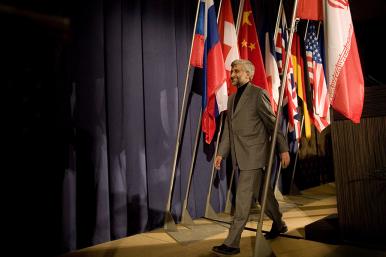
There can be little doubt that the United States, France, Britain, Germany, Russia, and China would all prefer a diplomatic outcome to the impasse over Iran's nuclear ambitions. Collectively, they make up the P5+1 mechanism that will soon resume negotiations with Iranian representatives. Talks were discontinued last year because Tehran's
٠٥‏/٠٤‏/٢٠١٢
◆
  • Dennis Ross
Articles & Testimony
The Future of the Marjayia
The current form of religious leadership over the Shi'ite community, marjayia, was founded in the 1830s when Mohammed Hassan Najafi became the first transnational Shi'ite religious authority (marja) in Najaf, Iraq. Najafi created a universal patronage network through which he received religious taxes and endowment incomes, and appointed religious representatives
٠٣‏/٠٤‏/٢٠١٢
◆
  • Mehdi Khalaji
Articles & Testimony
The U.S. Can Meet Israel Halfway on Iran
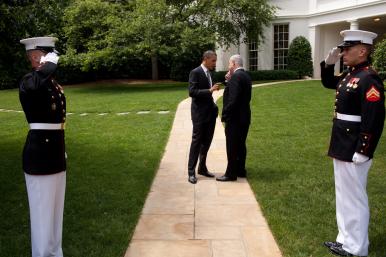
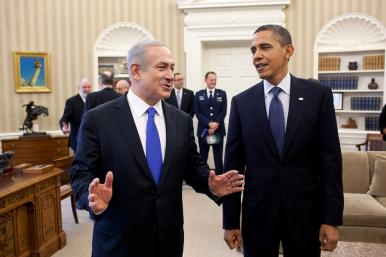
There is no daylight between the United States and Israel on the objective and the preferred means for dealing with Iranian nuclear ambitions. Much has been written about possible differences, but the recent meeting between President Obama and Prime Minister Benjamin Netanyahu highlighted key points of convergence: Both agree that
٠٢‏/٠٤‏/٢٠١٢
◆
  • Dennis Ross
  • David Makovsky
Brief Analysis
Dateline Middle East: Trip Reports from around the Region
On March 27, 2012, Robert Satloff, Andrew J. Tabler, and Simon Henderson addressed a Policy Forum at The Washington Institute. Dr. Satloff, the Institute's executive director and Howard P. Berkowitz chair in U.S. Middle East policy, had just returned from Israel and Jordan. Mr. Tabler, the Institute's Next Generation fellow
٢٩‏/٠٣‏/٢٠١٢
◆
  • Robert Satloff
  • Andrew J. Tabler
  • Simon Henderson
Articles & Testimony
Danger Zone
Reporting from the USS Abraham Lincoln in waters near Iran, Simon Henderson describes why the carrier strike groups in the Persian Gulf are an awesome reminder of U.S. military might. View a slideshow of photos from his time aboard the supercarrier. U.S. President Barack Obama recently said that "all elements
٢٧‏/٠٣‏/٢٠١٢
◆
  • Simon Henderson
Brief Analysis
Iran, Hizballah, and the Threat to the U.S. Homeland
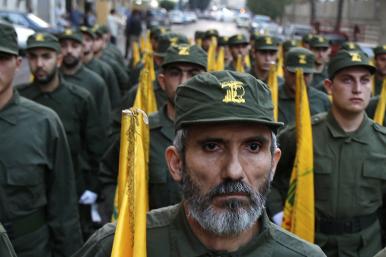
Should Hizballah decide to carry out attacks on U.S. soil in the event of a military confrontation with Iran, it has the capacity to do so.
٢٥‏/٠٣‏/٢٠١٢
◆
  • Matthew Levitt
Brief Analysis
Iran Keeps Compromise Option Open
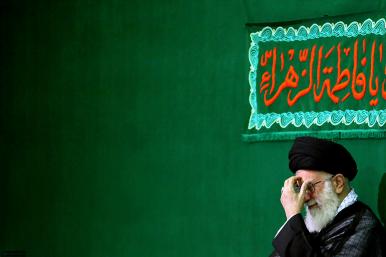
Whether by choice or through the military's influence, Ayatollah Khamenei has decided to keep a formerly marginalized regime figure -- and, by extension, the possibility of nuclear compromise -- in play.
٢٢‏/٠٣‏/٢٠١٢
◆
  • Mehdi Khalaji
Articles & Testimony
To Keep the Peace with Iran, Threaten to Strike
Washington must clearly articulate what its red lines are in terms of Iranian behavior and credibly threaten the regime with military action should it cross them.
٢٠‏/٠٣‏/٢٠١٢
◆
  • Michael Singh
Brief Analysis
Washington and Israel on Iran: Unresolved Differences
Notwithstanding their differing perspectives on the subject, the less daylight seen between Washington and Israel regarding Iran, the better.
١٦‏/٠٣‏/٢٠١٢
◆
  • Michael Herzog
Brief Analysis
To Retaliate or Not: Hizballah's Calculus Following a Strike on Iran
Hizballah's response to military action against Iran could be shaped by rational cost-benefit analysis, a perceived spiritual obligation to defend its Shiite patron in Tehran, or both.
١٤‏/٠٣‏/٢٠١٢
◆
  • David Schenker
Brief Analysis
Khamenei's Strength Could Be a Vulnerability
By weakening the Islamic Republic's institutions and strengthening his own authority, Ayatollah Khamenei may make himself more vulnerable in a time of crisis.
١٢‏/٠٣‏/٢٠١٢
◆
  • Mehdi Khalaji
Articles & Testimony
No Nuclear Compromise
The Iranian regime will not be able to survive existing sanctions, which are targeting the banking system and oil industry like never before.
٠٧‏/٠٣‏/٢٠١٢
◆
  • Mehdi Khalaji
Articles & Testimony
Avoiding a Bad Nuclear Deal with Iran
As the confrontation with Iran enters a new, more dangerous phase, Washington must avoid the temptation of redefining its red lines in a manner that endangers national security.
٠٧‏/٠٣‏/٢٠١٢
◆
  • Michael Singh
Brief Analysis
President Obama on Iran: Assessing Key Passages in the AIPAC Speech
Although the president's AIPAC speech offered reassurances that he is committed to the full logic of a "prevention" strategy in dealing with the Iranian nuclear challenge, including potential military action, it also implied a clear preference for Israel to hold back and let the noose of international sanctions tighten.
٠٥‏/٠٣‏/٢٠١٢
◆
  • Robert Satloff
Brief Analysis
The Need for Consistent U.S. and Israeli Public Messaging on Iran
Washington and Israel need to address their public messaging on Iran, which has undermined mutual trust and efforts to achieve their common objective: a diplomatic solution to the nuclear crisis.
٠٢‏/٠٣‏/٢٠١٢
◆
  • Michael Eisenstadt
  • David Makovsky
Brief Analysis
Iran's Majlis Elections: Whoever Wins, the West Loses
Iran's upcoming parliamentary elections, while vigorously contested, offer no hope for improving U.S.-Iranian relations.
٢٨‏/٠٢‏/٢٠١٢
◆
  • Nikolay Kozhanov
Articles & Testimony
Is the Iranian Regime Rational?
Although some examples suggest rational decisionmaking by Tehran, other Iranian actions seem unencumbered by cost-benefit considerations.
٢٣‏/٠٢‏/٢٠١٢
◆
  • Michael Singh
Articles & Testimony
Friendship Under Fire
The Iranian nuclear threat will challenge Obama and Netanyahu's sometimes-rocky relationship like never before.
٢٢‏/٠٢‏/٢٠١٢
◆
  • David Makovsky
Articles & Testimony
How to Construct an Inaccurate Historical Analogy
Resolving thorny policy problems requires not just historical analysis, but also the courage and conviction to choose, amid great uncertainty, among risky options.
١٦‏/٠٢‏/٢٠١٢
◆
  • Michael Singh
Brief Analysis
Who Will Lead Post-Khamenei Iran?
On February 13, Mehdi Khalaji, Karim Sadjadpour, and Dennis Ross addressed a Policy Forum at The Washington Institute. Mr. Khalaji is a senior fellow at The Washington Institute and author of the just-released Policy Focus Supreme Succession: Who Will Lead Post-Khamenei Iran? Mr. Sadjadpour is an associate at the Carnegie
١٥‏/٠٢‏/٢٠١٢
◆
  • Mehdi Khalaji
  • Dennis Ross

Pagination

  • Previous page ‹ Previous
  • First page « First
  • …
  • Page 96
  • Page 97
  • Page 98
  • Page 99
  • Current page 100
  • Page 101
  • Page 102
  • Page 103
  • Page 104
  • …
  • Last page Last »
  • Next page Next ›

Sign Up for Email Updates from The Washington Institute

Never miss a breaking event on U.S. policy interests in the Middle East. Customize your subscription to our expert analysis, op-eds, live events, and special reports.

Sign up

Background image with TWI branding
logo
wordmark
Homepage

1111 19th Street NW - Suite 500
Washington D.C. 20036
Tel: 202-452-0650
Fax: 202-223-5364

Footer contact links

  • الاتصال بالمعهد
  • غرفة الصحافة
  • الاشتراك

معهد واشنطن يسعى إلى تعزيز فهم متوازن وواقعي للمصالح الأمريكية في الشرق الأوسط والنهوض بالسياسات التي تؤمّنها.

المعهد هو منظمة 501(c)3 ؛ جميع التبرعات معفاة من الضرائب.

Footer quick links

  • حول معهد واشنطن
  • ادعم المعهد
  • روّاد المعهد

Social media

  • The Washington Institute on Facebook facebook
  • The Washington Institute on X x
  • The Washington Institute on YouTube youtube
  • The Washington Institute on LinkedIn linkedin

© 2026 جميع الحقوق محفوظة.

Footer

  • توظيف
  • نهج الخصوصية
  • الحقوق والأذونات