TWI logo معهد واشنطن لسياسات الشرق الأدنى
logo
wordmark
Homepage

Main navigation

  • تحليل
  • الخبراء
  • حول المعهد
  • الدعم
  • الخرائط والوسائط المتعددة
الأكثر شيوعاً:
  • الإرهاب
  • منافسة القوى العظمى
  • إيران
  • لبنان
  • دول الخليج العربي

المناطق والبلدان

  • إسرائيل
  • إيران
  • الأردن
  • العراق
  • الفلسطينيون
  • تركيا
  • دول الخليج العربي
  • سوريا
  • شمال أفريقيا
  • لبنان
  • مصر

القضايا

  • الإرهاب
  • الخليج وسياسة الطاقة
  • الديمقراطية والإصلاح
  • السياسة الأمريكية
  • السياسة العربية والإسلامية
  • الشؤون العسكرية والأمنية
  • الطاقة والاقتصاد
  • العلاقات العربية الإسرائيلية
  • انتشار الأسلحة
  • عملية السلام
  • منافسة القوى العظمى
TWI English
TWI Arabic: اللغة العربية Fikra Forum

الديمقراطية والإصلاح

Policy Analysis on الديمقراطية والإصلاح

Filter by:

Brief Analysis
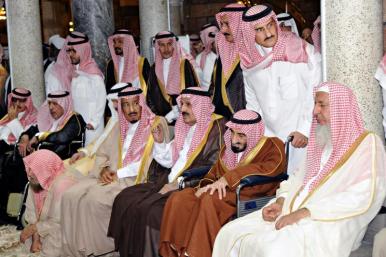
Saudi Succession Crisis Is an Opportunity for Change
Washington should bluntly tell the House of Saud that its current system of governance is broken, and that younger princes should be given bigger roles.
١٨‏/٠٦‏/٢٠١٢
◆
  • Simon Henderson
Brief Analysis
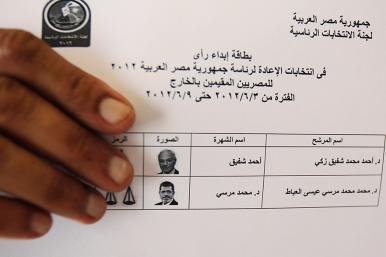
The Next Egyptian President: Likely Scenarios
Policymakers must prepare for the likelihood that Egyptian instability will continue for some time, rendering Cairo unable to continue its historic role as a major U.S. strategic partner.
١٥‏/٠٦‏/٢٠١٢
◆
  • Eric Trager
Brief Analysis
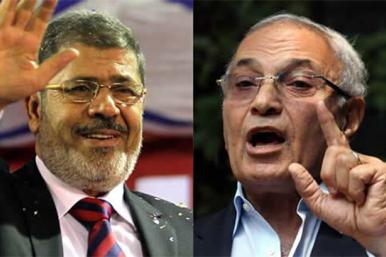
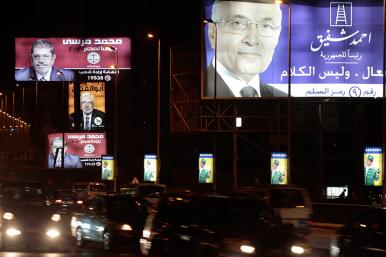
In Their Own Words: Egyptian Presidential Candidates Morsi and Shafiq
The second round of Egypt's presidential election, slated to take place this weekend, pits Muslim Brotherhood candidate Muhammad Morsi against Ahmed Shafiq, the former air force commander who served as Hosni Mubarak's last prime minister. Although it is impossible to predict how either candidate will govern if elected, their statements
١٥‏/٠٦‏/٢٠١٢
Brief Analysis
Egypt's Shocking Legal Judgments
New unrest in prospect after high-court rulings appear to back military council.
١٤‏/٠٦‏/٢٠١٢
◆
  • David Schenker
  • Eric Trager
Brief Analysis
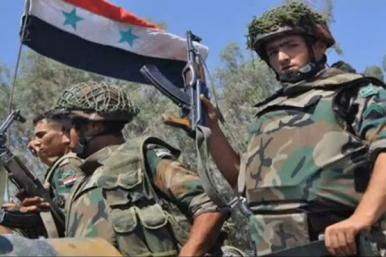
Russia's Response to the Massacres in Syria
Although many Russian officials are unsure about who exactly committed the recent massacres, the incidents are nevertheless a serious stress test for Russian-Syrian relations.
١٣‏/٠٦‏/٢٠١٢
◆
  • Nikolay Kozhanov
Articles & Testimony
What's at Stake with Egypt Vote?
Nothing captured the imagery of change in the Middle East more than last year's demonstrations in Tahrir Square that brought down Hosni Mubarak, Egypt's president for 30 years. The sense of hope and possibility that seemed so alive in Tahrir Square made everyone in the Middle East believe there truly
١٣‏/٠٦‏/٢٠١٢
◆
  • Dennis Ross
Interview: Dennis Ross on Iran, Peace Process, Egypt
On Tuesday 12 June, Ambassador Dennis Ross was interviewed by BICOM senior research fellow Professor Alan Johnson. The interview covered key policy issues facing Britain, Israel and the United States. The following is a transcript of their discussion.
١٣‏/٠٦‏/٢٠١٢
◆
  • Dennis Ross
Brief Analysis
Beware of Egyptian Political Shocks
Technically, Egypt's political transition is on schedule. The first round of the presidential election was held May 23-24, the second round is set to occur June 16-17, a winner will be announced by June 21, and the Supreme Council of the Armed Forces (SCAF), which has ruled the country since
٠٨‏/٠٦‏/٢٠١٢
◆
  • Eric Trager
Articles & Testimony
Why a Syrian Civil War Would Be a Disaster For U.S. National Security
Speaking Thursday before the U.N. General Assembly, just one day after the latest massacre of civilians by government-affiliated forces, Kofi Annan warned that the crisis in Syria was on a disastrous course. “If things do not change, the future is likely to be one of brutal repression, massacres, sectarian violence
٠٨‏/٠٦‏/٢٠١٢
◆
  • Robert Satloff
Articles & Testimony
Why Neither of Egypt's Presidential Choices Represents Democracy
The results of the first round of voting in Egypt's presidential elections has yielded a choice in the second round between two starkly different men -- former Mubarak-era prime minister and air force general Ahmed Shafik, and Muslim Brotherhood official Mohammad Morsi. For Washington, less important than which man wins
٠٦‏/٠٦‏/٢٠١٢
◆
  • Michael Singh
Brief Analysis
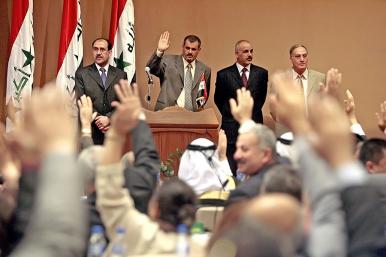
The Effort to Unseat Maliki: Lessons for U.S. Policy
With U.S. encouragement, broad-based national dialogue could increase the chance that Maliki handles Iraq's next political crisis by compromising with domestic partners rather than reaching out to Tehran, a player with no real commitment to Iraq's interests.
٠٥‏/٠٦‏/٢٠١٢
◆
  • Michael Knights
Articles & Testimony
America, Israel, and the Strategic Implications of the Arab Uprisings
The upheavals of the last 18 months have transformed an already difficult regional landscape into perhaps the most inhospitable strategic environment in modern history.
٠٤‏/٠٦‏/٢٠١٢
◆
  • Robert Satloff
Brief Analysis
U.S. Policy and Egypt's Presidential Runoff: Projecting Clarity, Not Disinterest
To bolster the integrity of Egypt's democratic process and preserve America's own national interests, Washington should make clear how the outcome of the presidential runoff could affect U.S.-Egyptian relations.
٠١‏/٠٦‏/٢٠١٢
◆
  • Robert Satloff
Articles & Testimony
What Does the Syrian Opposition Believe?
There are increasing calls for international intervention in Syria after this weekend's massacre in Houla, where Syrian President Bashar al-Assad's forces murdered more than 100 civilians. Obstacles to intervention remain, however, especially concern that the opposition to Assad's regime is dominated by religious fundamentalists. Until recently, for example, the Syrian
٣٠‏/٠٥‏/٢٠١٢
◆
  • David Pollock
Articles & Testimony
Cut Off Assad's Lifelines
Last week's massacre in the Syrian village of al-Houla, in which more than 100 civilians lost their lives, has called into question the conventional wisdom in Washington that intervention would make things worse on the ground. President Bashar al-Assad's disregard for the U.N. deadlines in early April to withdraw forces
٣٠‏/٠٥‏/٢٠١٢
◆
  • Andrew J. Tabler
Brief Analysis
Assad's Response to the Annan Plan: Violence as Usual
In light of the Houla tragedy and other indicators of growing violence, the UN observer mission in Syria will likely be withdrawn, spurring the regime to escalate its offensive operations even further.
٢٩‏/٠٥‏/٢٠١٢
◆
  • Jeffrey White
Articles & Testimony
Reports of the Muslim Brotherhood's Demise Were Greatly Exaggerated
In the run-up to the first round of Egypt's presidential elections, which concluded on Thursday, the Muslim Brotherhood's downfall was widely anticipated. Only four months after winning a 47-percent plurality in the parliamentary elections, the Washington Post reported that the Brotherhood's stock was "plunging," while the Wall Street Journal insisted
٢٨‏/٠٥‏/٢٠١٢
◆
  • Eric Trager
In-Depth Reports
Finding a Balance:
U.S. Security Interests and the Arab Awakening
The Arab Awakening—in which local youths accomplished through weeks of nonviolent action what al-Qaeda had failed to do through years of terrorism and bloodshed—has created significant opportunities to counter radical Islamist propaganda and leverage financial tools against violently repressive regimes. Yet it has also strained the intelligence community's resources, forcing
٢٣‏/٠٥‏/٢٠١٢
◆
  • Matthew Levitt
Brief Analysis
Presidential Elections Will Not End Egyptian Instability
Washington has little ability to influence the outcome of this week's election, in which most leading candidates appear disinclined to maintain strong relations with the United States. But it can encourage the Egyptian military to minimize the likelihood of another uprising.
٢٢‏/٠٥‏/٢٠١٢
◆
  • Eric Trager
Brief Analysis
Egyptian Elections: Beyond Winning
The legitimacy of Egypt’s next president will depend on the credibility of tomorrow’s elections, yet credibility may not be enough for many Egyptians.
٢٢‏/٠٥‏/٢٠١٢
◆
  • David Schenker

Pagination

  • Previous page ‹ Previous
  • First page « First
  • …
  • Page 79
  • Page 80
  • Page 81
  • Page 82
  • Current page 83
  • Page 84
  • Page 85
  • Page 86
  • Page 87
  • …
  • Last page Last »
  • Next page Next ›
Supported by the

Project Fikra: Defeating Extremism through the Power of Ideas

Fikra n. [Arabic] "Idea"

The Washington Institute's Project Fikra is a multiyear program of research, publication, and network-building designed to generate policy ideas for promoting positive change and countering the spread of extremism in the Middle East.

Sign Up for Email Updates from The Washington Institute

Never miss a breaking event on U.S. policy interests in the Middle East. Customize your subscription to our expert analysis, op-eds, live events, and special reports.


Sign up

Featured experts

Catherine Cleveland
كاثرين كليفلاند
كاثرين كليفلاند هي زميلة أقدم في زمالة عائلة "كروفت-واغنر" في معهد واشنطن.
Ben Fishman
بين فيشمان
بين فيشمان هو زميل أقدم في برنامج الزمالة "ستيفن د. ليفي" في "برنامج «روبين فاميلي» حول السياسة العربية" في معهد واشنطن حيث يركز على شمال أفريقيا.
Background image with TWI branding
logo
wordmark
Homepage

1111 19th Street NW - Suite 500
Washington D.C. 20036
Tel: 202-452-0650
Fax: 202-223-5364

Footer contact links

  • الاتصال بالمعهد
  • غرفة الصحافة
  • الاشتراك

معهد واشنطن يسعى إلى تعزيز فهم متوازن وواقعي للمصالح الأمريكية في الشرق الأوسط والنهوض بالسياسات التي تؤمّنها.

المعهد هو منظمة 501(c)3 ؛ جميع التبرعات معفاة من الضرائب.

Footer quick links

  • حول معهد واشنطن
  • ادعم المعهد
  • روّاد المعهد

Social media

  • The Washington Institute on Facebook facebook
  • The Washington Institute on X x
  • The Washington Institute on YouTube youtube
  • The Washington Institute on LinkedIn linkedin

© 2026 جميع الحقوق محفوظة.

Footer

  • توظيف
  • نهج الخصوصية
  • الحقوق والأذونات