Heba El Koudsy is an Egyptian-American journalist who has served as Washington bureau chief for Asharq Al-Awsat since 2017, and previously worked for several Egyptian and Gulf publications in Egypt, Kuwait, and the UAE. She is a recipient of a UN award for best journalistic coverage of women and
Brief Analysis
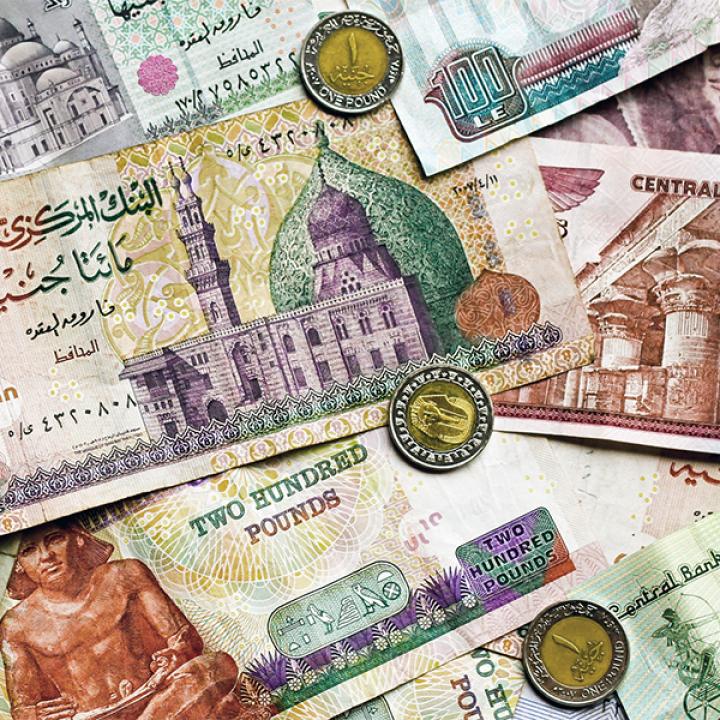
The Egyptian pound is weathering significant challenges to its stability as the Iran war continues to impact oil markets and Egypt's revenue streams, raising concerns about the longterm impact of continued conflict.
The war against Iran and its ongoing pressure on emerging economies are proving to be a stress test for Egypt’s currency, which has thus far remained stable yet is facing deep structural pressures. While Cairo claims it can absorb shocks, international reports and economic analyses indicate that the pound stands on “fragile but temporarily tenable” ground. With measures praised by experts for maintaining exchange rate flexibility, Cairo has so far managed the pound effectively, but it must remain highly vigilant and prepare to act swiftly if conditions deteriorate.
The most direct consequence of the war is the rise in energy prices and disruption of global supply chains, which quickly affected the Egyptian economy. For Egypt, a net energy importer, every $10 increase in oil prices adds roughly $2.5 billion to its import bill, placing pressure on the balance of payments. As the war has escalated, the pound has declined noticeably, losing more than 8 percent of its value since the conflict began amid outflows of foreign investment from local debt instruments and growing market anxiety. During some periods, the exchange rate surpassed 54 pounds to the dollar—a historic low for the pound. Estimates also suggest the pound has lost up to 14 percent of its value since the war began, a direct reflection of mounting external pressures.
Over the past decade, the pound has suffered significantly greater losses than in the current period. The official exchange rate was around 10 pounds to the dollar in early 2016, then 17.8 in 2017, followed by 19.2 in 2022 and 45.3 in 2024. In other words, the pound has lost more than 80 percent of its value over the past decade.
But crossing the threshold of 50 pounds to the dollar delivered a deep psychological blow to Egyptians, further diminishing their purchasing power and fueling feelings of anxiety, frustration, and helplessness amid soaring costs for basic goods, medicine, and education. The resulting pressure prompted shifts in consumer behavior, and many households, particularly those in the middle class, cut back on discretionary spending.
Economists believe that the war’s impact on the pound is extending far beyond exchange-rate fluctuations and is affecting several key channels. Most notably, Egypt’s energy import bill has surged from about $560 million before the war to $1.7 billion today, while total external debt-service obligations have risen to $29.2 billion, about $1.3 billion higher than pre-war projections. Together, these represent Egypt’s two largest sources of foreign-currency outflows.
At the same time, the war has affected major sources of dollar inflows. Suez Canal revenues have fallen from an average of $700–800 million per month before the conflict to just $300–400 million per month now, while tourism revenues have declined significantly after reaching a record high of almost $17 billion in 2025.
The risks associated with military escalation are not confined to higher energy costs and debt-servicing burdens. A more serious concern is the potential reduction in the number of Egyptian workers in Gulf countries, which could trigger a substantial decline in remittance inflows. Remittances, which exceeded $41 billion in 2025, remain one of Egypt’s most important sources of foreign exchange, alongside revenues from the Suez Canal and tourism.
These factors combined could increase Egypt’s current account deficit from roughly $15 billion to nearly $24 billion, compelling the government to seek additional foreign financing and further complicating its efforts to reduce external indebtedness and strengthen fiscal sustainability. This dynamic underscores a growing contradiction between Cairo’s objective of lowering its reliance on external borrowing and its mounting need for foreign capital to address widening financing gaps.
Dr. Mahmoud Mohieldin, the UN special envoy for financing the 2030 agenda for sustainable development, notes that there are varying degrees of exchange rate flexibility for managing such external geopolitical shocks, and that it is possible, and indeed necessary, for the exchange rate to shift in response to these pressures—on the supply side or the demand side. On the supply side, he explains, there has been a decline in tourism revenues; a reduction in exports, particularly to countries affected by the war; a likely slowing of growth in remittances from Egyptians abroad; and a decline in Suez Canal revenues, even absent disruptions in the Bab al-Mandab Strait, because of the war’s impact on international trade. On the demand side, the economy has seen greater demand for dollars from portfolio investors and short-term investors, hot money, and increased hedging demand for dollars, since the dollar is still a safer haven than other currencies.
The Government’s Response: Austerity Plus Support
The Egyptian government has taken a series of measures to contain the crisis and preserve currency stability. Most notable are the rationalization of energy consumption through reduced working hours and early closure of commercial establishments; cuts to fuel subsidies; the continuation of flexible exchange rate policies; and the pursuit of IMF support. These measures aim to reduce demand for dollars. The economic reforms Egypt has implemented, including liberalization of the exchange rate, have helped bolster foreign currency reserves—estimated at approximately $53 billion—and provided a temporary safety margin.
Deposits from the Gulf—primarily Saudi Arabia, the United Arab Emirates, and Kuwait—account for a significant share of Egypt’s foreign exchange reserves. Since mid-2024, long-term deposits from Arab countries have totaled approximately $9.3 billion. Although the UAE has converted a substantial portion of its deposits into investments in the Ras al-Hikma project, thereby reducing their overall volume, they still represent an important component of Egypt’s reserves. However, they remain vulnerable to sudden withdrawal if a Gulf state chooses to reclaim them due to political tensions or domestic liquidity needs. A recent example is the UAE’s request that Pakistan repatriate $3.5 billion in Emirati deposits. This risk makes a considerable portion of Egypt’s foreign exchange reserves inherently unstable, increasing the country’s financial vulnerability to geopolitical shifts and regional uncertainties.
In recent days, the Egyptian Finance Ministry sold dollar-denominated Treasury bills with a one-year maturity worth $934 million in its latest auction, amid a notable rise in borrowing costs. The yield reached 4 percent, an increase of 0.5 percentage points over the previous auction for the same maturity in February, which stood at 3.5 percent—the highest level since June 2025. This comes as Egypt prepares to repay $985 million in dollar-denominated Treasury bills, highlighting the clear discrepancy between the cost of external and domestic debt. The government has successfully issued bonds with interest rates ranging from approximately 9.5 to 10 percent, a rate lower than market levels, which reached 20 percent and 30 percent in 2023 and 2024. However, they are approaching the interest rates that prevailed during the first decade of the new millennium and are higher than the low rates that ranged between 4 and 7 percent in the 1990s.
Egyptian Finance Minister Ahmed Kojok has repeatedly emphasized that the government’s focus is on reducing external debt by $1 to $2 billion annually by repaying more than it borrows and extending maturities. However, the fallout from the war with Iran is throwing these plans into disarray, as the expected rise in Egypt’s energy bill and increased financing needs may push the government to increase external borrowing, thereby threatening efforts to reduce debt.
Mohieldin notes that Egyptian economic management has benefited from lessons learned during the fallout from the Russia-Ukraine war and that the exchange rate must enjoy sufficient flexibility—what he terms “variability”—meaning that the dollar-to-pound rate should move to reflect these changes. The shocks from the military operations against Iran were initially absorbed through a rise in the dollar against the pound, followed by a relative improvement in the nominal value of the pound, particularly given that a possible U.S. military action against Iran was expected before the war officially began. Mohieldin notes that Egyptian monetary authorities have managed foreign currency to meet urgent dollar demand, achieving a balance backed by foreign currency reserves and offering short-term investors an exit at a fair market rate rather than a preferential one. This approach is aligned with reality and also allows flexibility in exchange rate management.
Hedging against Pound Volatility
Dr. Ashraf al-Rubaie, former head of the Egyptian Commercial Service and former adviser to the minister of trade, argues that following the outbreak of war, Egypt’s currency was under more acute pressure than the currencies of many other Middle East countries, including those directly involved in the conflict. This is because the Egyptian economy is dependent on external sources of hard currency inflows: remittances from Egyptians abroad—the majority from Gulf states themselves affected by the war—Suez Canal revenues affected by declining international trade, and tourism revenues affected by the cancellation of numerous flights and the sharp rise in airfares. This is in addition to declining Egyptian exports, particularly to Gulf markets, a significant destination for Egyptian products.
Rubaie believes that importation of many inputs from abroad, and rising prices exceeding the real increase in hard currency exchange rates against the pound, have led to further pressure on productive operations—a result of growing speculation about how far the pound’s value might fall in the future, and hedging through price increases to cover a potential rise in the dollar against the pound. This has led many companies to raise prices, particularly on durable goods; to temporarily suspend sales until the situation becomes clearer; or to accept orders for certain types of products—such as cars, though they are already available—and decide the final price later, taking into account future fluctuations in the value of the pound.
Is Stability Real or Temporary?
Despite government measures that experts have praised for maintaining exchange rate flexibility, the question remains: Is the pound’s current stability real or temporary? Some analysts see the answer as lying in a gray zone. Certain estimates suggest that the current exchange rate may be “overvalued” as a result of geopolitical tensions and could recover as the crisis eases; conversely, financial institutions see the currency’s general trajectory as moving toward gradual weakness, with forecasts of the dollar trading between 52 and 55 pounds this year. This view is reinforced by the fact that inflation has risen to almost 15 percent, driven by rising food and energy prices.
How Long Can the Pound Hold?
Estimates point to three plausible scenarios. The first is temporary stabilization: If the war conclusively ends in the coming months, the pound may stabilize around current levels, with a gradual improvement in dollar inflows. The second is continued geopolitical pressure: If the war continues, this would keep the Egyptian pound under pressure, with the likelihood of further depreciation. The third and most dangerous scenario involves an escalation in the war and a sharp rise in oil prices beyond $150 per barrel, which would expose the pound to a new wave of depreciation and a rate of more than 55 pounds to the dollar.
The fallout from the war in Iran reveals the fragility of the equilibrium underpinning the Egyptian pound’s stability. While the government has succeeded in absorbing the initial shock through fiscal and monetary measures and external support, this stability remains hostage to external factors beyond Cairo’s control. Between apparent stability and latent pressures, the Egyptian pound appears to have entered a phase of “crisis management” rather than sustainable recovery—making its future closely tied to how the war unfolds and the economy’s capacity to absorb successive shocks.