- Policy Analysis
- Fikra Forum
The Other Phosphate: What Washington’s Moroccan Fertilizer Waiver Overlooks
The United States eased its fertilizer restrictions on the kingdom to manage a supply emergency, but Morocco could also become a key source of purified phosphoric acid—a crucial product tied to growing competition with China over battery production, supply chain integrity, and access to critical minerals.
Although this year’s U.S. military hostilities with Iran have remained confined to the Middle East, the war has quite literally reached American soil through the fertilizer market. When Tehran blocked the Strait of Hormuz in February, the resultant blow to global supplies of sulfur and ammonia—precursor materials necessary for turning mined phosphate rock into finished fertilizer—greatly disrupted farming around the world. To ease fertilizer access for American farmers, Washington turned to Morocco, recognizing that the kingdom is a longtime U.S. partner, holds the world’s largest phosphate reserves, and had kept exporting even as other suppliers were cut off.
Yet lost in the rush to issue emergency agricultural waivers is the fact that these same Moroccan reserves yield another crucial product: purified phosphoric acid (PPA), a key component in the lithium iron phosphate (LFP) battery cathodes needed for electric vehicles, grid storage, and other sectors. Currently, China refines roughly three-quarters of the world’s PPA, giving U.S. policymakers ample reason to look beyond immediate fertilizer shortages when expanding collaboration with Morocco.
One Rock, Two Products
The materials that go into fertilizers had become tools of leverage long before the Iran war. China, the largest exporter of processed phosphate, halted exports of this material in December and has kept them shut ever since. The war then took out the sulfur and ammonia that other producers needed to fill the gap. And because these demands run on a calendar—more than half of phosphate fertilizer in America is applied between fall and early spring—there was no time to develop other sources. By April, just a few weeks into the war, a U.S. survey found that roughly seven in ten American farmers could not afford sufficient fertilizer this season. This was hardly surprising after five years of U.S. government duties on Moroccan fertilizer had raised growers’ costs by an estimated $6.9 billion (see below).
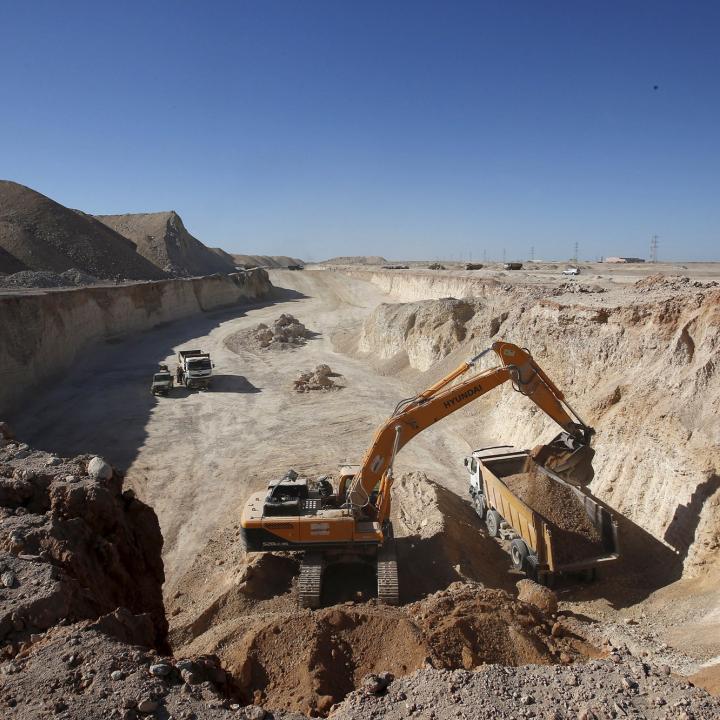
Morocco holds roughly 70 percent of the world’s phosphate rock reserves (about 50 billion tons, compared to 2.8 billion for Egypt, the next-largest holder). When the Hormuz closure cut off sulfur and ammonia supplies, Morocco’s state phosphate company, OCP Group, kept shipping and sourcing ammonia from as far as Trinidad and Tobago to keep fertilizer production running.
Washington adjusted accordingly. On June 29, President Trump signed Proclamation 11038, declaring an emergency and issuing a waiver that suspended the duties on Moroccan phosphate fertilizer for up to eight months. These duties had been imposed in 2021 after the American fertilizer company Mosaic petitioned Washington alleging that Morocco’s OCP benefited from unfair government subsidies. A revised bill cosponsored by Sen. Roger Marshall (R-KS) would remove the tariffs permanently; as of this writing, they are still being reviewed by the U.S. International Trade Commission.
This multi-branch U.S. government focus on emergency agricultural issues was certainly helpful to that sector, but the PPA supply chain requires attention as well. Although most phosphate rock is used to produce fertilizer, a harder technical step is used to remove impurities and produce the acid needed not just for LFP batteries, but also for various parts of the food, pharmaceutical, and electronics sectors.
Morocco has run one variety of that harder step since the 1990s, long before critical minerals became a major U.S.-China issue. Its purification plant at Jorf Lasfar—a joint venture called EMAPHOS—is managed with two European partners, Belgium’s Prayon and Germany’s Budenheim. It runs on Western technology, and a third of the world’s PPA production uses the process that Prayon licenses. Prayon also operates two U.S. plants, in Georgia and Illinois. Yet while EMAPHOS has produced purified acid for food and industrial uses for decades, battery production requires an even higher purity. Morocco has not yet publicly shown that it can produce battery-grade acid at commercial scale, but the kingdom and its partners have the technical capability to make that leap.
Avoiding the Rare-Earths Mistake with PPA
Increasing global demand for PPA has presented the United States with a problem similar to that faced with rare earths, a subset of critical minerals. Processing rare earths is expensive and environmentally costly, so for years the United States shipped its domestically mined concentrate to China, where it was cheaper to process. Yet this created undue dependence on an economic competitor for an indispensable material. The lesson was that owning the raw material is not enough to protect U.S. national security interests when a single foreign country controls the processing.
Phosphate rock is comparatively abundant; what is scarce is the capacity to refine it to the purity needed for fast-growing LFP battery demands. China reportedly refines around 75 percent of the world’s PPA, and the alternative producer list is short: Belgium’s Prayon, the Canadian firm Nutrien, the American firm Innophos, and the Israeli firms ICL and Haifa Chemicals. Meeting the rise in LFP battery demand is projected to require an additional 2.5 million tons of PPA by 2030—on the order of thirty new plants at current capacities.
The U.S. government has only recently come to treat phosphate and its byproducts as strategically important critical minerals. The U.S. Geological Survey added phosphate to its critical minerals list last November, while the White House invoked the Defense Production Act this June to secure supplies of elemental phosphorus. These policy steps treated phosphate as a supply security issue, just like lithium and rare earths.
Washington also signed an agreement with Morocco in February to cooperate on critical minerals—though its terms have not been made public, so its degree of emphasis on phosphate products is unclear. In any case, the next supply opportunity in need of attention is battery-grade PPA, which China supplies almost entirely today but Rabat could also produce.
Morocco’s PPA Possibilities
Over the past few months, every relevant U.S. policy move toward Morocco—the duties waiver, the Trade Commission’s tariff review, the critical minerals agreement—has treated the kingdom as a fertilizer supplier only. None of these discussions has signaled recognition that the same Moroccan production sites now receiving fertilizer waivers are also producing PPA with European partners and Western technology, giving the United States another potential source for its LFP battery supply chain.
What would it take for the kingdom to become a true node in that chain? Several obstacles lie in that path, and addressing some of them will require rather lengthy and uncertain processes that should therefore start as soon as possible.
First, OCP is about 95 percent state-owned, so any supply agreement would also need the Moroccan government’s commitment, shaped by Rabat’s diplomatic priorities—including its presumed desire to balance trade relations with China and the United States while avoiding moves that anger Chinese officials or investors. At present, Morocco’s trajectory signals that this balance may start tilting further toward Beijing if American officials and companies do not counteract it. Two Chinese projects—BTR New Material Group’s cathode plant near Tangier and Gotion’s facility in Kenitra—are slated to begin LFP battery cathode production inside Morocco in the third quarter of 2026, with most output bound for Europe. In other words, Chinese firms are already building the downstream that Moroccan PPA could feed, which would leave the supply chain still dependent on Beijing.
Second, the Trump administration has been emphasizing American domestic production whenever possible, and U.S. companies are already building some PPA production capacity of their own. Yet those projects are still small and years from meeting the continual rise in demand. Morocco’s advantage is that its production runs through Western partners on Western technology, making it a potential complement to domestic capacity, not necessarily a competitor. It is also a non-Chinese source at a time when almost every alternative runs through Beijing.
One early development that could clarify matters is whether OCP and its EMAPHOS partners begin certifying part of Jorf Lasfar’s output to battery-grade standards for North American cathode projects. Starting this qualification process now would signal long-term U.S.-Moroccan commitment, since certification typically requires years of purity testing, customer audits, and battery cell testing. Another key indicator is whether Prayon’s Georgia and Illinois sites become the landing point for Moroccan PPA rather than continuing solely with their current, unrelated business dealings.
In theory, publicly releasing details of the February critical minerals agreement could help clarify these issues as well. Yet a state-owned company like OCP has little reason to announce such specifics because doing so could turn a business decision into a political decision and draw pushback from Chinese refiners and officials. Ultimately, commercial contracts will determine whether Morocco becomes a viable PPA partner, not government statements. Yet any further public steps taken by the Trump administration or Congress could influence how private companies decide to approach these commercial issues. The question is whether Washington is willing to start viewing Morocco not just as a longtime ally and an emergency fertilizer source in times of crisis, but also as a strategic partner in a broader effort whose importance will only grow in the coming years—namely, reducing U.S. and global dependence on China for critical minerals in the LFP battery supply chain.